
Table of Contents
🔍 What Are Related Party Transactions (RPTs)?
Related Party Transactions are deals between a company and people or entities closely tied to it: promoters, family members, group firms, or key executives. While not illegal, they must be disclosed and done at “arm’s length.”
Why They Raise Red Flags:
- Can be used to siphon money
- Often lack transparency
- Lead to asset stripping
- Undermine shareholder trust
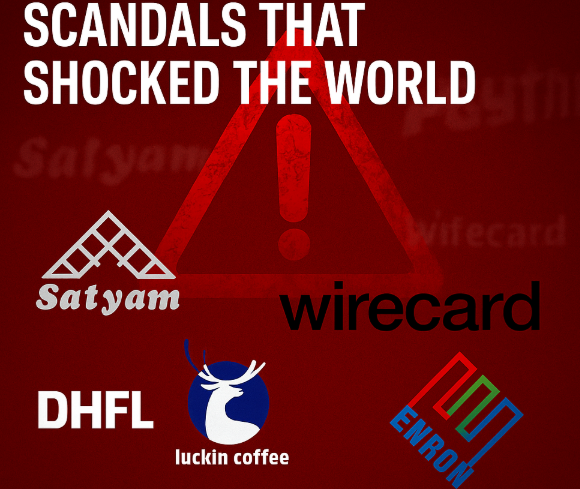
📉 1. Satyam Computers (India, 2009)
RPT Red Flag:
Founder Ramalinga Raju attempted to divert ₹7,000 crore into a real estate company Maytas Infra, run by his own family.
Impact:
Market crash, investor wipeout, and jail for the founder.
Lesson:
Auditors and independent directors failed to challenge the promoter’s RPT deals.
🏚️ 2. DHFL – Dewan Housing Finance Corp. (India, 2019–2020)
RPT Red Flag:
₹31,000 crore siphoned off through 87 shell companies allegedly linked to promoters.
Impact:
Retail investors, pension funds, and banks lost thousands of crores; stock delisted.
Lesson:
Complicity of auditors, weak internal control, and poor regulatory oversight.
💻 3. Enron Corp. (USA, 2001)
RPT Red Flag:
Used special-purpose entities (SPEs)—off-balance sheet companies owned by executives—to hide debt.
Impact:
$74 billion lost in shareholder value, Arthur Andersen collapsed, thousands lost pensions.
Lesson:
Complex RPTs masked fraud with the help of senior insiders and auditors.
🇦🇷 4. YPF – Argentina’s Oil Giant (Argentina, 2012)
RPT Red Flag:
Accused of favoring related-party contractors owned by politically connected insiders.
Impact:
Nationalization followed, leading to years of lawsuits; governance reputation damaged.
Lesson:
State-linked companies are not immune to RPT corruption.
🏦 5. Wirecard (Germany, 2020)
RPT Red Flag:
Fake transactions and dubious business with third-party acquirers in Dubai and Singapore — many tied back to insiders.
Impact:
€1.9 billion “missing”; CEO arrested; first-ever DAX company to collapse.
Lesson:
Cross-border RPTs can be used to build a web of deception.
🛢️ 6. Petrobras (Brazil, 2014–2017)
RPT Red Flag:
Overpriced contracts with construction firms that funneled kickbacks to politicians and execs.
Impact:
“Operation Car Wash” uncovered $2+ billion in graft; rocked Brazil’s economy.
Lesson:
RPTs with political ties are dangerous in state-owned firms.
👕 7. Luckin Coffee (China, 2020)
RPT Red Flag:
Fake sales of $310 million created via transactions with related shell firms.
Impact:
NASDAQ delisting; executives fired; billions wiped out in market value.
Lesson:
RPT fraud in growth-stage startups can deceive global investors.
🏗️ 8. IL&FS (India, 2018)
RPT Red Flag:
Loans and guarantees given to group companies, often without repayment ability.
Impact:
₹91,000 crore default shook NBFC sector; massive liquidity crisis.
Lesson:
Complex group structures + related lending = RPT minefield.
🧪 9. Theranos (USA, 2015–2018)
RPT Red Flag:
Undisclosed business and decision-making links between founder Elizabeth Holmes and COO (her romantic partner).
Impact:
Valuation collapse from $9 billion to $0; criminal convictions followed.
Lesson:
Undisclosed personal relationships are also red-flag RPTs.
🏦 10. China Huarong Asset Management (China, 2021)
RPT Red Flag:
Chairman Lai Xiaomin used shell firms and relatives to embezzle billions.
Impact:
He was executed; company required government bailout.
Lesson:
State-owned financial firms are not exempt from RPT abuse.
📌 Key Takeaways:
| Red Flag | Pattern Seen |
|---|---|
| Shell companies | Used to mask fund transfers |
| Family-run entities | Favored for contracts or loans |
| Undisclosed relationships | Between executives & vendors |
| Cross-border deals | Harder to track, easier to fake |
| Weak boards/auditors | Enabled misuse |
🕒 Timeline of Major Global RPT Scandals
| Year | Company | Country | Nature of RPT | Consequences |
|---|---|---|---|---|
| 2001 | Enron | USA | Shell entities used to hide debt | $74B shareholder loss, auditor collapse |
| 2009 | Satyam Computers | India | Diverted funds to family-run Maytas Infra | Jail for founder, investor losses |
| 2012 | YPF | Argentina | Favoring politically connected contractors | Nationalization, lawsuits |
| 2014 | Petrobras | Brazil | Kickbacks through related construction firms | $2B graft exposed, political fallout |
| 2018 | IL&FS | India | Lending to own group companies | ₹91,000 crore default |
| 2019 | DHFL | India | Shell firms linked to promoters siphoned funds | Stock delisted, massive investor loss |
| 2020 | Wirecard | Germany | Fraud via related third-party partners | CEO arrested, company collapsed |
| 2020 | Luckin Coffee | China | Fake sales through related shell firms | NASDAQ delisting, top execs fired |
| 2021 | China Huarong | China | Embezzlement via related firms and relatives | Chairman executed, bailout required |
| 2018 | Theranos | USA | Undisclosed relationship between founders | Valuation crash, criminal charges |
📈 Investor Warning Signs to Watch For
- ⚡ Too many deals with family firms or group companies
- ⚡ Auditors resigning or disclaiming opinion
- ⚡ Promoters pledging or selling shares
- ⚡ Sudden write-offs or large receivables
- ⚡ Delays in publishing financials
“RPTs are the oldest trick in the fraud playbook. If left unchecked, they don’t just damage companies—they destroy lives.”
😢 The Emotional Toll on Investors
In the DHFL scandal, a middle-class family saving for their daughter’s education invested their entire savings. When the stock was delisted, they lost everything. No compensation. No recovery.
Just silence.
🛑 Recent RPT Red Flags & Regulatory Action
1. Paytm (One 97 Communications)
In July 2024, SEBI issued an administrative warning to Paytm’s parent company for unauthorized RPTs worth ₹360 crore with its affiliate Paytm Payments Bank during FY 2021–22.
- These transactions exceeded audit committee limits and lacked shareholder approval.
- SEBI directed that the board review the violations and implement stronger compliance measures.
en.wikipedia.org
2. Linde India
Also in 2024, SEBI launched a probe into RPTs between Linde India and its related entities Praxair India and Linde South Asia Services, alleging non-disclosure and failure to adhere to materiality thresholds.
- Shareholders had rejected related resolutions, yet the company proceeded without proper approvals.
- SEBI reprimanded Linde for making “dishonest and misleading” defenses and demanded valuation reports to assess lost opportunities.
moneycontrol.com
3. Residential Finance & Housing Limited (RHFL)
In a major SEBI order from August 2024, RHFL was penalized for diverting loans to entities indirectly linked to promoters, claiming these were ordinary business loans.
- SEBI determined they were covert RPTs, lacked proper disclosures, and misled investors.
- Funds flowed through “box-structured shareholding” firms, masking ultimate beneficiaries.
- SEBI held that public market investors were defrauded.
⚠️ Key Takeaways:
- Even post-2021, listed companies continue to face scrutiny for negligent—or intentional—RPT violations.
- SEBI is tightening enforcement, and investors remain vulnerable when oversight lapses.
- These cases show how RPTs—if unapproved, undisclosed, or poorly executed—can erode shareholder value and market confidence.
🌍 Final Thoughts: Governance Is Not a Form, It’s a Firewall
These scandals reveal a pattern: unchecked related party dealings, weak boards, and complicit auditors. Investors must demand transparency, regulators must act faster, and boards must uphold fiduciary duty without compromise.
Call to Action
💔 Your life savings deserve more than blind trust.
Before you invest in any company, look deeper. Ask:
“Is this company quietly doing business with its promoters, family, or friends?”
Because Related Party Transactions (RPTs) are the silent killers of shareholder value. They don’t show up in headlines — they hide in the footnotes.
🧾 How to Check RPTs:
✅ Go to the company’s Annual Report (Financial Statements)
✅ Look under the section titled: “Related Party Disclosures” (as per Ind AS 24 or IAS 24)
✅ Examine transactions with promoters, subsidiaries, relatives, or key management
✅ Watch for unusual contracts, loans, or purchases from connected entities
✅ Check if these deals were approved by audit committees or shareholders
🛑 If you see frequent or large-value deals with related parties — it’s a red flag.
🎓 This isn’t just about being smart — it’s about being safe.
✉️ Read More:
👉 Read the full blog on DHFL and Satyam scams and more blogs on Corporate Governance here.
Don’t let another silent fraud steal your future.
Reference SEBI LODR