Oppression and Mismanagement in a Company: 2 Case Studies

Corporate Oppression & Mismanagement

Table of Contents


🧠 Understanding Oppression and Mismanagement in a Company:

A Simple Story

Imagine a small company called Sunlight Pvt. Ltd.

It was started by four friends: Ravi, Meena, Arjun, and Pooja. Over time, the business grew, and many others joined as small investors. But Ravi and Meena held most of the shares, so they had more power in decisions.

Now here’s what happened:

🧱 Oppression: When Power Is Misused

Ravi and Meena started holding board meetings without informing Arjun and Pooja.

They:

  • Passed decisions without any discussion.
  • Removed Arjun from his role without proper reason.
  • Never shared the financial reports.
  • Used company funds to benefit their own private businesses.

This is oppression.
They used their majority power to silence and sideline others. Arjun and Pooja had shares, but no voice. Their rights were being crushed.


🧯 Mismanagement: When the Company Is Handled Irresponsibly

On top of that, Ravi and Meena:

  • Took huge loans without a clear plan.
  • Didn’t pay taxes on time.
  • Hired unqualified relatives for key positions.
  • Made bad investments using company money.

Soon, salaries were delayed, the business started losing clients, and the company’s future was in danger.

This is mismanagement.
It’s not just about being unfair—it’s about running the company in a careless and harmful way.


⚖️ What Can Be Done?

In real life, people like Arjun and Pooja can file a case under the Companies Act, 2013—especially Sections 241 and 242—to report oppression and mismanagement to a special court called the NCLT (National Company Law Tribunal).

The tribunal can:

  • Stop the bad behavior,
  • Remove directors,
  • Order the company to pay back losses,
  • Or even restructure the board.

Why It Matters

Oppression and mismanagement harm not just individual shareholders but also:

  • Employees, who lose jobs,
  • Customers, who lose trust,
  • And the economy, which suffers from failed businesses.

That’s why laws exist—to ensure companies are run fairly, transparently, and responsibly.


Corporate governance is not just about profits and boardrooms—it is about accountability, fairness, and justice. The Companies Act, 2013 introduced several reforms in India’s corporate law regime, aiming to enhance transparency and protect minority shareholders. Among its key provisions are mechanisms to address oppression and mismanagement within companies.

But while the law provides remedies on paper, the real question is: Does it truly protect the vulnerable, or just offer procedural solace?


What Is ‘Oppression and Mismanagement’ – Companies Act 2013

The terms aren’t explicitly defined in the Act, but judicial interpretations have established some clarity.

  • Oppression refers to conduct that is burdensome, harsh, and wrongful, particularly toward minority shareholders. It often involves the abuse of majority power, exclusion from decision-making, or siphoning of funds.
  • Mismanagement covers acts of gross negligence, fraud, or breach of fiduciary duty that threaten the company’s interest or its stakeholders.

These are addressed under Sections 241 to 246 of the Companies Act, 2013.


Section 241: Application to Tribunal for Relief

A member (usually a minority shareholder) can approach the National Company Law Tribunal (NCLT) if:

  • The company’s affairs are being conducted in a manner prejudicial to public interest, the company’s interest, or oppressive to any member.
  • There’s a material change in management or control, not in the shareholders’ or public interest.

This is a powerful provision in theory. It allows aggrieved parties to seek remedial action before damage becomes irreversible.


Section 242: Powers of the Tribunal

If the NCLT is satisfied that oppression or mismanagement has occurred, it can order:

  • Regulation of company affairs.
  • Purchase of shares by other members.
  • Removal of directors.
  • Recovery of undue gains.
  • Winding up, if absolutely necessary (though this is seen as a last resort).

These powers aim to restore equity and prevent further abuse of corporate machinery.


📘 Who Can File a Case for Oppression & Mismanagement?

Under Section 241 of the Companies Act, 2013, only members (shareholders) of a company can approach the National Company Law Tribunal (NCLT) to seek relief for oppression and mismanagement.

📌 For companies with share capital:

  • At least 100 members, or
  • Members holding at least 10% of the issued share capital, or
  • With NCLT’s permission, even fewer may apply (discretionary waiver under Section 244).

📌 For companies without share capital:

  • At least 1/5th of total members.

🧑‍💻 What about the Employees?

Employees qualify as members if they own shares in the company.

⚖️ When Can Employees Be Involved in NCLT Proceedings?

  • If they hold shares (e.g., as part of ESOPs), they may qualify as minority shareholders and can apply.
  • They may also be called as witnesses, or provide evidence in cases initiated by others (e.g., shareholders or regulators).
  • If the MCA itself files a petition under Section 241(2) (for matters prejudicial to public interest), employees may be part of the investigation.

If they do not own shares in the company, they can act indirectly in the following ways:


ScenarioLegal Route
Retaliation for whistleblowing➤ File complaint under Whistleblower Policy (mandatory in listed companies)
➤ Raise issue with SEBI (in case of listed companies)
Harassment or wrongful termination➤ Approach Labour Court or Industrial Tribunal
Financial fraud witnessed➤ File complaint with SFIO (Serious Fraud Investigation Office) or SEBI
Misuse of power, ESG, or public interest violation➤ Inform Registrar of Companies (ROC) or Ministry of Corporate Affairs (MCA)
Criminal acts (bribery, forgery)➤ File complaint with Police or Economic Offences Wing (EOW)

🔔 Final Thought:

While NCLT is not the direct route for most employees, their voices and evidence often form the foundation of larger cases on oppression, mismanagement, or fraud. And in some landmark cases (like Sahara or IL&FS), employee whistleblowers played a crucial role in triggering regulatory action.


Case Study 1: The Sahara Case

A Landmark in Corporate Mismanagement and Regulatory Evasion

The Sahara India Real Estate Corporation Ltd. (SIRECL) and Sahara Housing Investment Corporation Ltd. (SHICL) case is one of the biggest corporate mismanagement and regulatory defiance cases in Indian history. It showcases how misuse of corporate structures, lack of transparency, and deliberate evasion of securities laws led to massive regulatory action by SEBI (Securities and Exchange Board of India) and the Supreme Court.


📌 Background:

  • Between 2008 and 2011, Sahara companies collected around ₹24,000 crore (approx. $3.5 billion) from nearly 30 million investors through an instrument called OFDs (Optionally Fully Convertible Debentures).
  • They claimed these were private placements, and therefore not subject to SEBI’s regulatory oversight.

However, SEBI challenged this, arguing that:

“When the number of investors exceeds 50, it constitutes a public issue, and hence it must comply with SEBI regulations.”


2010 – SEBI Begins Investigation

  • SEBI received complaints and asked Sahara to submit details.
  • Sahara refused, claiming jurisdiction issues.

2011 – SEBI Orders Refund

  • SEBI ruled that the debenture issues were illegal public offerings.
  • Sahara was ordered to refund the money with 15% interest.

2012 – Supreme Court Judgment

  • The Supreme Court upheld SEBI’s order, stating: “Sahara had violated regulatory norms and failed to protect investor interests.”
  • Ordered Sahara to deposit the full amount (₹24,000 crore) with SEBI for refunding investors.

2014 – Arrest of Subrata Roy

  • Sahara’s chief, Subrata Roy, was arrested for non-compliance with court orders.
  • He was held in Tihar Jail for over 2 years, and released on interim bail after partial payment.

Key Issues of Mismanagement and Oppression:

ViolationDetails
Misuse of Private Placement RouteCollected money from millions, bypassing SEBI norms.
Lack of Transparency & DocumentationCould not furnish authentic records of investors.
Failure to Refund InvestorsContinued defiance of regulatory and court orders.
Oppression of Investor RightsInvestors were kept in the dark, no clarity on where funds were deployed.

📚 Relevance to Companies Act, 2013

Although most of the Sahara controversy began before the 2013 Act, it influenced the drafting of stricter corporate governance provisions, such as:

  • Section 42: Clear guidelines for private placements and limits on number of subscribers.
  • Section 245: Class action suits – allowing investors to take collective legal action.
  • Stronger SEBI powers: The SEBI Act was amended in parallel to ensure stricter enforcement.

🔍 What the Sahara Case Teaches Us:

LessonImplication
No one is above regulationEven large conglomerates must comply with SEBI and company law.
Private placements are not a loopholeAny mass fundraising, even via debentures, is subject to public issue norms.
Accountability is keyCompanies must maintain transparent records and be ready for audits/reviews.
Courts will act if regulators failThe Supreme Court played a strong role in enforcing justice when SEBI was challenged.

🧾 Current Status (as of 2024):

  • Sahara has not yet fully refunded the investors.
  • SEBI has managed to refund only a small portion due to lack of claimant verification.
  • Over ₹24,000 crore remains in the SEBI-Sahara refund account, but investor identification is challenging.

Conclusion:

The Sahara case stands as a cautionary tale in Indian corporate history. It revealed how corporate mismanagement, when combined with regulatory evasion, can lead to systemic risk and investor loss. The case also reinforced the power of SEBI and the judiciary in upholding the spirit of corporate governance.

If corporate laws like the Companies Act, 2013 are not enforced with vigilance, and if regulators are not empowered, corporate oppression will always find a way to masquerade as innovation.


Case Study 2: Tata Sons Ltd. vs. Cyrus Mistry


Background:

  • Cyrus Mistry, the sixth chairman of Tata Sons, was abruptly removed in October 2016.
  • He alleged that the removal was oppressive and in violation of corporate governance norms.
  • Mistry’s family firm, Cyrus Investments Pvt. Ltd., a minority shareholder, filed a petition under Section 241 and 242 of the Companies Act, 2013.

Allegations:

  • Oppressive conduct by the majority (Tata Trusts and Ratan Tata).
  • Mismanagement of Tata Group affairs.
  • Breakdown of governance and boardroom ethics.

  • NCLT (2017): Dismissed Mistry’s petition, ruling that the removal was within the board’s powers.
  • NCLAT (2019): Reversed NCLT’s ruling, reinstated Cyrus Mistry as Executive Chairman, and declared his removal illegal.
  • Supreme Court (2021): Overturned the NCLAT verdict, stating: “There was no case of oppression or mismanagement. The Board had every right to remove a director.”

Key Takeaways:

  • The case clarified that mere removal from office does not automatically amount to oppression.
  • It reinforced the principle that business decisions made by the board (with majority support) are generally not justiciable unless they breach legal or fiduciary duties.

Minority Protection vs. Procedural Hurdles

While the Companies Act, 2013 appears protective, there are practical challenges that often dilute its impact:

  1. Threshold Requirements
    Under Section 244, a minority shareholder must hold 10% of shares or 1/10th of total members to file a petition. This can be restrictive in companies where shareholding is fragmented or tightly held by promoters.
  2. Legal and Financial Barriers
    NCLT proceedings involve legal fees, procedural delays, and often require extensive documentation. Small shareholders may find it difficult to sustain a legal battle—especially when facing a well-resourced majority.
  3. Delays and Inefficiencies
    Despite the intent of speedy justice, NCLT is overburdened. Cases involving oppression and mismanagement often drag on, making “timely relief” more theoretical than real.

A Critical View: Is It Enough?

The law provides a framework, but the culture of corporate governance often limits its effectiveness.

  • In many companies, board decisions are rubber-stamped by a majority bloc, with no genuine internal checks.
  • Whistleblowers face retaliation, and internal grievance redressal mechanisms are often cosmetic.
  • Shareholder democracy is weak when promoters or institutional investors dominate votes.

Until there’s a shift in corporate ethics and accountability, legal remedies will remain reactive rather than preventive.


Conclusion: Reform Is Ongoing, but Responsibility Is Immediate

The Companies Act, 2013 was a leap forward from the outdated 1956 Act. But the challenges of oppression and mismanagement are as much about power dynamics and corporate culture as they are about law.

If India’s corporate sector is to build trust and resilience, then:

  • Legal provisions must be made more accessible to minorities.
  • Regulators and tribunals must ensure faster enforcement.
  • Companies themselves must commit to ethical self-regulation, not just legal compliance.

Laws can punish, but only governance can prevent.


Call to Action:

Don’t stay silent if you see signs of corporate misuse.
Whether you’re an investor, employee, or stakeholder—know your rights under the Companies Act, 2013.

🛡️ Speak up. Document it. Seek legal remedy.
⚖️ Empower yourself with knowledge. Share this article to raise awareness.
📩 Have a story or concern? Consult a professional or reach out to the NCLT for guidance.

Because in corporate governance, silence enables abuse—and awareness fuels accountability.

Check more blogs on Corporate Governance here.

Here’s one reliable external link to the official bare act text of the relevant provisions under the Companies Act, 2013 (hosted on the Ministry of Corporate Affairs website or trusted legal portal):

🔗 Section 241 – Application to Tribunal for Relief in Cases of Oppression (See page 118 onward)


📚 Frequently Asked Questions (FAQ)


1. What is “oppression and mismanagement” in a company?

Answer:
Oppression refers to unfair treatment of shareholders (especially minority ones), such as being excluded from key decisions, manipulated out of control, or denied rightful benefits.
Mismanagement refers to reckless, dishonest, or grossly negligent behavior by management that harms the company or its stakeholders.


2. Who can file a case for oppression and mismanagement under the Companies Act, 2013?

Answer:
Only members (shareholders) of the company can file a petition under Section 241 of the Companies Act, 2013. The eligibility typically includes:

  • 100 members or more, or
  • Members holding at least 10% of share capital, or
  • With special permission (waiver) from NCLT.

3. Can an employee file a complaint under oppression and mismanagement?

Answer:
Not directly. An employee cannot file under Section 241 unless they own shares in the company (e.g., through ESOPs).
However, employees can act indirectly:

  • Report wrongdoing via Whistleblower Policy (mandatory in listed firms)
  • Approach Labour Courts, ROC, SEBI, MCA, or EOW for specific legal violations
  • Provide evidence or testimony in cases initiated by shareholders or regulators

4. What is the role of the National Company Law Tribunal (NCLT)?

Answer:
NCLT is a quasi-judicial body that handles corporate disputes, including:

  • Oppression and mismanagement (Sections 241–246)
  • Shareholder rights and removal of directors
  • Mergers, restructuring, insolvency, and more
    It has powers to remove directors, freeze assets, cancel decisions, or even take over management.

5. Is there any protection for whistleblowers?

Answer:
Yes. Under various laws and SEBI regulations:

  • Listed companies must have a whistleblower policy
  • Employees can anonymously report misconduct
  • Protection from retaliation is a legal requirement—but often poorly enforced, so legal counsel is advised

6. Can the government take action if a company is acting against public interest?

Answer:
Yes. Section 241(2) empowers the Central Government to refer a case to NCLT if a company’s affairs are being conducted in a manner prejudicial to public interest.


7. What real cases show how this law works?

Answer:

  • Tata vs. Cyrus Mistry: Alleged boardroom oppression after sudden removal of the chairman
  • Sahara Case: Mismanagement and misleading of investors leading to regulatory action by SEBI and court orders
    These cases show how large firms, too, can be held accountable under law.

8. How can minority shareholders protect their rights?

Answer:

  • Stay informed through AGMs and company disclosures
  • Form alliances with other shareholders to meet filing thresholds
  • Maintain written records of questionable practices
  • Consult legal experts for NCLT action under Section 241

Independent Director – Why Speaking Up Matters – 5 Stories of Penalties to Jail

Independent Director

Being on the board isn’t enough — Independent Directors must challenge, question, and refuse to be a yes-man.

Table of Contents


Who Is An Independent Director?

A Quiet Responsibility

Behind every balance sheet is a story — of a father saving for his daughter’s education, of a retired couple investing their life’s earnings, of a young professional placing faith in a company’s future. These people don’t sit in boardrooms. They don’t understand quarterly reports. But they trust — trust that someone is watching, someone is guarding the gate.

That someone is the Independent Director.

They aren’t in the spotlight. They don’t chase headlines. But when they speak up, a company steers clear of scandal.

But speaking up is never easy. Often, the boardroom is a room full of smiles hiding silence — where most others may be insiders, tied by loyalty, fear, or personal gain. To stand alone and call out what’s wrong — when the majority chooses to look away — takes more than knowledge. It takes moral courage.

Yet, that one voice of truth can stop a fraud before it starts.
That one uncomfortable question can protect millions of rupees and countless lives.
That one refusal to sign blindly can uphold the trust of an entire nation.

This isn’t just about law. It’s about conscience.


🧑‍⚖️ Why Do We Need Independent Directors?

Lets understand with the help of a simple story.

🪶 Story:

Ravi and his cousins started a family business selling organic snacks. As the business grew, they brought in outside investors. But soon, problems began — Ravi’s brother gave contracts to his friend’s company without telling others. Another cousin borrowed company money for personal use. The investors got worried.

That’s when someone said,

“We need someone neutral — someone who’s not family, not emotionally involved — just someone to watch, question, and guide.”

So they brought in Ms. Shah, a seasoned businesswoman with no ties to the family. She wasn’t there to run the business but to make sure it ran right — fairly, transparently, and in everyone’s interest.


💡 Moral:

That’s exactly what Independent Directors do — they act as neutral outsiders on the board to protect investors, ensure ethics, and stop conflicts of interest before they harm the company.


🧠 The Role They Play:

An Independent Director is like the umpire or referee in a business. They:

  • Don’t work for either team (promoters or management),
  • Have no hidden interest in the outcome,
  • Follow the rulebook (law, ethics, good governance),
  • Protect the game — not just the players.

They make sure:

  • Money isn’t being misused,
  • Minority shareholders aren’t ignored,
  • Decisions are fair, ethical, and transparent.

✅ Why It Matters:

Just like a referee protects the spirit of the game, an Independent Director protects the spirit of business — ensuring that no one cheats, everyone plays fair, and the audience (investors, public) trusts the match.


Definition of Independent Director (India – Companies Act, 2013)

According to Section 149(6) of the Companies Act, 2013, an Independent Director is a director other than a managing director or whole-time director or a nominee director, who:

  • Does not have any material or pecuniary relationship with the company, its promoters, directors, or holding/subsidiary/associate companies;
  • Is not a promoter or related to promoters or directors;
  • Has not been an employee or key managerial personnel in the company or related companies in recent years;
  • Is qualified and experienced, and meets other prescribed criteria.

Independent Directors are usually not involved in day-to-day management. They are appointed to ensure objectivity, accountability, and transparency in the board’s functioning.


🌍 Need for Diversity in the Boardroom

A diverse board is not just a checkbox — it’s a strength. Different perspectives bring richer discussions, better decisions, and greater sensitivity to risks, ethics, and stakeholder needs. Whether it’s gender, experience, background, or thought, diversity helps a company see beyond narrow interests and echo chambers. Independent Directors play a crucial role in bringing this diversity — they come from outside the company, often with varied professional and sectoral experience. Unlike promoters or executives, they offer fresh, unbiased viewpoints, ask uncomfortable questions, and represent voices that are often unheard in tightly controlled boards. In doing so, they help ensure that decisions aren’t just legal, but fair, inclusive, and future-ready.


Role of Independent Directors:

  1. Corporate Governance Watchdogs:
    They safeguard the interests of all stakeholders, especially minority shareholders.
  2. Oversight & Risk Management:
    Monitor the performance of executive directors and the management; identify and flag risks.
  3. Board Committees:
    Required to be part of Audit Committee, Nomination & Remuneration Committee, etc., bringing independent judgment.
  4. Conflict Resolution:
    Help resolve conflicts between stakeholders, including promoters and minority shareholders.
  5. Compliance Oversight:
    Ensure that the company adheres to the laws, ethical standards, and corporate governance principles.
  6. Transparency & Accountability:
    Promote transparency in financial reporting, internal controls, and disclosures.
  7. Prevent Oppression and Mismanagement:
    Their presence acts as a check against arbitrary or unjust actions by management or majority shareholders.

Powers of an Independent Director (India – Companies Act, 2013)

While Independent Directors do not hold executive authority or management roles, the law gives them significant powers and responsibilities to safeguard governance and stakeholder interest.

Here are their key powers:


1. Right to Access Information

  • They have full access to books of accounts, records, and information necessary for informed decisions.
  • They can seek independent professional advice at the company’s expense.

2. Power to Attend and Vote in Board Meetings

  • Independent Directors have equal voting power as any other director in Board decisions.
  • Their voice carries special weight in matters like:
    • Related party transactions
    • Managerial appointments
    • Audit and financial oversight

3. Power in Committees

  • They must chair or be part of key committees:
    • Audit Committee: Reviews financials, internal audit, and risk management.
    • Nomination & Remuneration Committee: Selects top executives, decides their pay.
    • Stakeholders Relationship Committee: Addresses grievances and rights of shareholders.

4. Power to Report & Recommend

  • Can raise red flags on unethical practices, mismanagement, or governance issues.
  • Can recommend actions such as internal audits, investigations, or disciplinary steps.

5. Power to Demand Clarifications

  • Can ask tough questions and demand explanations from management or promoters.

6. Protection Against Retaliation

  • They are protected by law from being removed without proper procedure (Section 169) and can act fearlessly in the company’s best interests.

7. Influence, Not Executive Control

  • While they cannot issue binding orders, their power lies in independent judgment, influencing decisions, and ensuring compliance.
  • If ignored, they can record dissent in board minutes — which can be used in regulatory scrutiny.

Real Power = Oversight + Integrity

Their real power lies not in authority but in influence: ensuring checks and balances, preventing fraud, and protecting small shareholders.

Here’s a real-world case study from India where Independent Directors played a key role in protecting the company and its shareholders:


Case Study: Infosys – Independent Directors vs CEO (2017)

📌 Background:

In 2017, India’s tech giant Infosys went through a major governance crisis. The company’s founder Narayana Murthy raised concerns over:

  • Excessive severance pay to ex-CFO
  • Lack of transparency in CEO compensation
  • Acquisition decisions (e.g., Israeli company Panaya)

These concerns triggered an alleged conflict between the board and founders.


🎯 Role of Independent Directors:

Infosys had a strong board with Independent Directors, including Prof. Jeffrey Lehman, Roopa Kudva, and others.

Here’s how they acted:


1. Independent Review of Allegations

The board ordered a detailed independent investigation by legal and forensic firms into Murthy’s allegations — particularly around:

  • Acquisition of Panaya
  • Severance pay to ex-CFO
  • CEO Vishal Sikka’s conduct

📝 Result: No wrongdoing was found, but the board acknowledged “process lapses” and improved disclosure norms.


2. Backing CEO, Yet Ensuring Accountability

  • Independent Directors initially backed CEO Vishal Sikka, citing business growth and innovation.
  • But when shareholder trust eroded and conflict escalated, they persuaded Sikka to step down, to restore investor confidence.

3. Restoring Governance & Founder Trust

  • After Sikka’s exit, the board appointed Nandan Nilekani (co-founder) as Non-Executive Chairman.
  • Independent Directors helped realign the board, pacified public concerns, and stabilized the company.

📊 Impact:

  • Investor confidence returned.
  • Share price stabilized.
  • Governance standards were revised.
  • Infosys restructured board processes and disclosures.

💡 Key Takeaways:

ActionHow It Helped
Independent probeBuilt trust with shareholders
Defending and questioning the CEOBalanced growth with accountability
Transparent communicationReassured markets and employees
Dissent handlingPrevented reputational damage

Lesson:

Independent Directors don’t run the company, but they protect it. In the Infosys case, they acted as a bridge between promoters, management, and shareholders, ensuring no party dominated unfairly.

Let’s do a comparison between Infosys (2017) and the Satyam scandal (2009) to understand the role of Independent Directors — how they worked well in one case and failed in the other.


🆚 Infosys vs Satyam: Role of Independent Directors

AspectInfosys Case (2017)Satyam Case (2009)
🏢 Company TypeStrong corporate governance, tech giantFamily-controlled, tech company
⚠️ IssueDisputes over governance: CEO pay, acquisitions, transparencyMassive financial fraud: ₹7,000+ crore scam (fake profits, fake assets)
🧑‍⚖️ Independent DirectorsActive, informed, questioned CEO and managementPassive, unaware or negligent of fraud
🛠️ Action TakenOrdered independent investigation, stabilized board, protected stakeholder trustFailed to detect fraud; resigned after scandal broke
📉 ResultGovernance restored, investor confidence backStock crashed 90%, company nearly collapsed
🧠 Board CultureTransparent, diverse, open to criticismDominated by promoter (Ramalinga Raju); weak board controls
🛡️ Protection for ShareholdersPrevented long-term damageMassive shareholder wealth destroyed

Infosys: Independent Directors Worked

  • They acted like guardians, questioned even the CEO.
  • Handled founder pressure professionally.
  • Protected small investors through transparency.

Satyam: Independent Directors Failed

  • Did not uncover or question fake bank balances, inflated profits.
  • Approved a dubious deal to buy Maytas (promoter’s firm) — conflict of interest.
  • Entire board resigned only after the fraud was admitted by the promoter.

🧠 Final Insight:

Independent Directors are only effective when they are:

  • Truly independent (no ties to promoters)
  • Active (attending meetings, asking questions)
  • Experienced and ethical
  • Supported by good internal systems (audit, disclosures)

Satyam failed because the directors were rubber stamps. Infosys survived because they were watchdogs.


Case: IL&FS Financial Collapse (2018)

A classic case of board failure and compromised independence of Independent Directors.


🏢 Background:

IL&FS (Infrastructure Leasing & Financial Services) was a major infrastructure financing company. It defaulted on ₹90,000+ crore debt, triggering a systemic financial crisis.


🔍 What Went Wrong with Independent Directors:

  1. Ignored red flags:
    • Repeatedly signed off on high debt levels, inter-company transactions, and non-transparent funding practices.
    • Never raised concerns about over-leveraging or asset-liability mismatch.
  2. Failed oversight:
    • Sat in audit, risk and finance committees — but failed to act or warn investors.
    • Did not flag internal audit findings or questionable accounting.
  3. Too cozy with management:
    • Most Independent Directors had long tenures or affiliations.
    • The board, including IDs, approved questionable transactions without due diligence.
  4. No whistleblowing:
    • Even as employees were aware of mismanagement, no ID came forward until after the defaults became public.

🔥 Aftermath:

  • Government stepped in and replaced the entire board, including all Independent Directors.
  • NCLT (Tribunal) criticized the board’s failure of fiduciary duty.
  • Serious questions were raised: Were they truly independent, or rubber stamps?

📢 Quote from the crisis:

“The so-called Independent Directors failed to ask hard questions and did not fulfill their role as fiduciaries of public interest.”
— NCLT Order, 2018


🧠 Key Lesson:

An Independent Director loses independence when:

  • They are beholden to promoters or management.
  • They fail to question or investigate management decisions.
  • They prioritize relationships over responsibilities.

⚖️ Liability of an Independent Director

An Independent Director is generally not held liable for company wrongdoings unless it can be proven that they were involved through knowledge, consent, or negligence. As per Section 149(12) of the Companies Act, 2013, they are only responsible for acts of the company where they had direct involvement, failed to act despite knowing, or did not exercise due diligence. This means if an Independent Director ignores red flags, rubber-stamps decisions, or fails to question management, they can face legal action, penalties, or even imprisonment—especially in cases involving fraud, mismanagement, or financial irregularities. Simply put, while they’re not liable for everything, they can’t turn a blind eye either.

There are several real-life cases in India where Independent Directors (IDs) have faced penalties, prosecution, or even jail when they failed in their duties or were found complicit in fraud or negligence.

Here are notable examples:


⚖️ 1. Nirav Modi / PNB Scam – Gitanjali Gems Case (2018)

🏢 Company: Gitanjali Gems (Mehul Choksi group)

  • This ₹13,000 crore banking scam involved fraudulent LoUs issued by Punjab National Bank.
  • Several Independent Directors of Gitanjali Gems were booked by SFIO (Serious Fraud Investigation Office).

❗What happened:

  • IDs signed off on false financial statements and related party transactions.
  • They failed to detect or report fraud, even when red flags were visible.

🔨 Outcome:

  • SFIO filed criminal charges against the entire board.
  • IDs were named in FIRs and subjected to investigation under Companies Act and IPC.
  • While no ID was jailed immediately, prosecution is ongoing.

⚖️ 2. Satyam Scam (2009)

🏢 Company: Satyam Computer Services

₹7,000+ crore accounting fraud.

❗What happened:

  • The Independent Directors approved a shady acquisition of Maytas Infra & Maytas Properties (owned by the promoter’s family).
  • Ignored financial inconsistencies and fake bank balances.

🔨 Outcome:

  • Several IDs resigned after the fraud was exposed.
  • Some were named in CBI chargesheets.
  • Dr. (Mrs.) Rama Raju, an Independent Director, was arrested and later granted bail.
  • All faced SEBI and SFIO scrutiny.

⚖️ 3. Bhushan Steel Case (2018)

🏢 Company: Bhushan Steel

Corporate fraud + default on ₹40,000 crore loans.

❗What happened:

  • The SFIO charged Independent Directors for failing to prevent fraudulent accounting and diversion of funds.

🔨 Outcome:

  • IDs were prosecuted under Section 447 (fraud) of Companies Act.
  • They faced penalties and potential imprisonment up to 10 years, if found guilty.

⚖️ 4. National Spot Exchange Ltd (NSEL) Scam (₹5,600 crore)

🏢 Company: National Spot Exchange Ltd (NSEL)

Subsidiary of Financial Technologies India Ltd (FTIL), now known as 63 Moons Technologies.


❗What Happened:

  • NSEL was supposed to offer spot commodity trading, but in reality, it ran an unregulated paired contracts scheme, which functioned like a Ponzi scheme.
  • Around 13,000 investors lost money when NSEL abruptly shut down in 2013, defaulting on payouts worth ₹5,600 crore.
  • The scam involved fake warehouse receipts, non-existent commodities, and false promises of returns.

🔍 Role of Independent Directors:

  • Independent Directors of FTIL (the parent company) were accused of failing to supervise the operations of its subsidiary, NSEL.
  • They did not question or investigate the financial health of NSEL, despite being aware of rising investor complaints.
  • Regulatory bodies observed that the IDs blindly approved decisions, failing to exercise due diligence, especially given the scale of transactions.

🔨 Action Taken:

  • Ministry of Corporate Affairs (MCA) and SEBI initiated action under the Companies Act.
  • MCA moved to declare Independent Directors of FTIL “not fit and proper” to hold board positions in any public company.
  • Enforcement Directorate (ED) and Economic Offences Wing (EOW) called Independent Directors for questioning; some were named in charge sheets.
  • SEBI barred 63 Moons and its directors from accessing capital markets, with Independent Directors included in this restriction.

🧠 Why This Matters:

This case set a precedent that Independent Directors of holding companies can be held liable for wrongdoings in their subsidiaries, especially when they sit on the boards of both entities. It reinforced the principle that ignorance is not a defense — IDs must actively question, verify, and act when something appears wrong.


⚖️ 5. Ricoh India Fraud Case (2016)

🏢 Company: Ricoh India Ltd. (subsidiary of Ricoh Japan)

🧾 Issue: ₹1,123 crore accounting fraud — financial statements were manipulated to show inflated revenues and profits.


❗What Happened:

  • Ricoh India’s top management (MD, CFO, etc.) were involved in massive accounting irregularities, including fake sales and false reporting to impress shareholders.
  • The Independent Directors, who were part of the Audit Committee, failed to detect or prevent these misstatements — despite multiple signs, like internal auditor warnings and delayed filings.
  • They signed off on financial reports that were later found to be false.

🔨 Action Taken:

  • In 2019, SEBI (Securities and Exchange Board of India) imposed penalties and barred the Independent Directors (along with other board members) from:
    • Holding directorships in listed companies for up to 5 years.
    • Accessing securities markets during the period.
  • SEBI held them accountable for failing in their fiduciary duties and not exercising due care as board members.

🧠 Why This Matters:

Even though the IDs were not directly involved in committing the fraud, SEBI ruled that their inaction and silence contributed to it — reinforcing the idea that “negligence is liability” when you’re in a position of trust.


🧠 Key Takeaway:

“Independence is not immunity.”
If Independent Directors fail to perform their duties diligently, especially in fraud, mismanagement, or non-compliance, they can be criminally liable — even if they were not directly involved.


🕊️ Call to Action:

In a world where trust is fragile and corporate greed can quietly destroy lives, Independent Directors are the last line of defense — not just for investors, but for the soul of a company. Their silence can cost thousands their savings. Their indifference can turn fraud into tragedy. But their courage — to ask, to doubt, to dissent — can protect the dreams of countless families who invest with hope. If you are an Independent Director, or aspire to be one, remember: you are not just signing papers — you are signing your name to the truth. Stand up. Speak up. Because when watchdogs sleep, the wolves take over.

Read blogs on Corporate Governance here.


  • Section 149(4) to 149(13) deals with appointment and qualifications of Independent Directors.
  • Schedule IV of the Act outlines the Code for Independent Directors, detailing their role, duties, and professional conduct.

  1. 📘 Section 149 – Appointment of Directors
    👉 https://www.mca.gov.in/Ministry/pdf/CompaniesAct2013.pdf
    (Refer to pages 102–106 of the PDF for Section 149)
  2. 📘 Schedule IV – Code for Independent Directors
    👉 https://www.mca.gov.in/Ministry/pdf/TableFtoScheduleV_Chapter12toScheduleVII.pdf
    (Refer to pages 33–36 of this PDF)

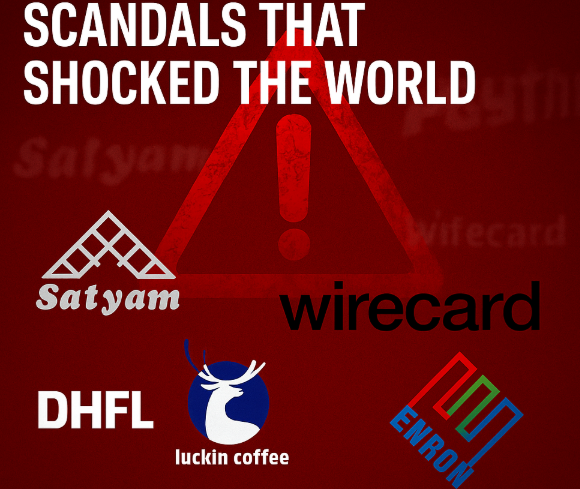
🚨10 Biggest Related Party Transaction (RPT) Scandals That Shocked the World

Related Party Transaction - Sandals

Related Party Transactions are deals between a company and people or entities closely tied to it: promoters, family members, group firms, or key executives. While not illegal, they must be disclosed and done at “arm’s length.”

Why They Raise Red Flags:

  • Can be used to siphon money
  • Often lack transparency
  • Lead to asset stripping
  • Undermine shareholder trust

📉 1. Satyam Computers (India, 2009)

RPT Red Flag:
Founder Ramalinga Raju attempted to divert ₹7,000 crore into a real estate company Maytas Infra, run by his own family.
Impact:
Market crash, investor wipeout, and jail for the founder.
Lesson:
Auditors and independent directors failed to challenge the promoter’s RPT deals.


🏚️ 2. DHFL – Dewan Housing Finance Corp. (India, 2019–2020)

RPT Red Flag:
₹31,000 crore siphoned off through 87 shell companies allegedly linked to promoters.
Impact:
Retail investors, pension funds, and banks lost thousands of crores; stock delisted.
Lesson:
Complicity of auditors, weak internal control, and poor regulatory oversight.


💻 3. Enron Corp. (USA, 2001)

RPT Red Flag:
Used special-purpose entities (SPEs)—off-balance sheet companies owned by executives—to hide debt.
Impact:
$74 billion lost in shareholder value, Arthur Andersen collapsed, thousands lost pensions.
Lesson:
Complex RPTs masked fraud with the help of senior insiders and auditors.


🇦🇷 4. YPF – Argentina’s Oil Giant (Argentina, 2012)

RPT Red Flag:
Accused of favoring related-party contractors owned by politically connected insiders.
Impact:
Nationalization followed, leading to years of lawsuits; governance reputation damaged.
Lesson:
State-linked companies are not immune to RPT corruption.


🏦 5. Wirecard (Germany, 2020)

RPT Red Flag:
Fake transactions and dubious business with third-party acquirers in Dubai and Singapore — many tied back to insiders.
Impact:
€1.9 billion “missing”; CEO arrested; first-ever DAX company to collapse.
Lesson:
Cross-border RPTs can be used to build a web of deception.


🛢️ 6. Petrobras (Brazil, 2014–2017)

RPT Red Flag:
Overpriced contracts with construction firms that funneled kickbacks to politicians and execs.
Impact:
“Operation Car Wash” uncovered $2+ billion in graft; rocked Brazil’s economy.
Lesson:
RPTs with political ties are dangerous in state-owned firms.


👕 7. Luckin Coffee (China, 2020)

RPT Red Flag:
Fake sales of $310 million created via transactions with related shell firms.
Impact:
NASDAQ delisting; executives fired; billions wiped out in market value.
Lesson:
RPT fraud in growth-stage startups can deceive global investors.


🏗️ 8. IL&FS (India, 2018)

RPT Red Flag:
Loans and guarantees given to group companies, often without repayment ability.
Impact:
₹91,000 crore default shook NBFC sector; massive liquidity crisis.
Lesson:
Complex group structures + related lending = RPT minefield.


🧪 9. Theranos (USA, 2015–2018)

RPT Red Flag:
Undisclosed business and decision-making links between founder Elizabeth Holmes and COO (her romantic partner).
Impact:
Valuation collapse from $9 billion to $0; criminal convictions followed.
Lesson:
Undisclosed personal relationships are also red-flag RPTs.


🏦 10. China Huarong Asset Management (China, 2021)

RPT Red Flag:
Chairman Lai Xiaomin used shell firms and relatives to embezzle billions.
Impact:
He was executed; company required government bailout.
Lesson:
State-owned financial firms are not exempt from RPT abuse.


📌 Key Takeaways:

Red FlagPattern Seen
Shell companiesUsed to mask fund transfers
Family-run entitiesFavored for contracts or loans
Undisclosed relationshipsBetween executives & vendors
Cross-border dealsHarder to track, easier to fake
Weak boards/auditorsEnabled misuse

🕒 Timeline of Major Global RPT Scandals

YearCompanyCountryNature of RPTConsequences
2001EnronUSAShell entities used to hide debt$74B shareholder loss, auditor collapse
2009Satyam ComputersIndiaDiverted funds to family-run Maytas InfraJail for founder, investor losses
2012YPFArgentinaFavoring politically connected contractorsNationalization, lawsuits
2014PetrobrasBrazilKickbacks through related construction firms$2B graft exposed, political fallout
2018IL&FSIndiaLending to own group companies₹91,000 crore default
2019DHFLIndiaShell firms linked to promoters siphoned fundsStock delisted, massive investor loss
2020WirecardGermanyFraud via related third-party partnersCEO arrested, company collapsed
2020Luckin CoffeeChinaFake sales through related shell firmsNASDAQ delisting, top execs fired
2021China HuarongChinaEmbezzlement via related firms and relativesChairman executed, bailout required
2018TheranosUSAUndisclosed relationship between foundersValuation crash, criminal charges

📈 Investor Warning Signs to Watch For

  • ⚡ Too many deals with family firms or group companies
  • ⚡ Auditors resigning or disclaiming opinion
  • ⚡ Promoters pledging or selling shares
  • ⚡ Sudden write-offs or large receivables
  • ⚡ Delays in publishing financials

“RPTs are the oldest trick in the fraud playbook. If left unchecked, they don’t just damage companies—they destroy lives.”


😢 The Emotional Toll on Investors

In the DHFL scandal, a middle-class family saving for their daughter’s education invested their entire savings. When the stock was delisted, they lost everything. No compensation. No recovery.

Just silence.


🛑 Recent RPT Red Flags & Regulatory Action

1. Paytm (One 97 Communications)

In July 2024, SEBI issued an administrative warning to Paytm’s parent company for unauthorized RPTs worth ₹360 crore with its affiliate Paytm Payments Bank during FY 2021–22.

  • These transactions exceeded audit committee limits and lacked shareholder approval.
  • SEBI directed that the board review the violations and implement stronger compliance measures.
    en.wikipedia.org

2. Linde India

Also in 2024, SEBI launched a probe into RPTs between Linde India and its related entities Praxair India and Linde South Asia Services, alleging non-disclosure and failure to adhere to materiality thresholds.

  • Shareholders had rejected related resolutions, yet the company proceeded without proper approvals.
  • SEBI reprimanded Linde for making “dishonest and misleading” defenses and demanded valuation reports to assess lost opportunities.
    moneycontrol.com

3. Residential Finance & Housing Limited (RHFL)

In a major SEBI order from August 2024, RHFL was penalized for diverting loans to entities indirectly linked to promoters, claiming these were ordinary business loans.

  • SEBI determined they were covert RPTs, lacked proper disclosures, and misled investors.
  • Funds flowed through “box-structured shareholding” firms, masking ultimate beneficiaries.
  • SEBI held that public market investors were defrauded.

⚠️ Key Takeaways:

  • Even post-2021, listed companies continue to face scrutiny for negligent—or intentional—RPT violations.
  • SEBI is tightening enforcement, and investors remain vulnerable when oversight lapses.
  • These cases show how RPTs—if unapproved, undisclosed, or poorly executed—can erode shareholder value and market confidence.

🌍 Final Thoughts: Governance Is Not a Form, It’s a Firewall

These scandals reveal a pattern: unchecked related party dealings, weak boards, and complicit auditors. Investors must demand transparency, regulators must act faster, and boards must uphold fiduciary duty without compromise.


Call to Action

💔 Your life savings deserve more than blind trust.

Before you invest in any company, look deeper. Ask:
“Is this company quietly doing business with its promoters, family, or friends?”

Because Related Party Transactions (RPTs) are the silent killers of shareholder value. They don’t show up in headlines — they hide in the footnotes.

🧾 How to Check RPTs:
✅ Go to the company’s Annual Report (Financial Statements)
✅ Look under the section titled: “Related Party Disclosures” (as per Ind AS 24 or IAS 24)
✅ Examine transactions with promoters, subsidiaries, relatives, or key management
✅ Watch for unusual contracts, loans, or purchases from connected entities
✅ Check if these deals were approved by audit committees or shareholders

🛑 If you see frequent or large-value deals with related parties — it’s a red flag.

🎓 This isn’t just about being smart — it’s about being safe.

✉️ Read More:

👉 Read the full blog on DHFL and Satyam scams and more blogs on Corporate Governance here.
Don’t let another silent fraud steal your future.

Reference SEBI LODR

🚩Red Flags Exposed: How Related Party Transactions in Satyam & DHFL Wiped Out Investors’ Life Savings

RPT - Related party Transaction

Table of Contents


A Story About Related Party Transactions

When the Boss’s Brother Gets the Contract:

Imagine you’re part of a housing society that needs a contractor to repaint the entire building. Several professionals submit quotes, but the society’s secretary—who controls the decision—insists on hiring his own brother’s company.

His brother’s quote is higher than the others. The quality of work is average. But the deal still goes through. Why? Because of the relationship—not the merit.

This is a classic example of a related party transaction.

In the business world, these kinds of deals happen when a company does business with someone closely connected—like a relative of a director, another company owned by the CEO, or even a subsidiary. And just like in our housing society, these deals can put fairness and accountability at risk.

When companies favor their “own people” instead of making decisions in the best interest of all stakeholders, it becomes a serious corporate governance issue. Money can be misused, shareholders may lose trust, and companies can even collapse under the weight of hidden deals.

In this blog, we’ll break down what related party transactions really are, how they work, and why they’re often a red flag for investors and regulators alike.


🏢 Which Companies Are Covered?

Type of CompanyRPT Rules Applicable?
Private CompaniesYes, but with some exemptions (e.g. relaxed approvals in certain cases)
Public Unlisted CompaniesYes, governed by the Companies Act, 2013
Listed CompaniesYes, very strict rules under SEBI LODR Regulations
Subsidiaries of Listed CosYes, indirectly covered under consolidated compliance requirements

Related Party Transactions (RPTs) are business deals between a company and someone it has a close relationship with — like a director, major shareholder, or a company owned by a relative of management.

These are not ordinary, arm’s-length deals. Instead, there’s a risk that the decision might be biased because of personal interests.

👉 Examples:

  • A company gives a loan to its CEO’s brother’s business.
  • A company buys services from a firm owned by the chairperson’s son.
  • A listed company sells assets to its own subsidiary at a lower-than-market price.

CategoryWho is Included
1. Key Management Personnel– Directors (Board members)
– CEO, CFO, Company Secretary, etc.
2. Relatives of Key Personnel– Spouse
– Parents
– Children (including step-children)
– Siblings
3. Holding Company– The parent company that owns or controls the reporting company
4. Subsidiary Company– A company that is controlled by the reporting company
5. Associate Company– A company in which the reporting company holds significant influence (≥20%)
6. Joint Venture Partner– A company that has a joint control agreement with the reporting company
7. Shareholders with Influence– Persons or entities owning ≥20% shares or voting power
8. Entities Controlled by Related People– Firms or companies where directors/relatives hold ≥20% ownership or control
9. Partnership Firms or HUFs– Where directors/relatives are partners or members
10. Others (As per Law)– Any person on whose advice a director or manager routinely acts

⚠️ Why Are RPTs a Red Flag in Corporate Governance?

Though RPTs can be legitimate, they raise concerns when used to favor insiders or siphon off company value. Here’s why regulators and investors stay alert:

🚩 1. Conflict of Interest

  • The decision-maker may benefit personally, instead of acting in the company’s or shareholders’ best interest.

🚩 2. Lack of Fair Pricing

  • Prices may not reflect market value (e.g., selling assets cheaply to a director’s firm).

🚩 3. Diversion of Funds

  • Money may be moved out of the company under the guise of a legitimate transaction, especially in loans and guarantees.

🚩 4. Suppression of True Financial Health

  • Profits/losses may be manipulated by transacting with related entities.

🚩 5. Weak Internal Controls

  • If oversight is weak, RPTs can be used for fraud, bribery, or enrichment of promoters.

📉 Impact on Investors & Stakeholders

  • Reduced trust in financial reporting
  • Lower valuation of the company due to governance risk
  • Potential for regulatory action or penalties
  • In extreme cases, business collapse (e.g., Satyam, IL&FS)

Yes, they are allowed, but only under certain conditions:

  • Must be done at arm’s length (i.e., on fair market terms)
  • Must be approved by the right authority within the company
  • Must be disclosed properly

Related Party Transactions (RPTs) are not completely banned, but they are heavily regulated to ensure transparency, fairness, and accountability.


  1. Identification of a Related Party:
    • The company identifies whether the counterparty is a related person/entity.
    • This includes directors, key managerial personnel (KMP), their relatives, and entities controlled by them.
  2. Nature of Transaction:
    • Sale/purchase of goods or property
    • Loans or guarantees
    • Transfer of resources, services, or obligations
  3. Approval Process:
    • Audit Committee approval (mandatory for listed companies)
    • Board approval for transactions beyond certain thresholds or not in the ordinary course
    • Shareholder approval for large (material) transactions
  4. Disclosure:
    • Must be disclosed in financial statements, annual reports, and for listed firms, to the stock exchange.

Whose Approval is Required for RPTs?

Type of RPTRequired Approval
At arm’s length & in ordinary course of businessNo prior approval needed, but must be disclosed in financials
Not at arm’s length OR not in ordinary courseBoard of Directors approval is required
Material RPTs (large value transactions)Must be approved by shareholders via special resolution
Listed CompaniesAlso need approval from Audit Committee before execution

📌 Note:

  • Interested directors cannot vote on RPTs in board meetings.
  • For listed companies, all RPTs (even if arm’s length) must go through the Audit Committee.

📊 What is a “Material” RPT?

As per SEBI (India) norms:

  • A transaction is material if it exceeds ₹1,000 crore or 10% of the company’s annual consolidated turnover, whichever is lower.

🤝 What Does “Arm’s Length” Mean?

“Arm’s length” is a term used to describe a fair and independent transaction between two parties who are not related and have no conflict of interest.

It means both parties act in their own self-interest, negotiate freely, and the deal reflects true market value — just like it would between strangers.


📌 Key Features of an Arm’s Length Transaction:

FeatureWhat It Means
No special relationshipThe buyer and seller are not family, partners, or insiders.
Fair pricingThe price is based on what the product/service is worth in the open market.
Independent decisionBoth parties act independently, without pressure or influence from the other.
Comparable to market dealsSimilar terms would apply if the same deal happened with an unrelated party.

🏡 Simple Example:

Arm’s Length:

You sell your house to a stranger for ₹50 lakh after comparing market rates and negotiating freely.

Not Arm’s Length:

You sell the same house to your cousin for ₹30 lakh — because of your relationship, not fair market value.


🏢 In a Business Context:

Let’s say a company hires a vendor for office catering:

  • ✅ If the vendor is selected through open bidding, with competitive pricing → Arm’s length
  • ❌ If the vendor is the CEO’s brother, and no other bids were considered → Not arm’s length

⚠️ Why It Matters in Corporate Governance:

If a related party transaction is not at arm’s length, there’s a higher risk of:

  • Favoritism
  • Overpayment or underpricing
  • Conflict of interest
  • Shareholder loss

That’s why companies must prove that RPTs are done at arm’s length, or else get board/shareholder approval.


📋 Summary:

  • RPTs are not illegal, but they must be approved by the Board, Audit Committee, and sometimes shareholders.
  • Disclosure is mandatory in annual reports and stock exchange filings (for listed companies).
  • Strong rules apply especially to listed companies, where public money is involved.

📉 Case Study: Satyam Computers Scam (India, 2009)

“India’s Enron” — How a related party deal exposed massive fraud


🏢 The Company:

Satyam Logo

Satyam Computer Services Ltd.
A leading Indian IT services company, once hailed as a blue-chip stock listed on the BSE, NSE, and NYSE.

In 2008, Satyam Computer Services Ltd., a publicly listed company on the NSE, BSE, and NYSE, shocked the corporate world with a failed attempt to acquire two companies — Maytas Infra and Maytas Properties. The twist? Both companies were owned by its Chairman Ramalinga Raju’s family.


🔍 The Problem:

In 2008, Satyam’s board approved a related party transaction — a $1.6 billion deal to acquire two infrastructure companies:

  • Maytas Properties
  • Maytas Infra

These companies were owned and controlled by the family of Satyam’s Chairman, Ramalinga Raju.

The deal was not in Satyam’s core business (IT), and the pricing was opaque and hugely inflated.


🚨 Red Flags:

Red FlagExplanation
❌ Same promoter groupRaju controlled both buyer (Satyam) and sellers (Maytas firms)
❌ Overpriced assetsInfrastructure companies were valued far above their worth
❌ No shareholder approvalThe transaction bypassed shareholder consultation initially
❌ Conflict of interestRaju’s personal interests clashed with those of the shareholders
❌ Outrage from investors & analystsStock plummeted 55% in a single day post-announcement

💣 What Happened Next:

This related party transaction (RPT) raised immediate red flags. The deal had no clear business logic, involved massive sums, and was with entities directly controlled by the promoter’s family. At the time, RPTs were governed in India by Clause 49 of the SEBI Listing Agreement, which required listed companies to ensure transparency and board oversight in such transactions.

However, oversight mechanisms failed. The board approved the deal, ignoring glaring conflicts of interest and valuation concerns.

Next –

  • After intense backlash, investor pressure, the deal was aborted.
  • A few weeks later, Raju confessed to a massive ₹7,000+ crore accounting fraud.
  • He had inflated cash and bank balances for years to make the company look profitable.
  • The aborted RPT was seen as an attempt to fill the hole by diverting cash to related entities.

⚖️ Consequences:

StakeholderOutcome
Chairman (Raju)Arrested and jailed; confessed in a written letter to the board
Board of DirectorsDismissed; faced criticism for failing to exercise independent judgment
CompanyTakeover by Tech Mahindra in 2009 through government intervention
Auditors (PwC)Found guilty of negligence; partners arrested; lost credibility
InvestorsMassive wealth erosion; shares crashed by over 80%
Regulators (SEBI, MCA)Tightened norms for RPT disclosures, corporate governance, and audit standards

Case Study: The DHFL Scam (India, 2019-2021)

DHFL Logo

When Loans Go Home: The Dark Side of Related Party Transactions

Lets see a real world case study of how one of India’s largest housing finance companies collapsed under its own web of shady deals.


In 2019, investors were stunned when Dewan Housing Finance Corporation Ltd. (DHFL) — once a trusted name in affordable housing loans — was accused of siphoning off over ₹30,000 crore through a network of related party transactions.

What followed was a stunning corporate collapse that revealed how unchecked insider deals, fake loans, and regulatory gaps can devastate even the biggest companies.

This is not just a story of fraud — it’s a blueprint of what can go wrong when personal interests override public trust.


📉 The Allegations:

In early 2019, investigative reports revealed that DHFL had:

  • Given thousands of crores in loans to obscure shell companies
  • These firms had no real operations and were linked to the Wadhawan family (DHFL’s promoters)
  • Many of these loans were never repaid — but still shown as “performing assets” in the books

📊 How the Scam Worked

StepWhat Happened
🏚️ Fake shell companies createdPromoter-linked firms were set up with dummy directors
💰 DHFL lent huge amountsLoans given with little or no due diligence
📚 Loans shown as assetsThese inflated the balance sheet and misled investors
🔄 Money round-trippedSome funds allegedly returned to the promoters or used for unrelated activities

🗓️ Timeline of the DHFL Collapse

(Visual Suggestion: Horizontal Timeline Graphic)

DateEvent
Early 2019CobraPost exposé alleges ₹31,000 crore siphoned via shell firms
June 2019DHFL delays bond repayment; panic begins among investors
Nov 2019RBI supersedes DHFL’s board due to governance failure
2020ED and CBI file multiple cases against promoters under PMLA & IPC
Jan 2021DHFL becomes the first NBFC sent to NCLT for bankruptcy under IBC
June 2021Piramal Group wins bid to acquire DHFL in ₹34,000 crore resolution plan

  • Section 188 of the Companies Act, 2013 (RPT approval rules violated)
  • SEBI (LODR) Regulations (lack of disclosure of material RPTs)
  • PMLA, IPC, and Fraud under ED/CBI investigation
  • RBI Guidelines for NBFCs (breach of lending norms)

💥 Consequences of the Scam

StakeholderImpact
PromotersArrested and charged with fraud and money laundering
Company (DHFL)Declared bankrupt; acquired by Piramal Group after ₹30,000+ crore write-off
InvestorsMajor losses to mutual funds, FDs, retail bondholders
AuditorsInvestigated for negligence and failure to flag irregularities
RegulatorsRBI & SEBI tightened norms on NBFC governance and RPT monitoring

💸 What Happened to DHFL Investors?

After DHFL’s bankruptcy and resolution through the Insolvency and Bankruptcy Code (IBC) process, the outcomes varied based on type of investor:


👨‍💼 1. Shareholders (Equity Investors)

Did they get anything back?
No. DHFL shares were delisted and shareholders got nothing.

  • Piramal Group’s takeover offer (₹34,250 crore) wiped out all existing equity.
  • As per IBC rules, equity shareholders are last in line — after secured and unsecured creditors.
  • On June 14, 2021, DHFL shares were delisted from NSE and BSE.
  • Investors lost 100% of their capital in DHFL stock.

🔻 Outcome:
Complete loss for retail and institutional shareholders.


📉 2. Bondholders (NCD Holders, Debenture Investors)

📊 Mixed outcome — partial recovery.

  • DHFL had issued Non-Convertible Debentures (NCDs) to retail and institutional investors.
  • Under Piramal’s resolution plan:
    • Secured bondholders received between 40%–65% of their money, depending on the class and seniority.
    • Unsecured bondholders received almost nothing or token value (~1% or less).

🏦 Why the difference?

  • Secured creditors (banks, large institutions) had charge over DHFL’s assets.
  • Unsecured NCD holders, including many retail investors, had no asset protection.

🔻 Outcome:

  • Partial recovery for secured NCDs
  • Heavy losses (up to 90–100%) for unsecured ones

🏦 3. Fixed Deposit (FD) Holders

📊 Small recovery.

  • FD holders were treated as unsecured creditors under the IBC process.
  • Most received small payouts — around 23%–30% of their deposit amounts (in staggered installments).
  • Many senior citizens who invested in DHFL FDs suffered huge losses, with no full refund.

🔻 Outcome:
Partial recovery (majority lost 70%+)


🛠️ What Did Piramal Group Actually Do?

  • Piramal acquired DHFL’s assets and loan book for ₹34,250 crore through IBC.
  • It merged DHFL into its financial services arm and is now operating the business under Piramal Capital & Housing Finance Ltd.
  • No funds were paid to DHFL’s original shareholders.
  • Funds were distributed as per the IBC waterfall mechanism (secured > unsecured > shareholders).

🧠 Investor Takeaways:

LessonImplication
Equity is high-risk, high-returnYou’re the first to gain in success, but the last to be paid in a collapse.
NCDs ≠ 100% safeEspecially when unsecured — read the terms and credit rating carefully.
FDs in NBFCs carry credit riskUnlike bank FDs, NBFC deposits are not insured by RBI or DICGC.
IBC protects creditors, not shareholdersResolution prioritizes repayment of debt, not market value recovery.

📘 Lessons for Investors & Corporate Boards

  • Always review a company’s RPT disclosures in annual reports
  • Be skeptical of unusual loan growth to private or unknown firms
  • Strong audit committees and independent directors are vital to protect stakeholders
  • Regulators must be empowered with real-time data and greater enforcement teeth

🧩 Final Thoughts

The DHFL collapse is a cautionary tale for the financial system. It shows how Related Party Transactions, when hidden behind complex structures, can silently destroy companies from within.

Transparency, oversight, and accountability are not just compliance terms—they are the pillars of trust in any public company.


💔 Conclusion: The Cost Wasn’t Just Financial — It Was Human

Behind the balance sheets, court filings, and corporate headlines of the DHFL scam were real people.

A retired schoolteacher who invested her life savings in a DHFL fixed deposit, trusting its brand and credit ratings.

A middle-class family saving for their child’s education, who thought NCDs offered both safety and better returns.

Thousands of small investors — senior citizens, homemakers, salaried professionals — who never imagined that a regulated, publicly listed housing finance company could vanish overnight, taking their hard-earned money with it.

For them, the collapse wasn’t about bad headlines or stock charts — it was about shattered trust, sleepless nights, and a future suddenly uncertain.

While the promoters walked away under legal proceedings, and financial institutions counted their write-downs, retail investors were left with nothing but regret — no refunds, no justice, just silence.

The DHFL story reminds us that financial scams don’t just destroy companies — they destroy lives. It’s a call for stronger accountability, stricter governance, and most importantly, for protecting the everyday investor who simply believed that their money was in safe hands.


📘 Key Takeaways:

  • RPTs can be used to hide fraud or divert funds if not monitored.
  • Boards must act independently and question transactions, even if initiated by promoters.
  • Audit Committees and shareholders must have full transparency before approving such deals.
  • The scandal triggered regulatory reforms in India, including stricter norms under the Companies Act 2013 and SEBI regulations.

Conclusion

Not all RPTs are bad—but unchecked RPTs are dangerous. They’re like secret deals in a family-run shop where customers (investors) don’t know what’s really happening behind the scenes. That’s why regulators, auditors, and investors pay close attention to them.


📣 Call to Action: For a Safer, Fairer Financial System

For Regulators:

  • Tighten enforcement around RPTs.
  • Mandate real-time, digital disclosures for high-value transactions.
  • Ensure promoter accountability doesn’t stop with resignations.

For Boards & Auditors:

  • Treat every RPT like a potential conflict, not just a compliance checkbox.
  • Build a culture where questioning is a duty, not disrespect.

For Investors:

  • Always read the Related Party Transactions section in annual reports.
  • Be wary of sudden, unexplained shifts in business focus or large intra-group loans.
  • If it smells fishy — it probably is.

For Policy Makers:

  • Create fast-track grievance redressal for small investors caught in corporate fraud.
  • Introduce retail investor insurance for deposits in regulated NBFCs.

🛑 Let’s not wait for another Satyam or DHFL to act.

Because behind every “related party” is an unrelated investor who may lose everything — and they deserve better.


Read Corporate Governance Best Practices here.

References:

Governs how companies can enter into contracts with related parties. It includes approval requirements by board/shareholders and defines “related party.”

🔗 Companies Act, 2013
→ Refer to Section 188, page 101–102.


Covers disclosure and approval requirements for listed entities. Applies stricter norms, mandates audit committee oversight, and shareholder approval in certain cases.

🔗SEBI
→ See Regulation 23 in Chapter IV.

Gender Bias-How Male-Dominated Workplaces Quietly Drive Customers Away

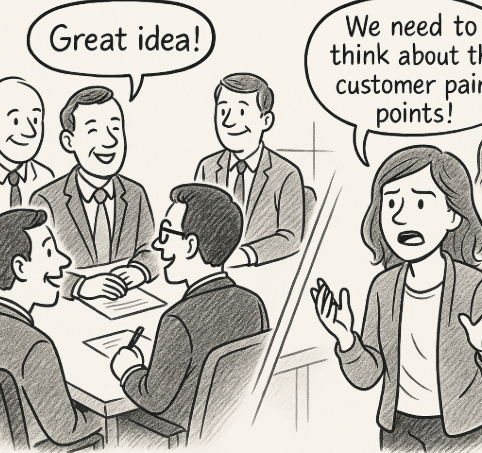
Riya asking to think over customer pain points

She had ideas. She had empathy. She had the courage to speak when others stayed silent. But none of it mattered in a room where decisions were made by men, for men.

In many workplaces today—especially in traditionally male-dominated sectors—gender bias doesn’t always scream; it whispers. It shows up in who gets invited to meetings, whose suggestions are taken seriously, and who gets credit when a project succeeds. For women, navigating these environments can feel like walking a tightrope—speak up, and you’re “difficult.” Stay silent, and you’re invisible.

What’s worse? When companies ignore these biases, it’s not just women who lose—businesses lose too. Innovation stalls, customer understanding suffers, and blind spots multiply. Because when everyone in the room thinks the same, they miss what truly matters outside it.

This is a story of one such team in a company—where male comfort, unchecked bias, and the silencing of a single woman’s voice eventually came at a high cost.


🧍‍♂️🧍‍♂️ The Cost of a Single Perspective: How a Male-Dominated Culture Failed Its Customers

Here’s a real-world story, with names changed, that illustrates the impact of lack of diversity and suppressed voices in a male-dominated workplace, especially on customer experience and business outcomes:

At TechAxis Solutions, a software development company, the leadership structure was predictably uniform—two male directors, all-male team leads, and a technical team where 90% were men.With 95% hiring from within, the workplace became an echo chamber—where insiders guarded their turf, and fresh, diverse voices were silenced before they could be heard. Hiring often happened through referrals, and over time, a pattern emerged: men hired men—not out of malice, but due to unconscious bias and comfort zones.


👩‍💼 Few Women, Lower Voices

In a team of 40, only 3 women worked at entry-level positions—none in leadership. One of them, Riya, a junior UX analyst, began noticing a disturbing pattern in product feedback:

“Customers, especially women, often find the user interface unrelatable, confusing, and lacking emotional intelligence.”

When she suggested changes—like using more inclusive design, empathic onboarding, and conversational support messages—her inputs were brushed off. Comments like:

“We’ve always done it this way.”
“Too emotional. Let’s focus on performance.”
became routine responses.


💥 The Consequences

Over the next quarter:

  • Customer churn rose by 22%, particularly among women-led businesses.
  • Review forums filled with complaints: “Clunky UX”, “Doesn’t understand my workflow”, “Too robotic”.
  • A top client backed out, citing “poor alignment with user experience expectations.”

But the leadership team never connected the dots. In internal meetings, male managers kept echoing each other’s assumptions, reinforcing the same flawed approach—a classic yes-man loop.


👤 The Silencing of Innovation

Riya tried once more in an all-hands meeting, bringing mockups and data. One manager interrupted mid-sentence.

“We’ll think about it. Not a priority now.”


She was later moved to backend documentation—a silent dismissal. On top of it, the male manager criticized her for being stubborn. He took the side of other male employees in team —not thinking about the customer or the company—but only to keep majority happy so he gets good ratings in the company half yearly surveys, which asked team members to rate manager.

Riya even approached HR to raise her concerns, hoping for fair mediation. However, her complaint was quickly deflected. She was told to use the company’s “conflict lounge” process and advised that unless a majority of her team shared and supported her viewpoint, no formal steps could be taken. Since the managers involved had over 25 years of tenure within the company,they wielded significant internal influence, HR hesitated to challenge them. The fear of upsetting powerful figures meant no constructive feedback or accountability was enforced.

Riya was isolated, stressed due to constant criticism from her manager every time she gave a different opinion. Later the manager assumed Riya will be the one to not give him good feedback in company surveys, he considered her as a threat to his own promotions. He played dirty games behind closed doors, hoping she’d break. The constant stress, isolation, and criticism shattered Riya’s health—sleepless nights, nightmares, and a body out of balance. In the end, she walked away—not in defeat, but to save herself.

Riya’s departure came as a quiet relief to the male-dominated team. With no one left to challenge their one-dimensional thinking, the managers felt reassured. Some even laughed, assuming that with a like-minded, all-male team, they’d now secure better ratings and promotions—free from any internal dissent or differing perspectives.


📉 The Company Pays the Price

Eventually, a competitor with a diverse, customer-driven design team won over several TechAxis clients by doing what Riya had suggested all along—humanize the product, listen empathetically, design inclusively.


The Turnaround:

Months after Riya’s exit, the company began noticing cracks in customer satisfaction and product adoption. Complaints continued to rise—especially from women and older users—while churn increased. A formal committee was eventually formed to investigate the mounting losses and declining brand trust.

After extensive internal surveys, customer interviews, and team assessments, the conclusion was clear: the lack of diversity and silencing of alternative perspectives had cost the company deeply. The homogenous team structure had created blind spots that no one was equipped to challenge.

Realizing the damage, the leadership made a strategic shift. A new policy mandated inclusive hiring, ensuring that at least 35% of new hires came from diverse backgrounds—not just in gender, but in experience, age, and thought. Slowly, a healthier culture began to emerge—one where difference was not dismissed, but invited.


🎯 Lesson:

  • Sidelining voices that offer empathy and alternative perspectives leads to poor innovation and customer dissatisfaction.
  • Diversity must go beyond hiring numbers—it must exist in leadership, be heard in decisions, and be protected in culture.

Call to Action:

If you’re a leader, a teammate, or an HR professional—pause and reflect.

Are you creating a space where voices like Riya’s are welcomed, or quietly erased?

Every time a thoughtful opinion is shut down, every time a lone voice is ignored for not “fitting in,” your company loses more than just an employee—it loses empathy, innovation, and the trust of its customers.

Diversity isn’t just a hiring metric. It’s the soul of decision-making.

Don’t wait for losses to wake you up. Make inclusion a daily practice. Listen deeper. Challenge sameness. Empower the quiet voice in the room—before silence becomes your company’s loudest downfall.


When Patriarchy Travels from Home to Office

Gender Bias- Indian House - Mother-in-law & husband abusing

How Patriarchal Norms Shape Workplace Gender Bias in Countries like India

In many Indian homes, men are respected as decision-makers while women are silenced—even when equally or better educated. After marriage, this imbalance deepens. The same mindset walks into offices, where women are seen but not heard. For many men, a woman being praised or leading feels threatening—their ego resists it, because they’ve never seen women take charge at home. Cultural conditioning doesn’t stop at the doorstep; it shapes boardrooms too. And in doing so, it robs companies of the power of diverse thought.


🌍 Why Diversity at the Workplace Matters

Diversity in the workplace goes beyond gender, race, or ethnicity. It includes diverse experiences, age, socioeconomic backgrounds, neurodiversity, and perspectives. A diverse team brings more innovation, better decision-making, and higher profitability.

🔑 Key Benefits of Diversity:

  • Broader perspectives = better problem-solving
  • Greater creativity and innovation
  • Higher employee engagement and retention
  • Better access to global markets
  • Enhanced reputation and employer brand

✅ Real-World Example: Microsoft’s Neurodiversity Hiring Program

The Problem:
Tech companies often overlooked neurodiverse candidates (such as those with autism) due to non-traditional communication or interview styles.

The Action:
Microsoft launched a Neurodiversity Hiring Program to actively recruit and support individuals on the autism spectrum by adjusting interview processes and providing mentorship.

The Outcome:

  • Improved product testing through exceptional pattern recognition by autistic testers
  • Higher retention rates among neurodiverse hires
  • Broader innovation due to unique problem-solving approaches

Microsoft reported that these efforts not only created a more inclusive workplace but also led to direct improvements in engineering and product performance. Reference link.


✅ Example: Johnson & Johnson – Power of Inclusive Design

Here’s a powerful real-life example of how diversity helped a company innovate, connect with new customers, and drive business success:

Company: Johnson & Johnson
Diversity Impact: Product design, customer trust, revenue growth

🔍 The Story:

Johnson & Johnson’s consumer health division embraced diversity in their product development teams, intentionally involving female scientists, engineers, and people from diverse ethnic and age backgrounds.

One key success was the design of bandages that match a range of skin tones, especially important for people of color who had long been underserved. For decades, traditional skin-tone bandages were made only in light beige, which didn’t match darker skin and subtly sent a message about exclusion.

Thanks to employee voices from diverse backgrounds, J&J released “Truly Bandages” — inclusive skin-tone bandages for all. It wasn’t just about aesthetics; it was about belonging, dignity, and representation.

💡 The Result:

  • Massive positive media coverage and public goodwill
  • Increased trust among underrepresented customers
  • New market segment unlocked
  • Boost in brand loyalty and product sales
  • Positioned J&J as a leader in inclusive product innovation

🧠 Lesson:

Diversity isn’t a checkbox—it’s a business advantage. When people from different life experiences are empowered to contribute, companies can create products and services that truly reflect the world they serve.


🌟 Final Thought

Diversity isn’t just a moral responsibility—it’s a strategic advantage. When companies embrace differences, they unlock powerful capabilities that homogenous teams often miss.

Diversity isn’t about slogans—it’s about action. If inclusion isn’t practiced on the ground, it’s just theatre. Real progress happens when every voice is heard, valued, and empowered to shape outcomes.

Read how Yes-Men sink Giants here.

🚨GM to Boeing to Kodak to Toyota Case Study: How Yes-Men Sink Giants & Voice Saves Them

Office Culture of Fear vs Culture of Voice

Introduction


Behind many corporate collapses lies not just bad decisions, but a culture of silence. While most businesses spend time and money on external audits, branding, and innovation — few recognize the danger posed by silent employees and agreeable managers who nod, agree, and comply, even when the business is heading toward a cliff. This blog dives deep into how such “yes-man” cultures breed stagnation, fear, and failure — and why nurturing dissent, open feedback, and critical thinking can save your company from self-destruction.


The Hidden Cost of Silence


Silence isn’t always golden. In boardrooms and management meetings, silence can translate to compliance, complacency, and missed warnings. Employees or managers who spot flaws, inefficiencies, or unethical practices but stay quiet due to fear, politics, or indifference enable a slow corporate death.

  • Kodak ignored internal voices urging a pivot to digital.
  • Enron thrived on a toxic culture of silence until its implosion.
  • Boeing faced catastrophic issues after employees’ concerns were overridden by executive pressure.

Who Are the Yes-Men (and Why They Exist)

Yes Man keeps Boss Happy


Yes-men (or women) are individuals who prioritize appeasing superiors over expressing concerns or ideas. They often:

  • Fear retaliation or career damage.
  • See disagreement as disloyalty.
  • Work in rigid hierarchies discouraging challenge.
  • Lack psychological safety to speak freely.

Culture of Fear vs. Culture of Voice


When a company penalizes dissent and rewards blind agreement:

  • Innovation dies.
  • Errors go uncorrected.
  • Toxic behaviors fester.
  • Valuable employees leave.

Silent Employees vs. Vocal Safeguards


While silent employees allow problems to grow unnoticed, those who raise concerns — the ethical whistleblowers, the honest analysts, the questioning minds — serve as a company’s true immune system. They detect and raise alarms before small issues turn into disasters.

Encouraging Open Feedback: A Leadership Imperative To prevent collapse from within, leaders must:

  • Build psychological safety.
  • Encourage anonymous feedback.
  • Create regular review loops involving junior voices.
  • Recognize and reward truth-tellers.
  • Include dissent in decision-making processes.

Case Example: Toyota


Toyota’s “kaizen” (continuous improvement) culture allows all employees, even factory workers, to stop the production line if they notice an issue. This approach has saved billions in defects and built a culture of responsibility.


🔷 Case Study: Toyota – Kaizen Culture & the Power of Internal Voices

Toyota Cars

Company: Toyota Motor Corporation
Industry: Automotive
Founded: 1937
Headquarters: Toyota City, Japan


🎯 Background:

Toyota is globally recognized not just for its vehicles, but for pioneering “Kaizen”, a Japanese term meaning continuous improvement. This philosophy is deeply ingrained in Toyota’s corporate DNA, encouraging employees at every level—from engineers to factory floor workers—to contribute ideas, raise concerns, and stop operations if something is wrong.


🛠️ The System: Jidoka & Andon Cord

One of the most powerful implementations of Kaizen is the Andon Cord:

  • It’s a physical or digital mechanism any employee can pull to stop the production line.
  • If a defect or abnormality is found—even a minor one—workers are empowered to halt operations and trigger immediate investigation and support from supervisors.
  • This is part of Jidoka: building quality into the process by allowing machines and people to detect issues automatically.

🧠 Why This Matters:

Toyota actively listens to its employees. Factory workers are not treated as cogs in a machine, but as critical quality guardians. Every worker is seen as a stakeholder in Toyota’s brand promise.


💡 Real-World Impact:

  • Defect Prevention: Stopping production prevents defective vehicles from reaching the customer, saving billions in recalls and reputational damage.
  • Cost Savings: Toyota’s global warranty costs remain significantly lower than many competitors due to this system.
  • Employee Morale & Ownership: Workers feel heard and responsible, increasing loyalty and innovation.
  • Faster Improvements: Continuous feedback leads to incremental innovations, such as layout optimization, reduced waste, and efficiency gains.

📉 Case Comparison: Toyota vs. GM

In contrast, General Motors (GM) faced massive recalls and lawsuits in the 2010s due to an ignition switch defect that engineers knew about years earlier but did not act on. The culture at GM discouraged speaking up, especially from lower ranks.

👉 Where Toyota’s culture rewards vigilance, GM’s culture at the time punished dissent, costing them over $2 billion and loss of consumer trust.


🔍 Case Study: General Motors – Ignition Switch Crisis

Company: General Motors (GM)
Industry: Automotive
Crisis Period: 2000s–2014
Public Source References:

  • Valukas Report (2014)
  • U.S. Congress hearings
  • New York Times, Reuters, and NPR reports

🚨 What Happened:

GM recalled over 2.6 million vehicles due to a defective ignition switch that could unexpectedly shut off the engine, disabling power steering, brakes, and airbags. The defect was linked to at least 124 deaths and 275 injuries (as per GM compensation fund reports).


😷 Culture of Silence:

According to the Valukas Report, commissioned by GM’s board:

  • Engineers and mid-level managers knew about the defect for years.
  • Repeated attempts to raise concern were either ignored or buried in bureaucracy.
  • GM had what the report called a “GM nod” (passive agreement without action) and a “GM salute” (deflecting responsibility).

Employees feared retribution or career stagnation if they challenged leadership or escalated safety concerns.


⚖️ Consequences:

  • GM paid over $2 billion in fines, settlements, and recalls.
  • Several executives were fired.
  • Massive reputational damage led to a complete overhaul of safety and compliance systems.

💡 Lesson:

GM’s crisis wasn’t just about a faulty part—it was about a broken culture. A system where dissent is punished and responsibility is diffused can be lethal. The case underscores why empowering employees to speak up—and acting on their warnings—is a cornerstone of ethical corporate governance.


Governance Reflection:

Toyota proves that good governance isn’t just board-level policies—it lives on the factory floor. By embedding ethical responsiveness and operational empowerment in everyday work:

  • Risks are caught early.
  • Reputation remains strong.
  • Costs are minimized.
  • Employee trust is maximized.

🟢 Key Takeaways for Other Companies:

  • Empower Employees: Create systems where people can speak up without fear—like Toyota’s Andon cord.
  • Listen Proactively: Feedback loops must be real, not performative.
  • Reward Integrity: Recognize those who catch issues or propose improvements.
  • Avoid Silence Culture: Don’t rely solely on leadership to spot problems.

🚀 Summary:

Toyota’s success isn’t accidental—it’s engineered by its people.
By treating every employee as a quality guardian, Toyota demonstrates how a voice on the factory floor can save a company billions and uphold its brand integrity.


✈️ The Boeing 737 MAX Crisis:

📌 What Happened:

  • Two Boeing 737 MAX aircraft crashed:
    • Lion Air Flight 610 (Indonesia, October 2018)
    • Ethiopian Airlines Flight 302 (March 2019)
  • 346 people died in total.

⚙️ Root Cause:

  • Investigations revealed that a software system called MCAS (Maneuvering Characteristics Augmentation System) was defectively designed.
  • Pilots were not properly trained on MCAS, and documentation was misleading.
  • Internal Boeing communications revealed that some employees had expressed safety concerns about MCAS and the certification process, but their warnings were ignored or dismissed under executive and commercial pressure to meet delivery deadlines.

🧾 Official Proof & Accountability:

U.S. Congressional Report (2020):

  • Found that Boeing “made faulty assumptions about critical technologies” and pressured regulators.
  • “Culture of concealment” identified within Boeing.

FAA and Global Aviation Authorities:

  • Grounded the entire 737 MAX fleet for 20 months (March 2019–November 2020).

U.S. Department of Justice (DOJ):

  • Boeing paid $2.5 billion in settlement for criminal charges of fraud related to the certification of the 737 MAX.
  • Admitted employees withheld information from the FAA.

🚨 Catastrophic Impacts:

  • Loss of 346 lives
  • Boeing’s market value dropped by tens of billions
  • Loss of global trust in Boeing’s safety culture
  • Reputational damage still being addressed years later
  • Thousands of orders for the 737 MAX were delayed or canceled

🔍 Sources:


📉 Case Study: Kodak – The Cost of Ignoring Internal Innovation


🏢 Company: Eastman Kodak Company

Industry: Photography & Imaging
Founded: 1888
Peak Era: 1970s–1980s
Downfall Milestone: Filed for bankruptcy in 2012


📌 What Happened:

Despite being a pioneer in photography, Kodak failed to adapt to the digital revolution—even though the technology was in its grasp.

  • In 1975, Steve Sasson, a Kodak engineer, developed the first-ever digital camera prototype.
  • Sasson presented the invention to Kodak executives, who dismissed it, fearing it would cannibalize their lucrative film business.
  • Internal teams and other engineers continued to raise concerns about Kodak’s lack of digital direction through the 1980s and 1990s.
  • But senior leadership refused to act, relying on their dominance in film.

Key Mistakes:

  • Short-term profits > Long-term innovation: Leadership clung to film margins.
  • Suppressed dissent: Engineers and digital advocates were sidelined or unheard.
  • No structural shift: Even when Kodak eventually entered the digital market in the late ’90s, it was too late. Competitors like Canon, Sony, and Nikon dominated.

🧨 Consequences:

  • 2012: Kodak filed for Chapter 11 bankruptcy protection.
  • It sold major parts of its patent portfolio and downsized drastically.
  • Once the gold standard in photography, Kodak became a cautionary tale.

🧠 Lesson:

“Kodak didn’t fail because it missed the digital wave. It failed because it ignored its own people who spotted the wave early.”

This is a prime example where internal voices warning of change were not just ignored, but feared. A culture of denial and hierarchy led to missed transformation opportunities.


Governance Insight:

  • True innovation requires listening to internal challengers, even if they disrupt the status quo.
  • Leadership that shuts down internal signals creates blind spots.
  • Had Kodak embraced digital when it invented it, the company could have been the Apple of imaging.

Summary: Toyota vs GM vs Boeing vs Kodak Culture & Outcome

GM to Boeing to Kodak

This table highlights how culture directly affects business resilience and public reputation. Companies that encourage internal voices and action tend to adapt and thrive, while those that suppress dissent often face crises or collapse.

Toyota vs GM vs Boeing vs Kodak

🧭 Bonus: How Managers & Leaders Should Handle Conflicts for Improvement

1. Create a Safe Space for Dialogue

  • Psychological safety is key. Employees should feel safe to express disagreement without fear of retaliation.
  • Avoid power-play or instant judgement.

“Let’s explore all sides. I’m listening.” is more powerful than “That won’t work.”

2. Listen Actively & Without Bias

  • Don’t interrupt. Allow team members to express fully.
  • Ask clarifying questions: “What makes you feel that way?”

3. Focus on Issues, Not Personalities

  • Encourage feedback that’s about the process, not the person.
  • Example: “The approval delay slowed us down” vs “You’re always delaying things.”

4. Encourage Constructive Dissent

  • Invite different viewpoints during discussions.
  • Assign a “devil’s advocate” in meetings to challenge groupthink safely.

5. Acknowledge & Appreciate Feedback

  • Publicly appreciate honest inputs—even if tough.
  • Recognize whistleblowers and problem identifiers as solution enablers, not troublemakers.

6. Collaborative Conflict Resolution

  • Let team members co-create solutions. This builds ownership.
  • Use phrases like: “How can we fix this together?”

7. Train Managers in Emotional Intelligence

  • Empathy, self-regulation, and awareness help leaders manage tensions with maturity.

8. Follow-Up & Take Action

  • Nothing demotivates like ignored feedback. Always close the loop.
  • Show what changed due to internal voices—transparency builds trust.

🛡️ Conflict Managed Right = Culture of Excellence

Organizations like Toyota encourage bottom-up suggestions and dissent. This has led to innovation, efficiency, and a culture of continuous improvement.


Conclusion: Raise the Right Voices


Silent teams don’t save companies. They bury problems until it’s too late. A culture that listens — truly listens — is a culture that leads. Businesses that foster open dialogue, protect whistleblowers, and respect critical thinking are more resilient, ethical, and future-ready.


Call to Action

  • Employees: Speak up — your voice might be the one that saves your company.
  • Boards: Make active dissent a boardroom virtue, not a threat.
  • Leaders: Ask yourself — when was the last time someone disagreed with you?


“Am I listening deeply, or just hearing?”
Encourage feedback. Reward honesty. And remember:

Silence can bankrupt. Truth can build. Which will your company choose?


Read Blogs on Corporate Governance here.

Disclaimer:
The case studies and examples mentioned in this article are based on publicly available reports, media investigations, and corporate disclosures. The intention is to highlight the impact of corporate culture on business outcomes, not to defame or target any organization or individual. All opinions expressed are for educational and informational purposes only.

Corporate Layoffs or Poor Governance? 4 Red Flags You Need to Know

2025 Layoffs


Introduction

In recent years, layoffs have become a recurring headline across industries. From tech giants like Google and Amazon to startups struggling with funding winters, companies are reducing workforce under the pretext of optimization, economic uncertainty, or restructuring. But an important question arises: Are layoffs a reflection of good corporate governance? Or do they expose deeper flaws in business ethics and leadership strategy?

This blog delves deep into the complex world of layoffs, exploring their types, causes, ethical implications, and alignment (or misalignment) with effective corporate governance practices.


Understanding Layoffs: Types & Intent

1. Voluntary Layoffs

These occur when companies offer employees the option to leave in exchange for benefits or severance packages. Often used in restructuring, it allows employees to exit on mutual terms.

Example: IBM and Intel have historically used voluntary retirement schemes (VRS) during major organizational shifts.

2. Involuntary Layoffs

This is the most common form where employees are terminated due to cost-cutting, automation, or redundancy.

Example: Meta laid off thousands in 2023 citing “efficiency year” despite record profits.

3. Mass Layoffs

Mass terminations across departments often signal financial distress, merger integrations, or failed strategic plans.

Example: Twitter (post Elon Musk acquisition) laid off over 50% of its global workforce.

4. Passive Layoffs (Quiet Firing)

Employees are indirectly pushed out by making work conditions unfavorable. Tactics include unrealistic expectations, micromanagement, and forced office return policies.

Example: Anonymous reports in tech firms suggest subtle use of quiet firing to trim staff without formal layoffs or severance.


Why Do Companies Resort to Layoffs?

  • Cost Reduction: Wages form a major chunk of operational costs.
  • Automation & AI: Replacing human tasks to improve efficiency.
  • Strategic Pivot: Business model changes leading to role redundancies.
  • Mergers & Acquisitions: Elimination of overlapping roles.
  • Investor Pressure: To improve margins or appease shareholders.

Corporate Governance: What Does It Demand?

Corporate governance is a system of rules, practices, and processes by which a company is directed and controlled. Effective governance demands:

  1. Accountability
  2. Transparency
  3. Stakeholder Welfare
  4. Ethical Conduct
  5. Long-Term Vision

So, do layoffs—especially mass or passive ones—uphold these principles? Let’s analyze.


Ethical Analysis of Layoffs

When Layoffs Reflect Good Governance

  • Transparent communication with employees and public.
  • Fair severance packages and outplacement support.
  • Prioritizing alternatives first (retraining, reskilling).
  • Consulting with board, HR, and legal compliance.

Example: Cisco provided generous exit packages and mental health support during their workforce reshuffle.

When Layoffs Violate Governance

  • Abrupt termination with little notice.
  • Targeted layoffs without justification.
  • Disguising poor strategic planning as restructuring.
  • Passive firing to avoid legal responsibilities.

Example: Better.com CEO’s infamous Zoom firing of 900 employees showed lack of empathy, planning, and dignity.


Real-World Case Studies

Tata Group (India)

Known for ethical governance, Tata has managed transitions like Tata Steel-Europe restructuring with stakeholder dialogue and social welfare safeguards.

WeWork

Failure in governance and leadership transparency led to mass layoffs, poor morale, and eventual collapse of valuation.

Salesforce

Despite layoffs in 2023, they were handled with open letters from top leadership, enhanced severance, and internal job boards.


Passive Layoffs: A Silent Crisis

Quiet firing is a manipulative practice where employees are made to feel unwanted until they resign. It breaches:

  • Ethical workplace standards
  • Employee protection rights
  • Trust and morale

Impact:

  • Increased attrition
  • Talent drain
  • Legal risk
  • Toxic work culture

Why companies do it? To avoid severance cost and negative PR. But it’s a ticking bomb in the era of social media whistleblowing.


💔 Story of Priya: Example of Passive Layoff

Priya - A Working Mother

Priya, a dedicated product manager in a reputed tech firm, had just returned from her maternity leave. Her one-year-old daughter still needed constant care, and Priya had arranged a fragile balance between work and home with the help of her elderly in-laws and a part-time nanny.

Initially, the company had promised a hybrid work model. It was one of the reasons Priya felt confident returning. But just weeks after she resumed work, the company suddenly announced a rigid 3-days-per-week mandatory office policy. For someone managing a young child without full-time support, this shift wasn’t just inconvenient — it was destabilizing.

When Priya raised her concern with the HR team, she expressed how difficult it was to manage full-day office work for three days a week while caring for her one-year-old child. She hoped for some empathy or flexibility—perhaps the option to work entirely from home for a while.

But instead, the HR executive casually responded, “This is a hybrid model, Priya. You’re already getting two days at home. That’s the flexibility.”

Priya tried to explain that hybrid work isn’t just a fixed 3-day office mandate—it’s meant to be a flexible balance between remote and on-site work, depending on an employee’s role and life circumstances. But her words fell on deaf ears.

To make things worse, her manager began assigning her extra projects with unrealistic deadlines. Meetings were deliberately scheduled late in the evening. There were subtle remarks implying she was “no longer as committed” or had become “less productive.” Despite consistently meeting her goals, the pressure mounted, and so did the emotional toll.

Priya felt cornered — not officially fired, but being pushed out. Her mental health suffered, and eventually, she resigned voluntarily. But it wasn’t a choice — it was a silent, passive layoff. No severance. No exit support. Just a mother forced out, because governance failed to protect her dignity and rights.


❌ What Kind of Governance Was This?

This was governance in name, not in spirit. While the company may boast of DEI (Diversity, Equity, and Inclusion) policies on paper, it failed to translate values into action. The absence of:

  • Employee well-being monitoring
  • Inclusive leadership
  • Whistleblower support
  • Ethical oversight of middle management

…resulted in the erosion of trust and talent.


💡 What Could Priya Have Done?

Instead of resigning silently, Priya could have:

  1. Escalated to HR formally with documentation of biased treatment.
  2. Accessed the Internal Complaints Committee (ICC) if there was any sign of harassment.
  3. Used Whistleblower Mechanisms if the company had one.
  4. Sought support through employee forums or external legal counsel.

But the deeper question is: Why did she feel none of these were safe or effective?


🧭 What’s the Alternative?

Strong corporate governance includes:

  • Work-life integration policies
  • Parental support programs
  • Transparent communication
  • Accountability for indirect discrimination

If such policies existed in action — not just in policy documents — Priya may have thrived.


🔊 Call to Action

📣 To Corporate Boards & Leaders:
Governance isn’t just about audits and compliance — it’s about people. You don’t just lose employees like Priya — you lose trust, credibility, and long-term loyalty.

📣 To Employees:
Speak up. Document. Seek support. The culture you remain silent in is the culture you endorse.

📣 To Policy Makers & Regulators:
Passive layoffs are invisible wounds. It’s time to define, track, and regulate them under ethical employment norms.


Investor Perspective: A Red Flag

Investors often view mass layoffs as cost-saving and stock-positive in short term. But wise investors look deeper:

  • Are layoffs due to bad forecasting?
  • Is management transparent?
  • Is there a succession plan?
  • What’s employee sentiment on platforms like Glassdoor?

Ignoring these signals can mean investing in a short-lived story.


Employees: The Forgotten Stakeholder?

Corporate governance traditionally focused on shareholders. Modern frameworks now include employee welfare as a key metric.

Governance models like ESG (Environmental, Social, Governance) rate firms on:

  • Employee satisfaction
  • Layoff transparency
  • Reskilling efforts
  • Whistleblower policies

Example: Patagonia ranks high in ESG due to people-first policies.


Are Big Tech Giants Failing Corporate Governance?

A Deep Dive into 2025 Layoffs


1. Intel (2025 Layoffs, ~15% Workforce Reduction)

As reported by Reuters, in July 2025, Intel announced plans to reduce its global workforce by approximately 15% (about 24,000 jobs), targeting a core headcount of 75,000 by year-end to streamline operations and pivot toward AI and chip innovation under new CEO Lip‑Bu Tan Reuters. Meanwhile, Intel suspended investments in new mega-fab projects in Europe and Ohio to refocus spending Bild.

Governance Takeaway:
The cuts were part of a public restructuring strategy. However, analysts questioned whether governance truly prioritized long-term talent retention and strategic planning over cost-cutting.


2. Meta Platforms (Second Round in 2025, ~5% Cuts + 10,000 Roles)

According to Reuters, Meta began a second round of layoffs in early July 2025, eliminating around 10,000 roles following its initial 5% removal of “lowest performers” in January Reuters. The first wave began in February, targeting performance-based terminations, while the company planned to rehire in critical areas like machine learning Reuters.

Governance Takeaway:
Meta’s process emphasized efficiency but drew scrutiny—especially over stack-ranking policies and the impact on those with parental leave or health-related absences Wikipedia.


3. Amazon (2025 AWS Layoffs in AWS Division)

As reported by Reuters in July 2025, Amazon cut hundreds of jobs in its Amazon Web Services (AWS) division following a strategic review of roles focusing on product and customer specialization sectors Reuters. Earlier in June 2025, other divisions—such as Books, Devices, and Healthcare—saw smaller job cuts as part of internal realignment Reuters.

Governance Takeaway:
While Amazon framed these adjustments as strategic optimization, critics noted the lack of clarity around employee support and raised concerns about transparency and workforce morale.


4. Google (2025 Layoffs: Fewer than 200 Jobs)

As reported by SF Chronicle and Business Insider via a crowdsourced Google Doc, Google cut under 200 roles across Cloud, ad sales, and Trust & Safety teams in early 2025. The company stated these cuts were part of ongoing efficiency efforts, even as it expands its Trust & Safety group and invests in AI priorities San Francisco Chronicle.

Governance Insight:
While the layoffs appeared small and strategic, the absence of clear communication and reliance on internal spreadsheets to track cuts raised employee anxiety and trust concerns—especially with union-led petitions calling for voluntary buyouts, severance protections, and fair performance evaluations SFGATE.


5. Infosys (2025 Trainee Exits from Mysuru Campus)

According to multiple public reports, Infosys laid off 755+ trainees across three rounds in February–April 2025. These layoffs followed failure to clear internal assessments despite being trained and onboarded earlier. The company offered training support and defends it adheres to contractual terms and local labor laws Business Standard.

Governance Insight:
Though the process was framed as merit-driven and legally compliant, critics highlighted concerns over inexperience exploitation, lack of transparency, and the ethics of testing after long delays. The rapid exits, union complaints, and labor ministry intervention suggest governance tone-deafness toward fairness and stakeholder welfare Reddit.


📋 Governance Summary Table

Tech Giants layoffs

🔍 Key Takeaways for Stakeholders

  • 📈 Investors: Consider more than balance sheets—probe leadership decisions, transparency, and long-term impact.
  • 👩‍💼 Employees: Watch for repeated restructuring, lack of grievance channels, or inconsistent leadership norms.
  • 🏛️ Leaders: Layoffs should be a measure of last resort—not a culture. Strong governance includes transparency, empathy, and planning.

Call to Action: Redefining Corporate Layoff Ethics

For Companies:

  • Treat layoffs as last resort, not first instinct.
  • Communicate transparently and empathetically.
  • Invest in reskilling rather than replacing.
  • Publish governance scorecards publicly.

For Investors:

  • Scrutinize leadership decisions, not just P&L sheets.
  • Ask ESG-related questions during AGM.

For Employees:

  • Understand your rights.
  • Speak up using whistleblower policies.
  • Document communication and behavior changes.

Conclusion

Layoffs are sometimes inevitable, but their execution defines a company’s true values. Good corporate governance doesn’t just manage numbers, it honors people.

Whether you’re a board member, HR leader, investor, or employee — it’s time to view layoffs not just as HR events but as governance litmus tests.

Because lasting businesses aren’t built on stock prices, but on how they treat their people when it matters most.


Read more blogs on corporate governance here.

Disclaimer:
The information presented in this article is based on publicly available news sources and reports as cited. The intent is to analyze corporate governance practices in the context of workforce management and does not intend to defame or misrepresent any company or its leadership. Readers are encouraged to refer to official company statements for verified information.

✅ Effective Corporate Governance: The Backbone of Long-Term Success

Effective Corporate Governance

Table of Contents


🏛️ What Is Effective Corporate Governance?

Effective corporate governance refers to the system of rules, practices, and processes by which a company is directed and controlled — in a way that is transparent, accountable, and ethical. It balances the interests of a company’s many stakeholders, including shareholders, management, customers, suppliers, financiers, government and the community.

It’s not just about compliance — it’s about building trust, enhancing performance, and ensuring long-term sustainability.


🌍 Why Effective Corporate Governance Matters

In today’s fast-paced, reputation-sensitive world, businesses are judged not only on profits but how they make those profits.
Poor governance can lead to financial scandals, shareholder mistrust, legal troubles, and even collapse. On the flip side, strong governance enhances brand value, attracts responsible investors, and drives sustainable growth.


Real-World Impact: Trust Builder vs. Trust Breakers

In the world of business, trust isn’t just a virtue — it’s a currency. It takes decades to build and just moments to destroy. One honest decision can build a legacy; one blind eye to ethics can bankrupt billions.

Imagine two boardrooms.

In one, values guide the vision — integrity fuels innovation. In the other, glowing spreadsheets mask deception, and pressure to perform trumps the truth.
The results? One company becomes a household name for generations. Another collapses overnight, leaving investors, employees, and reputations in ruins.

This is the story of Tata Group, Volkswagen, and Wirecard — three giants, three governance paths, and three very different outcomes.
Let’s explore how effective corporate governance can make or break the future of even the most powerful corporations.


Tata Group: The Gold Standard in Ethical Governance

Country: India
Founded: 1868
Sector: Conglomerate – Steel, IT, Automotive, Chemicals, etc.

Governance Strengths:

  • Deeply rooted ethical legacy from founder Jamsetji Tata.
  • Independent directors across companies like TCS, Tata Steel, Tata Motors.
  • Values-driven decision-making — prioritizing long-term stakeholder value over short-term profits.
  • Transparent succession planning and professional management.
  • Known for walking away from deals that are ethically questionable (e.g., exiting businesses not aligned with sustainability).

Impact:

  • High public trust, even among regulators and investors.
  • Tata Sons’ leadership transition (e.g., from Ratan Tata to N. Chandrasekaran) handled with transparency despite early boardroom tensions.
  • TCS is India’s most valuable company — reflecting investor confidence rooted in sound governance.

Lesson: Governance rooted in values creates brands that outlive generations.


Wirecard: A Catastrophic Governance Failure

Country: Germany
Founded: 1999 (Collapsed in 2020)
Sector: Financial Technology (Payments)

Governance Failures:

  • Over €1.9 billion “missing” from accounts — the largest accounting scandal in post-war Germany.
  • Weak board oversight, especially from the supervisory board.
  • Ignored repeated whistleblower and media reports (e.g., from the Financial Times).
  • External audit (EY) failed to catch fraud for years.
  • CEO Markus Braun arrested; COO Jan Marsalek fled the country.

Impact:

  • Stock fell from €100+ to nearly zero in days. Investors/shareholders lost lifetime savings.
  • Wirecard was removed from Germany’s DAX index.
  • Shattered trust in German regulatory systems (BaFin) and auditing integrity.

Lesson: A rising stock price isn’t proof of integrity. Governance is tested in truth — not in numbers.


⚠️ Volkswagen: Strong Governance on Paper, Weak in Practice

Country: Germany
Founded: 1937
Sector: Automotive

Governance Issues:

  • The infamous Dieselgate scandal (2015): VW installed software to cheat emissions tests.
  • The board claimed ignorance, but compliance systems failed to prevent or detect fraudulent engineering practices.
  • Lack of ethical accountability in decision-making — pressure to meet market share goals overrode integrity.
  • Over-centralized control, limited whistleblower freedom.

Impact:

  • Paid over $30 billion in fines, legal settlements, and vehicle buybacks.
  • CEO resigned; executives prosecuted in the US and Germany.
  • Brand reputation damaged, especially in eco-conscious markets like the US.

Lesson: Even global giants fall hard when corporate values take a back seat to profit pressure.


🧾 Comparison Table: Governance in Action

ElementTata GroupVolkswagenWirecard
Governance CultureEthical, values-drivenStrong in form, weak in spiritFraud-prone, opaque
Board OversightActive, independentFormal, but failed in crisisLax and complicit
TransparencyHighSelective, especially during crisisFabricated financials
Whistleblower HandlingTaken seriouslyIgnored/covered upSuppressed and threatened
Public Trust OutcomeHigh and enduringDamaged, slowly recoveringCompletely destroyed
Legal & Financial FalloutMinimal$30+ billion in penaltiesBankruptcy, jail time
Shareholder ImpactSteady value creationVolatile stock recoveryComplete wealth erosion

Summary:

  • Tata Group is a model of governance with conscience, proving that trust and profit can grow together.
  • Volkswagen shows how ignoring ethical red flags — even with formal governance systems — leads to long-term damage.
  • Wirecard is a case study in how unchecked ambition, opaque leadership, and audit failures can destroy billions.

10 Core Elements of Effective Corporate Governance

With Real-World Examples & Leadership Lessons


1. ✅ Long-Term Vision & Strategy

Schneider Electric has demonstrated long-term growth through a forward-looking strategy that combines AI-driven energy optimization with strong ESG commitments. By focusing on sustainable automation and digital transformation, the company is leading the charge toward a low-carbon future.

Lesson:
Embedding AI and ESG into long-term strategy fuels innovation, future-proofs operations, and builds lasting value for all stakeholders.


2. 🔍 Transparent Disclosure & Reporting

Example: Tata Group
Known for ethical reporting and open stakeholder communication.
Lesson: Trust is built with transparency, not polished PR.


3. 🧭 Board Independence & Diversity

Example: Apple Inc. (USA)
Apple ensures independent directors outnumber insiders on its board, enhancing governance objectivity.
Lesson: A balanced board helps challenge decisions constructively and reduces CEO overreach.

Example: Unilever
A diverse, independent board brings broader perspectives and stronger checks on management.
Lesson: Balanced leadership leads to balanced decisions.


4. ⚖️ Shareholder Rights & Fairness

Example: Procter & Gamble (USA)
P&G treats all shareholders equitably and provides a strong framework for proxy voting and minority rights.
Lesson: Treating every shareholder with fairness attracts long-term investors.


5. 🤝 Ethical Culture & Values

Example: Salesforce (USA)
Salesforce fosters a values-driven culture of trust, equality, and responsibility — integrated into daily operations.
Lesson: Ethical behavior must start at the top and be part of everyday business.


6. 🌱 ESG Integration

Example: Patagonia (USA)
Patagonia integrates sustainability across its products, supply chains, and philanthropy, proving profit can align with purpose.
Lesson: ESG isn’t a cost—it’s a competitive advantage and risk management tool.


7. 💼 Executive Performance & Pay Alignment

Example: Adobe Inc.
Links executive compensation to innovation, ESG, customer metrics.
Lesson: Fair pay drives focused leadership.


8. 🚨 Risk Management & Oversight

Example: Johnson Controls International (JCI)
Best-in-class risk planning, including ESG and supply chain risks.
Lesson: Real resilience is built before the storm.


9. 📣 Stakeholder Engagement

Example: IKEA
Considers customers, employees, suppliers, and the environment in all decisions.
Lesson: When everyone matters, loyalty and trust follow.


Example: Sony Group (Japan)
Sony has maintained a reputation for legal integrity and internal compliance across decades and jurisdictions.
Lesson: Compliance must be built into the system—not just followed under pressure.


Final Thought

A company’s greatest asset is trust — and that’s built not in one day, but every day, through good governance.


📉 5 Companies That Collapsed Due to Ineffective Corporate Governance

…and how shareholders lost lifetimes of savings💸


1. Enron (USA)

Industry: Energy | Collapse Year: 2001
Key Governance Failure:

  • Hidden debt using shell companies and accounting loopholes
  • Conflicts of interest overlooked by the board
  • Complicit external auditing by Arthur Andersen

Result:

  • Over $74 billion in market value erased
  • Thousands of shareholders — including employees — lost retirement savings
  • Sparked the Sarbanes-Oxley Act, overhauling U.S. corporate governance

2. Lehman Brothers (USA)

Industry: Investment Banking | Collapse Year: 2008
Key Governance Failure:

  • Excessive risk in subprime lending
  • Poor oversight and no meaningful internal controls
  • Misused “Repo 105” accounting trick to mask debt

Result:

  • Filed the largest bankruptcy in U.S. history ($600+ billion)
  • Millions of global investors impacted as markets crashed
  • Retail investors and pension funds lost life savings overnight

3. Wirecard (Germany)

Industry: FinTech | Collapse Year: 2020
Key Governance Failure:

  • €1.9 billion in fake cash reported on books
  • Whistleblowers ignored for years
  • Auditors failed basic verifications

Result:

  • Company became the first DAX-30 firm to go insolvent
  • Share price dropped from €100 to nearly €1, wiping out investors
  • Thousands of retail shareholders lost 90%–99% of their investments

4. Satyam Computers (India)

Industry: IT Services | Scandal Year: 2009
Key Governance Failure:

  • Chairman confessed to falsifying profits worth $1.5 billion
  • Fake employee records and inflated invoices
  • Board had no true independence

Result:

  • Share price crashed 80% in a single week
  • Investors lost billions in wealth, especially retail investors and mutual funds
  • Led to SEBI tightening listing and disclosure norms in India

5. Evergrande Group (China)

Industry: Real Estate | Crisis Year: 2021
Key Governance Failure:

  • Debt-fueled expansion with no governance guardrails
  • Unclear asset valuations and hidden liabilities
  • Top-down decision making with no board challenge or transparency

Result:

  • Over $300 billion in liabilities
  • Shareholders left holding worthless paper, including many middle-class Chinese citizens
  • Set off financial contagion fears across global markets

🚫Top ESG Failure Examples (with Explanation)


1. BP (British Petroleum) – Deepwater Horizon Oil Spill (2010)

  • E (Environmental): Massive oil spill in the Gulf of Mexico.
  • Impact: 11 workers died, marine life devastated, coastlines polluted.
  • Cost: $65+ billion in fines, cleanup, lawsuits.
  • Lesson: Ignoring safety & environmental warnings led to disaster.

2. Volkswagen – Dieselgate Emissions Scandal (2015)

  • G (Governance): Installed software to cheat emissions tests.
  • Impact: ~11 million vehicles affected worldwide.
  • Cost: $30+ billion in fines, recalls, lawsuits.
  • Lesson: Lack of board oversight and unethical leadership.

3. PG&E (Pacific Gas & Electric) – California Wildfires (2018–2020)

  • E & G: Failed to maintain power lines, leading to deadly fires.
  • Impact: 100+ deaths, destruction of towns, bankruptcy filing.
  • Cost: ~$30 billion in liabilities.
  • Lesson: Neglect of infrastructure & risk management is fatal.

4. Facebook (Meta) – Cambridge Analytica Scandal (2018)

  • S (Social): Leaked personal data of 87 million users.
  • Impact: Global backlash over privacy, misinformation.
  • Cost: $5 billion FTC fine + trust erosion.
  • Lesson: Weak data governance affects democracy and user trust.

5. Vale SA – Brumadinho Dam Disaster (Brazil, 2019)

  • E & G: Dam collapsed due to ignored warnings.
  • Impact: 270+ people died, toxic mud buried a town.
  • Cost: $7 billion+ in reparations, lawsuits.
  • Lesson: ESG negligence in mining sector = human & environmental catastrophe.

6. Union Carbide (UCC) – Bhopal Gas Tragedy (India, 1984)

  • E & G: Lethal gas leak from poorly maintained plant.
  • Impact: 15,000+ deaths (officially 3,787), 5 lakh+ injured.
  • Legacy: Still a haunting ESG failure, with ongoing cleanup issues.

7. Wells Fargo – Fake Accounts Scandal (2016)

  • G: Employees created 2 million+ fake accounts to meet targets.
  • Impact: Massive trust loss, CEO resigned, billions in fines.
  • Cost: $3 billion settlement.
  • Lesson: Toxic culture and unethical incentives destroy brands.

8. Foxconn (Apple Supplier) – Labor Rights Violations

  • S (Social): Worker suicides, poor working conditions in China.
  • Impact: Exposed global supply chain exploitation.
  • Response: Apple faced intense global criticism.
  • Lesson: Even top companies must ensure ethical sourcing.

🔥Bhopal Gas TragedyWorst Industrial Disaster In Human History

On the night of December 2, 1984, Bhopal was shaken by one of the deadliest industrial disasters in history, as toxic methyl isocyanate gas leaked from a pesticide plant owned by Union Carbide India Limited (UCIL), a subsidiary of the US-based Union Carbide Corporation. Over 5,000 people died, and hundreds of thousands suffered lifelong health complications. The real tragedy, however, didn’t end with the sirens that night. Even today, contaminated groundwater, abandoned toxic waste, and unresolved medical needs plague survivors and their families.

Investigations revealed gross negligence in safety protocols, poor risk management, and an alarming lack of corporate accountability. The disaster exposed how cost-cutting, poor ESG practices, and weak governance can permanently scar a community. The haunting legacy of Bhopal reminds us that corporate failure doesn’t just collapse stock prices — it devastates human lives across generations.


📚 Legacy:

The Bhopal gas tragedy fundamentally reshaped how the world views corporate responsibility, leading to:

  • Stricter global industrial safety standards
  • Rise of ESG frameworks in investment and regulation
  • Creation of disaster risk governance protocols in global business practices

🧠 What These Failures Teach Us

  • ESG failures are not abstract — they result in real deaths, destroyed environments, lost investor wealth, and global reputational harm.
  • Prevention costs less than crisis management.

🔊 Call to Action:

Let’s Build Ethical Businesses Together

👩‍💼 For Board Members & Executives

Lead with integrity.
Set the tone at the top. Review your governance policies regularly, and align them with ESG, ethics, and transparency.
👉 “Would I trust this decision if I were an outsider?” – ask this daily.


📈 For Investors & Shareholders

Look beyond the balance sheet.
Evaluate companies not just on earnings but on governance, risk management, and sustainability metrics.
👉 Support shareholder resolutions that promote ethical leadership.


👩‍💻 For Employees

Be the voice of integrity.
Know your rights, raise concerns, and uphold your company’s values. Whistleblowing protects more than profits—it saves reputations.
👉 Your silence could cost more than your voice.


🌍 For Customers & Communities

Support transparent businesses.
Choose brands that respect people, planet, and profit equally. Speak up when companies fall short.
👉 Your buying power shapes corporate priorities.


🏛️ For Policymakers & Regulators

Strengthen enforcement and incentives.
Promote policies that reward ethical governance and penalize greenwashing or manipulation.
👉 Make integrity the easiest business decision.


🧭 Together, We Create a Future Built on Trust

Good governance isn’t just policy — it’s a shared responsibility.
Let’s each play our part in creating transparent, fair, and future-ready organizations.


Disclaimer:

“This article references publicly reported events from credible sources. The intent is to share learnings from real-world corporate ESG outcomes, not to defame or harm reputations.”

📚 Reference:

Read about the principles of corporate governance here. Know about 17 Sustainability Development Goals here.

Corporate Governance Best Practices🎯That Build Trust & Success

Corporate Governance Best Practices

🏛️ What Do We Mean by Corporate Governance Best Practices?

Corporate governance isn’t just a boardroom formality. It’s the invisible framework of ethics, checks, and accountability that guides how a company makes decisions, treats its stakeholders, and handles crises. Best practices in governance are those proven methods, principles, and safeguards that ensure a company operates with transparency, fairness, and long-term vision.


⚠️ Why Do We Need These Best Practices?

Because when governance fails, everything else can fall apart — trust, brand, profits, and people.

🔻 The Cost of Ignoring Governance:

Take the dramatic fall of Theranos, a health-tech startup once valued at over $9 billion. Despite red flags, its board lacked medical expertise, and oversight was minimal. Bold claims went unchecked until investigations revealed the tech didn’t work. The result? Investor losses, lawsuits, a founder’s conviction, and public disillusionment.


The Reward of Doing It Right:

Now contrast that with Unilever, a global company that ties executive pay to sustainability and social impact metrics. With transparent reporting, stakeholder inclusion, and long-term ESG strategies, Unilever has consistently earned investor trust while championing ethical growth.


🌍 In Short:

Best practices in corporate governance protect organizations from disaster — and guide them toward responsible, resilient success.

They aren’t just about legal compliance. They’re about creating a culture where decisions are made with integrity, insight, and accountability.

In this blog, we’ll explore the 8 proven best practices and how some of the world’s most respected companies use them to grow ethically — and sustainably.


Best Practices in Corporate Governance (With Real Stories)

1️⃣ Establish an Independent and Diverse Board

Corporate Governance Best Practices

Why it matters:
An independent board challenges management, brings diverse perspectives, and prevents power from being concentrated in a few hands.

✅ Real Example: IBM (USA)
IBM has one of the most independent boards globally, with most directors unaffiliated with the company. It includes members from various industries (finance, academia, public service), ensuring fresh ideas and challenging viewpoints.

🧠 Lesson:
Diversity and independence in the boardroom make better oversight possible, especially in rapidly evolving tech and global markets.


2️⃣ Foster a Strong Ethical Culture and Code of Conduct

Why it matters:
A culture of integrity ensures all employees — from interns to the CEO — act with transparency and accountability.

✅ Real Example: Johnson & Johnson (USA)
Known for the Tylenol crisis of 1982, J&J recalled over 31 million bottles when some were found tampered with, putting consumer safety first — even though the incident wasn’t their fault. Their values, outlined in their “Credo,” guided every decision.

🧠 Lesson:
Strong ethical frameworks help companies make brave, reputation-saving decisions under pressure.


3️⃣ Ensure Transparent Financial Reporting and Disclosures

Financial Reporting

Why it matters:
Open financial communication builds trust with investors, regulators, and the public — and prevents scandals.

✅ Real Example: Infosys (India)
Despite facing multiple whistleblower complaints, Infosys continues to maintain investor confidence through detailed disclosures, transparent investigations, and prompt board actions. They even publish board meeting insights and ESG performance openly.

🧠 Lesson:
Even when faced with internal concerns, transparency can strengthen public trust and resilience.


4️⃣ Whistleblower Protection and Internal Reporting Systems

Why it matters:
A safe space for employees to report misconduct internally prevents reputational damage and legal trouble later.

✅ Real Example: Intel (USA)
Intel has a strong anonymous whistleblower policy and publishes annual data on ethics-related investigations. Their open-door culture helped them prevent several operational mishaps in R&D through early internal reporting.

🧠 Lesson:
Encouraging employees to speak up internally reduces long-term risks.


5️⃣ Risk Management and Internal Controls

Why it matters:
Proactive risk management helps companies avoid financial frauds, cybersecurity breaches, and environmental violations.

✅ Real Example: JP Morgan Chase – Leading with Enterprise Risk Management (ERM)

JP Morgan Chase sets a gold standard in risk management with its robust enterprise risk framework, real-time oversight, and proactive culture post-2008 crisis. It stands out in the banking sector for navigating volatility while avoiding major governance failures.

🧠 Lesson:
Strong risk oversight saves brands from long-term damage and supports ethical supply chains.


6️⃣ Stakeholder Inclusiveness in Decision-Making

Why it matters:
When companies consider employee, community, and environmental interests — not just shareholders — they build broader and more loyal support.

✅ Real Example: Unilever (UK–Netherlands)
Under former CEO Paul Polman, Unilever embedded sustainability into its strategy. Initiatives like “Sustainable Living Plan” and shareholder dialogues showed how companies can grow profits while meeting social goals.

🧠 Lesson:
Profitability and stakeholder well-being are not opposites — they reinforce each other.


7️⃣ Executive Accountability and Performance Evaluation

Why it matters:
Reviewing CEO and executive actions ensures decisions align with company values and long-term goals.

✅ Real Example: Apple (USA)
Apple ties executive bonuses to clear performance metrics: revenue, market share, and ESG goals. After poor stock performance in 2022, Tim Cook voluntarily took a pay cut — a rare act of leadership humility.

🧠 Lesson:
When leadership is accountable, investors and employees feel aligned and secure.


8️⃣ ESG Integration and Long-Term Sustainability Goals

Save the Planet - Sustainable Development Goals

Why it matters:
Strong governance today includes environmental and social responsibility alongside financial performance.

✅ Real Example: Patagonia (USA)
Founder Yvon Chouinard legally transferred 100% of company ownership to a trust focused on environmental causes. The company’s decisions now prioritize climate action without sacrificing ethical governance.

🧠 Lesson:
Corporate governance isn’t just about numbers — it’s about leaving a responsible legacy.


📌 Summary: Best Practices Checklist

Best PracticeCompany ExampleKey Impact
Independent BoardIBMBalanced decisions, no bias
Ethical LeadershipJohnson & JohnsonConsumer trust during crisis
Transparent DisclosuresInfosysMaintains investor confidence
Whistleblower SupportIntelEarly issue resolution
Risk ManagementJP Morgan ChaseAvoids reputational damage
Stakeholder EngagementUnileverProfit with purpose
Executive AccountabilityApplePerformance-based rewards
ESG & SustainabilityPatagoniaEthical legacy, climate action

🧠 Final Takeaway:

“Great governance isn’t a one-time policy — it’s a daily habit. It’s not just a boardroom issue — it’s a leadership commitment.”


🧭 What Are Business Ethics & Corporate Governance?

  • Business Ethics refers to the moral principles and standards that guide behavior in the world of business — what is right, fair, and just beyond legal compliance.
  • Corporate Governance is the framework of rules, relationships, systems, and processes within and by which authority is exercised and controlled in corporations.

Together, they ensure that companies:

  • Do what is right, not just what is profitable
  • Serve stakeholders (not just shareholders)
  • Stay accountable, transparent, and sustainable

🧩 How They Work Together:

1. Ethical Foundations Strengthen Governance

  • If leadership embraces integrity, then governance structures are applied in spirit, not just letter.
  • Example: A company with strong ethics will not manipulate financial reports, even if loopholes exist.

2. Governance Enforces Ethical Conduct

  • Good corporate governance creates formal channels — like whistleblower policies, audit committees, and independent directors — to catch or prevent unethical behavior.
  • Example: If an employee flags unethical sourcing, governance mechanisms ensure the concern is addressed fairly.

3. Ethical Boards → Ethical Companies

  • Boards are expected to set the tone at the top. Ethical boards ensure:
    • Fair CEO pay
    • Honest financial disclosure
    • Respect for environmental and social responsibilities

📖 Real-Life Example: The TATA Group

  • Ethical Leadership: Ratan Tata emphasized values like honesty, humility, and service to society.
  • Governance Structure: Tata Trusts, independent boards, and shareholder accountability reinforce ethical decision-making.
  • Impact: The group consistently avoids major scams, has strong employee loyalty, and is trusted by investors globally.

🚫 When Ethics & Governance Are Misaligned

Example: Enron (USA)

  • Had a board and committees — but ethics were ignored.
  • Executives manipulated accounts for personal profit.
  • Poor governance failed to check fraud.
  • Led to bankruptcy and massive shareholder loss.

✨ In Summary:

Corporate governance is the framework;
Business ethics is the soul.


Call to Action:

Take the Lead in Ethical Governance!

Strong corporate governance isn’t optional — it’s your competitive edge.
Audit your organization’s governance today and start building a culture of transparency, trust, and long-term success.

📢 Share this post to inspire better leadership

When ethics guide the intentions and governance enforces the execution, businesses become trustworthy, sustainable, and respected.

Read 8 principles of corporate governance here. Learn about 17 Sustainability Goals here.

External References: OECD Principles of Corporate Governance

🏛️ Corporate Governance Principles: The 8 Pillars That Build Trust & Sustainability

Corporate Governance Principles

🧭 Introduction: What Is Corporate Governance & Why It Matters

Imagine investing your hard-earned money in a company. You trust that the leaders will use it wisely, report honestly, and make decisions that ensure growth without crossing ethical lines. This trust is not built overnight — it’s the result of strong corporate governance.

Corporate governance is the framework that ensures accountability, transparency, fairness, and ethical leadership in an organization. It is not just about ticking compliance boxes — it’s about how companies earn and retain public trust in the long term.

⚠️ Real-World Example: Enron – When Share Prices Soared on Lies and Collapsed in Ashes

Enron's Rise to Failure due to lack of Corporate Governance Principles

In the late 1990s, Enron was America’s crown jewel.

Lauded as an innovative energy giant, its stock soared to nearly $90, and it was hailed as a Wall Street success story. Investors poured in. Employees bought stock options. Financial media couldn’t stop praising its rapid growth and visionary leadership.

But it was all a house of cards.

Behind the glowing balance sheets were fabricated profits, hidden debts, and unethical accounting tricks. The board of directors turned a blind eye. Auditors from Arthur Andersen signed off on manipulated reports. Executives reaped millions in bonuses while concealing the company’s true health.

Then, the truth broke.

Enron filed for bankruptcy in 2001 — the largest corporate failure in U.S. history at the time. Over $60 billion in shareholder value was wiped out. Thousands of employees lost their retirement savings. Trust in corporate America was shattered.


💡 What really failed?

Not the business potential.
Not the economy.
But the very foundation of corporate governance — accountability, transparency, ethical oversight, and independent checks.


🚀 In This Blog:

You’ll uncover the 8 powerful principles of corporate governance that companies must follow to build trust, protect investors, and ensure long-term success — without shortcuts or scandals.


Corporate Governance Principles

Let’s dive deep into the eight core principles of corporate governance, and how they show up in the real world.

🔑 1. Accountability: The Backbone of Responsible Leadership

Corporate governance starts with accountability. The board of directors, CEOs, and managers must be accountable for their decisions — not just to shareholders, but to regulators, employees, and the public.

Real-World Example:

HDFC Bank is known for its clear role definitions and strict performance reporting. When leadership transitions took place (from Aditya Puri to Sashidhar Jagdishan), the process was transparent, stable, and accountable to stakeholders.

Key Practices:

  • Defined roles for board members
  • Performance monitoring
  • Internal audits and reporting mechanisms

👁️ 2. Transparency: Letting the Truth Shine Through

Transparency means companies share relevant, timely, and accurate information. It minimizes information asymmetry and allows all stakeholders to make informed decisions.

Real-World Example:

Tata Steel goes beyond legal disclosure by publishing detailed sustainability reports, ESG risks, and operational data — creating confidence in investors and regulators.

Key Practices:

  • Open financial reporting
  • Transparent risk disclosures
  • Equal information access for all shareholders

⚖️ 3. Fairness: Equal Treatment for All Stakeholders

Whether you own 1 share or 1 lakh shares — you deserve the same respect and rights. Fairness ensures equal access, protection of minority interests, and non-biased decision-making.

Real-World Example:

Nestlé India offers all investors — large and small — equal opportunity to participate in annual meetings and access reports. No backroom deals, no selective disclosures.

Key Practices:

  • Protection of minority shareholders
  • Avoidance of insider favoritism
  • Equal voting and dividend rights

🛡️ 4. Responsibility: Ethical Business Is Smart Business

Responsibility means acting with integrity and legal compliance. But it also means doing the right thing even when the law is silent — showing moral responsibility to people, planet, and purpose.

Real-World Example:

Mahindra Group embeds responsibility in its DNA — from fair labor practices to rural education programs. Their focus is not just on “how much profit,” but “how the profit is made.”

Key Practices:

  • Strong code of conduct
  • Legal and ethical compliance
  • Internal ethics training and audits

🧑‍⚖️ 5. Independence: The Power of Objective Oversight

Independent directors help prevent conflicts of interest and ensure unbiased governance. They bring fresh perspectives and check internal power dynamics.

Real-World Example:

Infosys, despite past controversies, maintains a strong structure of independent audit and risk committees to oversee executive decisions without bias.

Key Practices:

  • Independent audit, remuneration, and nomination committees
  • Separation of CEO and Chair roles (where possible)
  • Conflict of interest policies

🎯 6. Strategic Leadership: Governance with a Vision

The board is not just a watchdog — it’s a guide. Strategic governance means directing the company’s vision, mission, risk appetite, and values.

Real-World Example:

Under Ratan Tata, the Tata Group expanded globally while retaining its ethical, stakeholder-first values — blending vision with vigilance.

Key Practices:

  • Long-term strategy planning
  • Performance review of CEO and leadership
  • Risk management and scenario planning

🌱 7. Sustainability & ESG: Beyond Profits

Modern governance integrates Environmental, Social, and Governance (ESG) factors into boardroom decisions. It ensures long-term value creation for people and planet — not just shareholders.

Real-World Example:

Unilever ties executive compensation to ESG targets. They publish an integrated report showing carbon footprint, gender diversity, and ethical sourcing results.

Key Practices:

  • ESG targets in strategy and pay
  • Climate risk disclosures
  • Inclusive and ethical supply chains

🧩 8. Stakeholder Engagement: Governance for Everyone

Good governance involves more than shareholders. It considers employees, customers, suppliers, communities, and even future generations.

Real-World Example:

ITC’s e-Choupal program empowers rural farmers with market access, while also strengthening ITC’s procurement. This win-win approach reflects inclusive governance.

Key Practices:

  • Active stakeholder dialogue
  • Grievance redressal mechanisms
  • CSR and community outreach

📊 Summary Table: 8 Corporate Governance Principles

🏷️ Principle💡 Focus Area✅ Key Outcome
AccountabilityRoles, Reporting, AuditsResponsible leadership
TransparencyDisclosures, HonestyInvestor confidence
FairnessEqual RightsProtection of minority stakeholders
ResponsibilityEthics, LawSocial legitimacy, risk control
IndependenceUnbiased OversightBalanced decision-making
Strategic LeadershipVision & ExecutionSustainable business growth
Sustainability & ESGLong-term Planet & People ImpactTrust and brand reputation
Stakeholder EngagementInclusive GovernanceLoyalty and social license to operate

Ethical vs Broken Governance

Ethical GovernanceBroken Governance
Transparency in reporting and decisions 🧾Hidden deals, opaque disclosures 🤐
Accountability from top leadership 🎯Blame-shifting and denial ⛔
Inclusive stakeholder engagement 🤝Self-serving decisions for select few 🙄
Strong, independent boards 🧠Conflict-ridden, rubber-stamp boards ⚠️
Long-term vision with values 🌱Short-term greed for profits 💰

Lessons every business leader must learn:

10 Essential Lessons from Corporate Governance Principles that every Business Leader Must Learn from the principles of corporate governance — drawn from real-world stories of success and failure:

💡 1. Trust is Earned Through Transparency

Your stakeholders — employees, customers, investors — watch how you act, not just what you promise.
📌 Lesson: Be open with your books, your challenges, and your plans. Secrecy breeds suspicion.


🧭 2. Ethical Leadership Isn’t Optional

The tone at the top determines the behavior at every level.
📌 Lesson: Uphold integrity in all actions — even when it’s hard. People will follow the example you set.


⚖️ 3. Fairness Is a Strategic Advantage

Discrimination, favoritism, and unequal treatment damage internal culture and external image.
📌 Lesson: Build equity into governance, hiring, promotions, and shareholder rights.


🧠 4. An Independent Board is Your Best Defense

A board that challenges leadership constructively can prevent disasters.
📌 Lesson: Surround yourself with diverse, empowered directors — not “yes men.”


📉 5. Soaring Share Price Can Be a Mirage

Enron, Theranos, Yes Bank — all rose fast. And all crashed harder.
📌 Lesson: Don’t mistake hype for health. Solid governance matters more than stock spikes.


🧩 6. Accountability Must Start at the Top

When leaders pass the blame, trust collapses.
📌 Lesson: Own outcomes. Apologize when needed. Fix mistakes swiftly.


📊 7. Risk Management is Daily, Not Yearly

Ignoring small risks creates giant disasters.
📌 Lesson: Regularly audit operations, culture, and finances. Prevention is cheaper than crisis response.


🌱 8. Purpose Beyond Profit Drives Longevity

Companies with purpose outperform in trust, talent, and customer loyalty.
📌 Lesson: Balance profit with planet and people — the triple bottom line.


🤝 9. Listen to All Stakeholders

Employees, customers, regulators — not just investors — have a say in your success.
📌 Lesson: Create channels for dialogue and feedback from all key groups.


🔄 10. Governance is Not a One-Time Setup

Markets, laws, expectations evolve — so must your governance.
📌 Lesson: Regularly review and refresh your governance practices.


📌 Final Thought:

“Corporate governance is not about compliance. It’s about character, conscience, and continuity.


🔔 Conclusion: Governance Is the Soul of Business

In an age of public scrutiny, data leaks, greenwashing, and activist investors — governance is more than a legal obligation. It’s how companies build legacy, loyalty, and leadership.

“Corporate governance is not just about preventing failure. It’s about enabling success — the right way.”


📣 Call to Action:

Are you an entrepreneur, student, investor, or board member?

✅ Start asking the hard questions:

  • Is your business transparent?
  • Are you protecting stakeholder interests?
  • Are ethics as important as profits?

Because governance is not a checkbox — it’s a compass.

Read about United Nations 17 Sustainability Development Goals here.

Reference: OECD Principles of Corporate Governance