
Table of Contents
Introduction
When the word “fearless” finds form in a woman, it often takes the shape of Kiran Bedi. For decades, she has stood as a symbol of justice, grit, and empathy, breaking barriers not just for herself but for countless women across the country. From being India’s first woman IPS officer to transforming one of the most dreaded prisons in Asia into a model correctional facility, her journey is a testament to the power of purpose-driven leadership.
But beneath the khaki uniform and stern voice lies the heart of a woman who feels deeply, gives freely, and serves selflessly. This is her story — not just of policing and protocol, but of bold choices, quiet compassion, and unwavering empowerment.
Early Life and Education
Kiran Bedi’s upbringing played a pivotal role in shaping her fearless, disciplined, and purpose-driven personality.
🌸 Family Background & Early Life:
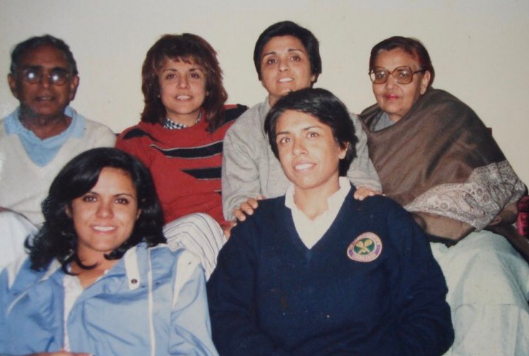
- Born: 9 June 1949 in Amritsar, Punjab
- Parents: Prakash Lal Peshawaria (father) and Prem Lata (mother)
- Sisters: Kiran is the second of four daughters
💪 Progressive & Supportive Parents:
- Kiran’s parents were unusually progressive for their time, especially in a conservative Indian society that often prioritized sons.
- Her father left a secure job in the textile industry to support his daughters’ education and ambitions.
- Instead of restricting their daughters to traditional roles, they empowered them to dream big.
🎾 Focus on Discipline & Sports:
- Her father enrolled her in tennis coaching at an early age, despite social criticism.
- Kiran went on to become national tennis champion, winning the Asian Lawn Tennis Championship.
- Her mother emphasized moral values and self-respect, ensuring the girls were emotionally strong and independent.
🎓 Education:
- Her parents insisted on a strong academic foundation:
- BA in English from Government College for Women, Amritsar
- MA in Political Science from Punjab University, Chandigarh
- LLB from Faculty of Law, Delhi University
- PhD in Social Sciences from IIT Delhi
🕊️ Summary:
Kiran Bedi’s upbringing was a fusion of love, discipline, and forward-thinking parenting. Her parents gave her freedom, confidence, and the courage to challenge gender roles, which became the foundation of her life as India’s first woman IPS officer and a relentless reformer.
Their belief:
👉 “Betiyaan bojh nahi, roshni hoti hain.” (Daughters are not burdens, they are the light.)
Trailblazing Journey as the First Woman IPS Officer
In 1972, Kiran Bedi became the first woman to join the Indian Police Service. This wasn’t just a personal milestone; it was a historic leap for Indian women. But the journey was far from smooth.
During her early IPS training, many male officers ridiculed her, telling her women were “too emotional” for the job. Yet she persisted, outperforming most of them in physical and mental evaluations.
When a senior once said, “You’re too pretty for this job,” she retorted, “Justice doesn’t care for lipstick or biceps. It listens to courage.”
Her calm defiance and dignified confidence became her hallmark.
The Iconic Traffic Cop Who Towed the PM’s Car
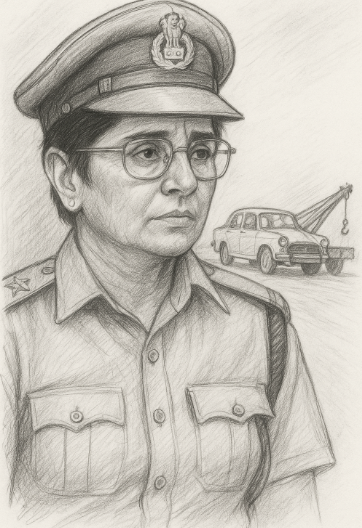
In 1982, as DCP (Traffic) of Delhi, Bedi made headlines by towing away the illegally parked car of then Prime Minister Indira Gandhi. The bold move earned her both admiration and criticism.
What the public didn’t see was the price she paid behind the scenes. That night, her home was stoned, and her family received threats. Yet she stood her ground and refused police protection.
“If I can’t walk the street alone, I don’t deserve to wear this uniform.”
Her unwavering commitment to the rule of law inspired many young women to consider careers in civil services.
Tihar Jail Reforms: Healing Behind Bars
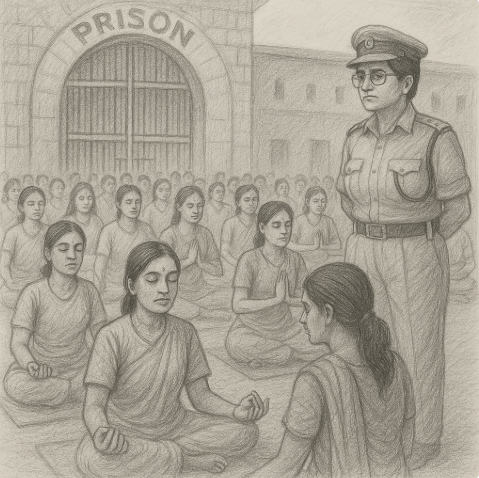
Perhaps her most celebrated achievement was her tenure as Inspector General of Tihar Jail, one of Asia’s largest prisons. Instead of punishment, she introduced reformative justice.
Under her leadership, Tihar saw:
- Introduction of education and meditation programs
- Vocational training for inmates
- Special focus on female inmates and their children
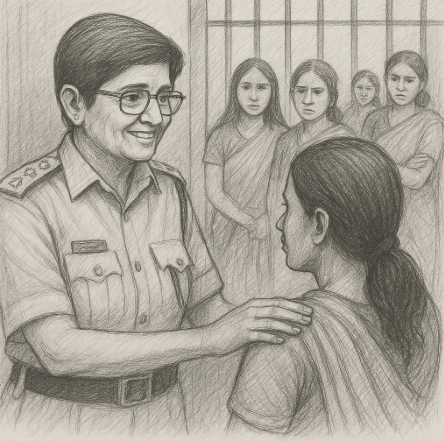
One emotional story stands out: A young mother, arrested for theft, was on the verge of suicide. Kiran Bedi held her hand for hours, offering no solution, just presence. That woman went on to become a counselor for fellow inmates.
“She gave me my name back. Not a number, not a prisoner — but Meera.”
Tihar Jail is located in New Delhi, India, specifically in the Tihar Village area of West Delhi. It is the largest prison complex in South Asia and is officially known as Tihar Central Jail.
Navjyoti India Foundation: Empowering Women and Children
In 1987, she co-founded the Navjyoti India Foundation, focused on education, drug rehabilitation, and women’s empowerment. Through this platform, she:
- Educated girls in slums
- Offered vocational training to women
- Rehabilitated street children
A young girl who once walked 10 km to attend classes was offered a bicycle and solar lamp by Bedi herself. That girl now works as a teacher, mentoring dozens like her.
“She reminded me of the girl I used to be — hungry to learn, afraid of nothing.”
Emotional, Bold, Untold Stories
1. The Slap That Made a Leader
As a teen, Kiran once saw a boy harassing a girl. With no adult stepping in, she slapped him in public. That was her first taste of justice. A spark had been lit.
2. The Girl Who Slept in Her Home
On a stormy night, a 12-year-old girl from Navjyoti had no shelter. Bedi took her home, gave her food and dry clothes. The next day, she made arrangements for her future quietly.
3. Facing Misogyny with Grace
Mocked during IPS training, Bedi responded with silent excellence. She topped her batch in several areas, letting her work speak louder than prejudice.
Challenges and Controversies
Despite her brilliance, Bedi often faced institutional resistance. Her strict discipline ruffled feathers, and she was sometimes sidelined for key positions. But not once did she let bitterness enter her soul.
“My duty is to serve. Whether or not the system rewards me is its karma, not mine.”
Post-Retirement: A New Phase of Empowerment
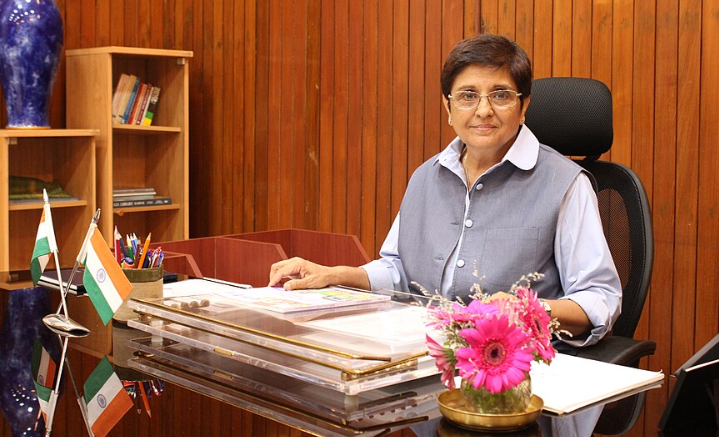
The Spirit of Compassion and Empowerment
What makes Kiran Bedi exceptional is not just her courage but her compassion. She empowered women not just through words but through action, mentorship, and systems that helped others rise.
She often said:
“I don’t believe in empowering women just by giving speeches. I believe in creating roads, giving lights, ensuring toilets, and teaching them to speak up.”
Call to Action: Rise Like Kiran
To every girl who’s told “you can’t,” to every woman afraid to speak up, let Kiran Bedi’s life be your answer. Dare to lead, dare to rise, dare to change.
Be bold like Bedi. Be kind like Bedi. Be unshakeable like Bedi.
Empower one woman, and you empower generations.
Personal Life
Kiran Bedi is 75 years old (born June 9, 1949), married to Brij Bedi (late), and has one daughter named Saina Bedi.
After retiring, Bedi turned to activism and politics. She joined Anna Hazare’s anti-corruption movement and later became the Lieutenant Governor of Puducherry. Even in politics, her focus remained clear: education, safety, and justice for women.
Kiran Bedi’s late husband, Brij Bedi, was a social activist known for his work in Amritsar, especially in education and drug rehabilitation. Their daughter, Saina Bedi, is a professional artist and photographer, leading a creative life away from public and political spheres. Despite Kiran Bedi’s high-profile career, both Brij and Saina maintained low-key lives rooted in service and art.
Kiran Bedi has openly acknowledged that she prioritized her duty and service to the nation above her personal and family life at times.
In several interviews and writings, she admitted that:
- Her demanding career, especially as an IPS officer and later as Director General of Tihar Jail and Lieutenant Governor of Puducherry, often took precedence over family time.
- Her husband, Brij Bedi, once said publicly that they led largely separate lives, though they shared mutual respect for each other’s work.
- Her daughter, Saina, was largely raised by Brij and his extended family, especially when Kiran was posted in demanding roles.
Despite the personal cost, Kiran Bedi always maintained that her sense of purpose and discipline came from a deep-rooted commitment to public service. She has said that if she had to choose again, she would still serve the nation first — a choice that defined her legacy as India’s first woman IPS officer and a fearless reformer.
It was a sacrifice, but one she made consciously — and with conviction.
Conclusion
Kiran Bedi’s life is a living testament to courage with compassion. She didn’t just wear the uniform — she honored it with integrity, fire, and love. Her legacy lives on in every girl she mentored, every system she changed, and every life she touched.
Let her story stir something in you. The fight for justice and dignity doesn’t need a badge. It needs a burning heart and a fearless soul.
Read our inspiring stories on women empowerment here.