Retrospect ESG in India 2025: An Independent Director’s Lens on Progress, Exposure, and the Road to 2026

ESG India 2025

Table of Contents


ESG India 2025 — A Year That Began With Confidence

At the beginning of 2025, ESG in India felt quietly optimistic.

There was a growing belief that the foundations were finally in place. Sustainability had moved beyond slogans and speeches. Board agendas carried ESG as a standing item. BRSR disclosures brought structure and comparability. Climate targets, social commitments, and governance frameworks appeared more disciplined than ever before.

In newspapers and business forums, ESG was largely reported as a success story. Indian corporates were portrayed as maturing — learning from past missteps and aligning with global expectations. Water stewardship, renewable energy, electric mobility, diversity goals — these were no longer peripheral ideas. They had entered the mainstream.

The narrative was reassuring. ESG had arrived.

Yet, as the year unfolded, that confidence was quietly tested.

Not through one dramatic collapse — but through a series of small, human, and operational moments that rarely dominate headlines. A workforce reduction described as restructuring. A supplier incident framed as operational disruption. A community concern deferred. A climate ambition stated without a visible transition pathway.

Individually, these moments appeared manageable. Collectively, they told a different story.

By the end of 2025, ESG in India no longer felt like a destination reached. It felt like a system under strain.

What changed was not intent — but pressure. Pressure from regulators asking sharper questions. Pressure from investors connecting disclosures with decisions. Pressure from employees and communities expecting consistency between values and behaviour.

2025 did not end with the failure of ESG.
It ended with a warning.

A warning that ESG cannot live only in reports.
A warning that governance determines whether sustainability survives stress.
A warning that trust, once tested, demands proof — not persuasion.

And yet, there is reason for hope.

Because 2025 clarified what truly matters. It revealed that ESG works when embedded in decisions, not narratives. It showed that accountability strengthens credibility. It reminded boards that sustainability is measured not by ambition — but by behaviour when choices are difficult.

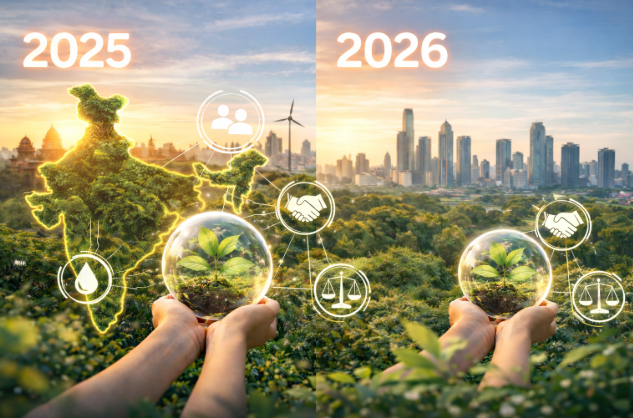
As India steps into 2026, ESG stands at a crossroads. One path leads back to comfort and optics. The other leads forward — toward discipline, honesty, and resilience.


1. 2025: When ESG Moved From Narrative to Governance Reality

As 2025 progressed, ESG stopped behaving like a reporting exercise and began asserting itself as a governance issue.

With SEBI’s Business Responsibility and Sustainability Reporting (BRSR) framework firmly in force, ESG disclosures now required:

  • Formal board approval
  • Cross-functional data ownership
  • Explicit accountability for accuracy

From an Independent Director lens, the implication was unambiguous:

Once ESG disclosures are approved by the board, ESG risk becomes a fiduciary responsibility — not a sustainability team activity.

2025 did not simplify ESG.
It removed plausible deniability.


2. Environmental ESG: Where India Demonstrated Real Progress

2.1 ITC: Water Stewardship as Risk Management

ITC continued to be cited in public disclosures for its long-term leadership in water stewardship.

Initiatives publicly reported included:

  • Large-scale watershed development
  • Rainwater harvesting across manufacturing sites
  • Integration of water security into agricultural supply chains

The governance lesson was clear: environmental leadership gains credibility when it protects business continuity, not just reputation.


2.2 Tata Group & Tata Motors: Climate Action Backed by Capital

Across Tata Group companies, climate ambition in 2025 was increasingly visible through investment decisions.

  • Tata Power expanded renewable capacity.
  • Tata Steel disclosed transition risks while piloting decarbonisation pathways.
  • Tata Motors strengthened its EV roadmap, directly linking sustainability with future mobility and competitiveness.

Capital followed intent — and markets noticed.


2.3 Mahindra & Mahindra: EV Innovation as Strategic ESG

Mahindra & Mahindra (M&M) emerged as a strong example of ESG aligned with innovation.

Public announcements highlighted:

  • Expansion of electric vehicle portfolios
  • Investments in dedicated EV platforms
  • Positioning sustainability as a growth opportunity rather than a compliance cost

This reinforced a central ESG truth: sustainability delivers value when embedded in core strategy.


2.4 Infosys: Carbon Neutrality With Disclosure Discipline

Infosys continued to receive attention for its progress toward carbon neutrality.

Public disclosures reflected:

  • High renewable energy adoption
  • Energy efficiency initiatives
  • Transparent acknowledgement of Scope 3 limitations

Credibility was built through honesty, not perfection.


3. Environmental ESG: Where Gaps Became Visible

3.1 Heavy Industry and the Scope 3 Constraint

Industrial groups such as JSW demonstrated progress on emissions efficiency and renewable sourcing.

Yet public disclosures and analyst commentary continued to highlight:

  • Supplier readiness gaps
  • Inconsistent Scope 3 data
  • Limited influence beyond direct operations

2025 reinforced a structural constraint:

Climate strategies limited to owned assets remain incomplete.


3.2 Net-Zero Without Transition Pathways

Across sectors, net-zero commitments often lacked:

  • Interim milestones
  • Clear capex linkage
  • Operational accountability

By year-end, public scrutiny increasingly questioned ambition without execution.


4. Social ESG: Layoffs, Labour, and Livelihoods

If environmental ESG was tested by capital allocation, Social ESG in 2025 was tested by people decisions.

4.1 Layoffs: The Defining Social ESG Moment of 2025

Across IT, startups, and new-age companies, layoffs emerged as the most visible ESG stress test of the year.

Public disclosures and media reports revealed:

  • Workforce reductions framed as efficiency or restructuring
  • Limited transparency on decision criteria
  • Inconsistent transition support for affected employees

From a governance lens, uncomfortable questions emerged:

  • Were social impacts debated at board level?
  • Were reskilling or redeployment meaningfully explored?
  • Did workforce decisions align with stated ESG values?

2025 showed that how layoffs are executed matters as much as why they occur.


4.2 Supply Chains and the Vedanta-Type Reality

In extractive and heavy industries — illustrated by Vedanta-type ecosystems — social risks continued to originate in contractor and supplier networks.

Public reporting highlighted:

  • Worker safety incidents
  • Contract labour vulnerabilities
  • Community trust deficits

A recurring lesson emerged:

Most social ESG failures occur where oversight is weakest — beyond direct payrolls.


4.3 Services Sector: Inclusion Beyond Numbers

In IT and services companies, gender diversity metrics improved.

However, public signals — attrition data, employee sentiment, and media reporting — pointed to unresolved challenges:

  • Burnout
  • Middle-management inclusion gaps
  • Psychological safety concerns

Representation improved.
Inclusion maturity remained uneven.


5. Governance (G): Progress With Persistent Weaknesses

5.1 BRSR as a Structural Governance Win

BRSR fundamentally changed ESG oversight by enforcing:

  • Formal ownership
  • Board accountability
  • Disclosure discipline

ESG could no longer be treated as optional.


5.2 ESG Data Quality: The Silent Governance Risk

At the same time, 2025 exposed weaknesses:

  • Manual data collection
  • Weak internal controls
  • Inconsistent definitions

Boards increasingly faced discomfort signing off ESG disclosures without financial-grade assurance.


5.3 The Expanding Role of Independent Directors

Public scrutiny reshaped expectations from independent directors:

  • Passive endorsement is no longer acceptable
  • Inquiry and escalation are expected
  • Silence increasingly carries reputational risk

Independence without engagement proved insufficient.


6. How ESG Looked at the End of 2025

By December 2025, ESG no longer felt reassuring.

Headlines shifted from commitments to consequences.

Layoffs questioned social credibility.
Supply-chain incidents unsettled investors.
Environmental claims faced sharper interrogation.
Boards recognised that ESG disclosures carried fiduciary exposure.

What changed was not policy — but pressure.

ESG did not fail in 2025.
It was exposed.


ESG Performance Across Indian Sectors in 2025: What Held, What Cracked, What Must Change

By the end of 2025, it became evident that ESG performance in India did not move uniformly. Each sector revealed a different relationship with environmental limits, social responsibility, and governance discipline.

From an Independent Director lens, ESG in 2025 looked less like a single journey—and more like many parallel stress tests.


1. Energy & Power: Strong Momentum, Uneven Transition

What went well

  • Rapid expansion of renewable capacity (solar, wind, hybrid)
  • Greater disclosure on transition risks and stranded assets
  • Improved alignment between climate goals and capital allocation

Visible examples

  • Tata Power’s renewable expansion
  • Adani Green’s scale-driven clean energy push
  • NTPC’s gradual but visible transition narrative

What struggled

  • Coal dependence remained high
  • Just transition planning for workers and communities was weak
  • Grid stability and storage lagged ambition

ID lens takeaway

India’s energy transition progressed—but governance around social transition lagged behind environmental ambition.


2. Metals, Mining & Cement: Environmental Progress, Social Fragility

What went well

  • Energy efficiency improvements
  • Increased renewable sourcing
  • Better emissions monitoring and disclosure

Visible examples

  • JSW Steel’s efficiency measures
  • Tata Steel’s decarbonisation pilots
  • Cement majors investing in blended cement and waste heat recovery

What failed

  • Contractor safety incidents
  • Community trust deficits
  • Labour and rehabilitation challenges (Vedanta-type situations)

ID lens takeaway

In heavy industry, ESG failure in 2025 was rarely environmental—it was social and governance-related.


3. Automobiles & EV Ecosystem: ESG as Growth Strategy

What went well

  • EV adoption accelerated
  • Sustainability aligned with product innovation
  • Cleaner mobility positioned as future competitiveness

Visible examples

  • Tata Motors’ EV leadership
  • Mahindra & Mahindra’s EV platform investments
  • Maruti Suzuki’s gradual shift narrative

What needs improvement

  • Battery sourcing transparency
  • End-of-life recycling infrastructure
  • Supplier ESG readiness

ID lens takeaway

ESG worked best where sustainability directly shaped future revenue.


4. FMCG & Consumer Goods: Social Strength, Supply-Chain Risk

What went well

  • Strong water stewardship
  • Farmer engagement programs
  • Packaging innovation

Visible examples

  • ITC’s water positivity
  • Hindustan Unilever’s supplier programs
  • Nestlé India’s rural sourcing focus

What struggled

  • Traceability beyond Tier-1 suppliers
  • Contract labour vulnerabilities
  • Plastic waste management at scale

ID lens takeaway

FMCG ESG credibility depends less on factories—and more on thousands of invisible suppliers.


5. IT & Technology: Environmental Leadership, Social Stress

What went well

  • Carbon neutrality progress
  • Renewable energy adoption
  • Transparent ESG reporting

Visible examples

  • Infosys’ carbon-neutral disclosures
  • TCS and Wipro’s renewable sourcing

What cracked in 2025

  • Layoffs and workforce rationalisation
  • Burnout and attrition
  • Inconsistent handling of employee exits

ID lens takeaway

In services, ESG credibility is judged not by emissions—but by how people are treated in downturns.


6. BFSI (Banking, Financial Services & Insurance): Governance Strength, Climate Lag

What went well

  • Strong governance frameworks
  • Improved ESG disclosures
  • Risk management maturity

Visible examples

  • Leading private banks strengthening ESG risk committees
  • Increased green financing disclosures

What needs improvement

  • Climate risk integration into credit decisions
  • Exposure to high-carbon assets
  • Social impact of loan recovery practices

ID lens takeaway

Financial institutions shape ESG outcomes indirectly—and must own that influence more explicitly.


7. Infrastructure & Real Estate: Environmental Risk, Governance Scrutiny

What went well

  • Green building certifications
  • Energy efficiency measures
  • Smart infrastructure planning

What failed

  • Land acquisition disputes
  • Worker safety lapses
  • Community engagement gaps

ID lens takeaway

ESG in infrastructure fails when speed overtakes consent.


8. Pharmaceuticals & Healthcare: Social Purpose, Environmental Blind Spots

What went well

  • Access to affordable medicines
  • Ethical positioning
  • Strong compliance culture

What needs attention

  • Effluent treatment
  • Water usage
  • Supply-chain environmental impact

ID lens takeaway

Healthcare ESG credibility is incomplete without environmental responsibility.


9. Startups & New-Age Companies: Intent Without Infrastructure

What went well

  • Strong purpose-driven narratives
  • Inclusion and innovation focus

What collapsed

  • Layoffs without social buffers
  • Weak governance
  • Limited ESG systems

ID lens takeaway

ESG maturity cannot be postponed until scale—it must grow with the business.


Cross-Sector Pattern from 2025

Across all sectors, ESG performance in 2025 revealed a consistent pattern:

  • Environmental goals advanced fastest where capital followed intent
  • Social ESG cracked first under cost pressure
  • Governance determined whether ESG survived scrutiny

Policies were common.
Execution was uneven.
Accountability made the difference.


Why This Matters for 2026

As India enters 2026, ESG maturity will no longer be judged sector by sector—but decision by decision.

The question will not be:

“Does this sector perform well on ESG?”

It will be:

“Does this board act responsibly when trade-offs are unavoidable?”

That answer will define the next phase of ESG in India.


7. Hope, Warning, and the Road to 2026

Despite the discomfort of 2025, there is genuine reason for optimism.

Boards now recognise ESG as a governance issue.
Management understands that ESG leaves evidence.
Investors increasingly reward substance over storytelling.

If 2025 exposed cracks, 2026 offers the opportunity to reinforce the foundation.

Not with louder commitments — but stronger systems.
Not with perfect narratives — but honest disclosures.
Not with fear — but accountability.

The warning is clear: ESG credibility will not survive comfort.

The hope is stronger: ESG integrity can still be rebuilt through discipline and courage.


Call to Action for 2026

For Boards & Independent Directors
Ask harder questions. Demand evidence. Treat ESG risk like financial risk.

For Management
Embed ESG into capital allocation, workforce decisions, and supply-chain governance.

For Investors
Reward transparency. Interrogate execution. Use capital responsibly.

For ESG Professionals
Choose integrity over optics. Build systems that withstand scrutiny. Speak up.


Conclusion: What 2026 Will Remember

ESG is not about image.
It is about impact.

It is revealed when growth slows, costs rise, and decisions hurt.

2025 showed how ESG behaves under pressure.

2026 will decide whether lessons were learned.

Because ESG’s future in India will not be written in reports.

It will be written in choices — made quietly, and judged publicly.

Read more blogs on sustainability here.


📌 Regulatory & Policy Context

  • SEBI reviewing ESG disclosure requirements for listed firms — shows evolving regulatory scrutiny and capacity challenges in reporting. Reuters
  • SEBI’s BRSR (Business Responsibility & Sustainability Reporting) has become mainstream reporting for top Indian companies (documented in various BRSR reports & manuals). ICSI

📊 Corporate ESG Actions & Performance

Automobile & Mobility Sector

  • Tata Motors partners with TCS for digital ESG reporting and sustainability tracking, embedding real-time data and compliance with SEBI’s BRSR. Tataworld+1
  • Tata Motors’ formal BRSR demonstrates environmental efforts including effluent processing and water recycling. Tata Motors

Brand & Sustainability Perceptions

  • Tata Group leads Indian brands in sustainability perception value, highlighting strong ESG positioning among Indian corporates. Brand Finance

IT & Technology Sector

  • Infosys outlines an updated ESG Vision 2030, including ongoing carbon neutrality and broader social/employment commitments. infosys.com

Manufacturing & Industrial Sector Recognition

  • Business Today “Most Sustainable Companies 2025” lists firms such as JSW Steel/JSW Energy, Mahindra & Mahindra, Hindustan Unilever, Godrej Properties for sustainability performance. Business Today

Climate & Energy Transition Initiatives

  • Indian corporates (e.g., L&T, Vedanta, RPG Group) expand sustainability programmes covering emissions, water, biodiversity and climate resilience. esgbroadcast.com

Trend & Commentary on ESG Reporting in India

  • Articles highlight that Indian companies are accelerating ESG initiatives as climate risks grow, but also face challenges in reporting quality and supplier data. esgbroadcast.com
  • Tech and automation (AI, blockchain, automation) are being explored to improve ESG data management and reporting quality in India. Times of India
  • Analyses suggest net-zero and Scope 3 reporting gaps remain in many Indian corporate disclosures — a reality check on the pace of transition. The Indian Express


The ESG Illusion: 3 Hard Lessons from GreenGlow’s Boardroom Wake-Up Call

ESG Illusion: Boardroom Story

ESG Illusion: A Company That Believed It Was Doing Everything Right

GreenGlow Energy had become a name synonymous with sustainability in India.

Listed on the NSE, operating across solar and wind assets, and frequently quoted in media as a “model renewable energy company”, GreenGlow’s leadership genuinely believed they were ahead of the curve. Their sustainability reports were polished, visual, and optimistic. Each year, they won awards. Each year, their ESG section grew thicker, glossier, more confident.

Inside the organisation, ESG was a source of pride.

Inside the boardroom, ESG was considered “handled.”

Until it wasn’t.


The London Roadshow: When Applause Turned into Silence

The investor roadshow in London was meant to be routine. Meetings with global funds, climate-focused investors, and ESG-themed portfolios were expected to reinforce GreenGlow’s premium positioning.

The presentation went smoothly—until the questions began.

One analyst flipped through the sustainability report slowly before looking up.

“You report under GRI. Can you also show us your SASB metrics—particularly how climate risks affect asset profitability?”

Another followed.

“Your report highlights 70% renewable energy usage. But there is no disclosure on Scope 3 emissions. Why?”

A third question cut deeper.

“MSCI rates you AA. Sustainalytics categorises you as High Risk due to governance concerns. Which rating reflects reality?”

The room grew quiet.

There was no hostility. No accusation.

Just a pause that felt uncomfortably long.

For the first time, GreenGlow’s leadership sensed something unsettling: their ESG story sounded strong—but did not feel investable.


The Emergency Board Meeting: Where ESG Became a Strategic Issue

Back in India, the board convened earlier than scheduled.

Some directors felt the investors were being unreasonable.

“We already report under GRI,” one executive argued. “It’s globally recognised. We win awards. Why complicate things?”

Others were uneasy.

The Independent Director, entrusted with protecting long-term shareholder interests, listened carefully. What was unfolding was not a reporting debate—it was a trust dilemma.

And the Independent Director framed it clearly for the board:

“This is not a debate about frameworks. This is a debate about credibility, capital, and regulatory readiness.”

The board was asked to step back—and look at the bigger picture.


Question 1: GRI or ISSB? The False Choice Boards Keep Making

Why GRI Felt Safe

GreenGlow’s comfort with GRI was understandable.

GRI had allowed the company to:

  • Showcase community impact
  • Highlight renewable achievements
  • Tell a compelling sustainability journey

GRI answers one powerful question:

How does the company impact the economy, society, and environment?

For stakeholders, NGOs, employees, and policymakers, this mattered deeply.

But the Independent Director reminded the board of an uncomfortable truth:

“Capital markets do not invest in intentions. They invest in risk-adjusted future cash flows.”

GRI, by design, is impact-focused, not financial-risk-focused.


Why Global Investors Were Asking for SASB, TCFD, and ISSB

The London investors were not rejecting sustainability. They were demanding decision-useful ESG information.

  • SASB answers: Which ESG issues financially matter for this specific industry?
  • TCFD answers: How does climate risk alter strategy, asset values, and resilience?
  • ISSB integrates ESG into the language investors already trust—financial reporting.

The Independent Director explained it plainly:

“GRI explains values. ISSB explains valuation.”

ISSB does not replace sustainability—it disciplines it.


The Regulatory Reality: Why BRSR Changes Everything

At this point, the board realised something critical had been missing from the discussion.

SEBI’s BRSR Core.

From the next financial year:

  • ESG disclosures would be mandatory
  • Key metrics would require assurance
  • Boards would be held accountable for accuracy

BRSR is not merely an Indian compliance document.

It quietly pushes companies toward:

  • Standardised metrics
  • Governance accountability
  • Financial materiality

In spirit, BRSR aligns far more with ISSB discipline than with pure GRI storytelling.

The Independent Director issued a clear warning:

“If we delay ISSB alignment, BRSR compliance will become a last-minute firefight—with reputational and regulatory risk.”


The Strategic Conclusion

The board was guided to a mature, non-binary decision:

  • GRI remains for stakeholder communication
  • ISSB becomes the backbone for investor, regulator, and lender trust

GRI would tell the story. ISSB would protect the balance sheet.


Question 2: The Credibility Gap Between Glossy Reports and Investor Reality

The board then confronted a harder question:

Why didn’t investors believe what they read?

The Independent Director identified three deep cracks beneath the surface.


1. Scope 3 Emissions: The Risk That Wasn’t Named

GreenGlow proudly disclosed Scope 1 and 2 emissions.

But Scope 3—supplier emissions, lifecycle impacts, logistics—accounted for 65% of its carbon footprint.

And it was missing.

The Independent Director explained the investor mindset:

“When a material risk is absent, analysts assume it is unmanaged—not immaterial.”

Best practice was not perfection.

Best practice was:

  • Screening-level estimates
  • Transparent assumptions
  • Clear boundaries

Silence, the board realised, was the most damaging disclosure of all.


2. Governance: ESG Without Ownership Is Theatre

ESG responsibility at GreenGlow sat across teams:

  • Sustainability prepared reports
  • Operations owned data
  • Risk teams stayed peripheral

No single board committee owned ESG risk.

The Independent Director was firm:

“If ESG is not owned at board level, it is not believed by the market.”

The recommendation:

  • A dedicated Board ESG & Risk Committee
  • ESG integrated into Enterprise Risk Management (ERM)
  • Climate and governance risks reviewed quarterly

This transformed ESG from narrative to oversight.


3. Assurance: The Difference Between Claims and Evidence

GreenGlow’s data was internally reviewed—but not independently assured.

Investors noticed.

The Independent Director reminded the board:

“In capital markets, unaudited ESG data is treated like unaudited financials—interesting, but not trusted.”

With BRSR Core mandating assurance, the path was clear:

  • Start with limited assurance
  • Move toward reasonable assurance
  • Align ESG controls with financial controls

Trust, the board learned, is built through verification—not vocabulary.


Question 3: ‘ESG Ratings Don’t Matter’—A Dangerous Illusion

One executive still resisted.

“Different ESG ratings don’t matter,” the argument went. “Investors choose whichever they prefer.”

The Independent Director countered—not with theory, but with reality.


How Ratings Shape Capital Access

Many global funds use ESG ratings as entry filters:

  • Minimum MSCI ratings
  • Maximum Sustainalytics risk thresholds

A “High Risk” label does not invite debate.

It quietly excludes the company.

“You don’t get rejected,” the board was told. “You simply stop being considered.”


The Reputation Multiplier Effect

Divergent ratings signal inconsistency:

  • Strong narrative
  • Weak systems
  • Governance blind spots

The market has seen this before:

  • Tesla’s governance discounts
  • Adani’s trust collapse post-Hindenburg

The lesson was stark:

“Markets punish uncertainty more aggressively than poor performance.”


Management Bandwidth Drain

Rating divergence triggers:

  • Endless clarifications
  • Deep-dive due diligence
  • Defensive investor calls

Instead of discussing growth, management explains gaps.

ESG stops being strategic—and becomes reactive.


The Board’s Realisation: ESG Is Now a Capital Discipline

By the end of the meeting, something fundamental had shifted.

ESG was no longer seen as:

  • A report
  • A ranking
  • A reputation exercise

It was recognised as:

  • A risk lens
  • A capital gatekeeper
  • A board accountability issue

The Independent Director summarised it simply:

“Sustainability earns applause. Credibility earns capital.”


The Choice That Defined GreenGlow’s Future

GreenGlow did not abandon GRI.

But it stopped hiding behind it.

ISSB alignment began—not overnight, but deliberately.

Scope 3 was disclosed—with caveats and courage.

BRSR Core was treated not as compliance, but as preparation.

And ESG finally moved from the design studio to the boardroom.


Final Message to Boards and CEOs

If your ESG report looks impressive but triggers uncomfortable investor questions, the problem is not communication.

It is governance.

In today’s markets:

  • Stories attract attention
  • Frameworks create comparability
  • Systems build trust

And trust—once lost—is always more expensive than transparency.

Read more blogs on sustainability here.

Reference:
IFRS Foundation – ISSB and Global ESG Reporting
https://www.ifrs.org/groups/international-sustainability-standards-board/

🚘 When Growth Meets Accountability: The ESG Turning Point at DriverU

Bold ESG Strategies - Gig Economy

How Independent Directors Helped a Gig-Economy Unicorn Prepare for an IPO Without Losing Its Soul


In early 2024, DriverU Mobility Services Ltd.—India’s fastest-growing on-demand driver platform—was a darling of the gig economy.

With ₹850 crore in FY23 revenue, 45,000 gig drivers, and 18-city operations, the company was sprinting toward an IPO planned just 18 months away.

But beneath its explosive 180% YoY growth, DriverU was sitting on a silent landmine:

It had zero ESG systems, zero sustainability reporting, and zero data for 98% of its workforce—because those 45,000 people were not “employees,” but gig workers.

And with investor pressure increasing, the company was about to learn that high growth does not protect anyone from ESG expectations.


Chapter 1: The Wake-Up Call in the Boardroom

The quarterly board meeting began with a sentence that froze the room.

“As a post-IPO top 1,000 listed company, you must publish full BRSR Core with assurance on Day 1,”
announced Priya Deshpande, the independent director with 20+ years in sustainability.

CEO Raghav Jain was stunned.

“But we have no employees—only contractors! And we don’t even know what vehicles they drive. How do we report Scope 3?”

Priya leaned forward.

“That’s exactly why this is an existential risk. Gig economy companies don’t fit neatly into BRSR—but investors won’t accept that excuse.”

The board began evaluating the three strategic ESG approaches prepared by management.


Chapter 2: Three Paths — and One Realistic Future

Approach A — Compliance Minimum

Only report office emissions, tech team metrics, and exclude gig workers completely.

Priya shook her head.

“This will fail institutional investor expectations. PE investors already need ESG for exits. And regulators will not accept invisibilising 45,000 workers.”

Approach B — Industry-Leading Transparency

Treat gig drivers as value chain workers, collect full welfare and emissions data.

CFO objected:
“Collecting that much data from 45,000 drivers is operationally impossible.”

Priya corrected him:

“No—it requires system redesign. Not impossible. Just uncomfortable.”

Approach C — Integrated GRI + BRSR

Use BRSR for compliance but integrate GRI topics to tell the full stakeholder story.

This was closest to reality.

After a heated debate, Priya summarized:

“Your reporting must be ambitious enough to satisfy investors, feasible enough to execute in 12 months, and transparent enough to build trust.”


✔ Adopt Approach C – Integrated GRI + BRSR,

but with selective elements of Approach B (driver welfare, emissions transparency).

A single integrated report—like ITC’s model—with:

  • BRSR as the primary structure
  • GRI disclosures cross-referenced
  • Same datasets audited once
  • Transparent Scope 3 methodology (“range-based” like Maruti)

Priya added:

“Investors care more about explanation than perfection. Don’t claim precision—show accountability.”


Implementation Roadmap (Independent Director–Led Plan)

🟦 Pre-IPO: 12-Month Preparation

1. Build an ESG Operating System

  • ESG Steering Committee created (CEO + CFO + CHRO + CTO)
  • New Board ESG Committee chaired by Priya
  • Monthly dashboard of 15 pilot metrics

2. Redesign Driver App to Collect ESG Data

  • Add fields:
    ✔ vehicle type
    ✔ fuel efficiency
    ✔ fuel used per trip
    ✔ earnings per hour
    ✔ break hours
    ✔ safety incidents
  • App auto-logs trip distance & idle time
  • Mandatory onboarding verification via RC upload

3. Establish Data Infrastructure

  • API connections similar to L&T’s ESG platform
  • Carbon accounting engine integrated like HDFC
  • Blockchain layer for income transparency
  • ML anomaly detection for driver-reported data

4. Prepare Range-Based Scope 3 Estimates

  • Estimate emissions where data unavailable (Maruti methodology)
  • Publish assumptions transparently
  • Begin pilot EV transition program

5. Begin First Assurance Preparations

  • Select assurance partner
  • Dry-run BRSR report
  • Gap analysis

🟩 Post-IPO: 12-Month Execution

1. Full BRSR Core + GRI Integrated Report

  • One report
  • One assurance
  • One dataset

2. Gig Worker Welfare Scorecard

Quarterly metrics sent to board:

  • median driver earnings/hour
  • % earning above city minimum wage
  • incident rates
  • % hours rested vs worked
  • driver satisfaction / grievance redressal time
  • women driver recruitment program

3. Scope 3 Emissions at Scale

  • 45,000-driver vehicle data integrated
  • AI-based accuracy checks
  • Sample audits with telematics partners
  • EV transition incentives added to platform ranking

4. ESG Incentives in Leadership Pay

  • 20% weighting based on:
    ✔ driver satisfaction
    ✔ grievance resolution
    ✔ safety
    ✔ emissions reduction

Priya insisted:

“Without linking compensation, ESG will remain a hobby—never a discipline.”


Chapter 3: The Data Revolution at DriverU

CTO Karan initially resisted the overhaul.

“Redesigning the app will delay our product roadmap.”

Priya countered:

“If your technology can match 45,000 drivers to 12 lakh trips a month, it can collect 10 ESG data points. This is the price of being a public company.”

The New System (Independent Director–Guided Design)

(a) Gig Worker Welfare Measurement

Collected automatically via app:

  • Verified earnings per hour
  • Real-time work hours
  • Rest periods
  • Corporate client tips & rating
  • Safety incident logs
  • Health insurance opt-in tracking

Validation:

  • Cross-checks with trip logs
  • anomaly detection for fake reporting
  • monthly sample audits

Blockchain:

  • Transparent earnings ledger
  • PE investors can verify payouts without accessing personal data

(b) Scope 3 Emissions Measurement

Data collected:

  • Vehicle type
  • year of manufacture
  • fuel efficiency
  • fuel consumed per trip
  • idle time

Model:

  • Hybrid actual + estimated model
  • City-based emission factors
  • 6-monthly vehicle verification

Output:

  • “Range-based emissions disclosures”
  • Driver-level emission dashboard to nudge EV transition

(c) Social Impact Metrics

DriverU created a Mobility Impact Score:

  • emissions saved vs personal car ownership
  • % drivers crossing living wage
  • % women drivers
  • safety enhancement improvements
  • urban congestion reduction (AI-estimated)

Priya’s message to the board:

“This is how you justify your existence to society. Not just investors.”


Chapter 4: Winning Back Stakeholders

Priya crafted a stakeholder communication strategy that changed DriverU’s public perception.


Stakeholder Engagement Plan (Independent Director–Led)

1. PE & Institutional Investors

Concern: exit readiness, comparable ESG metrics, audited data
Strategy:

  • Quarterly ESG investor deck
  • Assured BRSR + GRI integrated report
  • Transparent Scope 3 assumptions
  • Blockchain-based welfare data access

2. Gig Drivers

Concern: distrust, opaque earnings, lack of safety
Strategy:

  • Driver App “My ESG Dashboard”
  • monthly earning transparency
  • grievance turnaround target: <48 hours
  • safety hotline
  • new program: Women on Wheels (1000 female drivers in Year 1)

3. Customers

Concern: sustainability, safety, reliability
Strategy:

  • Trip-level emission comparison
  • “Choose an EV driver” filter
  • Safety score display

4. Regulators

Concern: gig worker protection, fair wages, data transparency
Strategy:

  • First-of-its-kind gig worker welfare reporting standard
  • BRSR compliance on Day 1
  • methodology published publicly

5. City Governments

Concern: congestion, pollution, ride safety
Strategy:

  • annual “Urban Mobility Impact Report”
  • driver safety certifications shared
  • emission reduction data shared with city mobility cells

Chapter 5: The Turning Point

One year later, as DriverU prepared its IPO draft, the CFO admitted:

“We thought ESG was a cost. It’s become our competitive advantage.”

PE investors praised the shift.

Regulators called DriverU a “model gig economy disclosure leader.”

And CEO Raghav finally told Priya:

“You were right. ESG didn’t slow us down—it gave us legitimacy.”


🚀 Final Message of the Story

When a company grows fast, it must decide:

Will ESG be a regulatory burden?
Or a structural backbone?

DriverU chose the latter.
And an independent director’s courage made that transformation possible.

Read more blogs here.

🔗 SEBI — Business Responsibility and Sustainability Reporting (BRSR) Regulations (May 2021)
https://www.sebi.gov.in/legal/circulars/may-2021/business-responsibility-and-sustainability-reporting-by-listed-entities_50096.html

From Chaos to Control: Solving the ESG Compliance Crisis in Supply Chain Seller Networks

ESG Compliance Crisis - E-Commerce

A Story of How One Marketplace Almost Collapsed — and How It Fought Back


ESG Compliance Crisis — When Growth Outruns Governance

For years, ShopKart, India’s fastest-growing e-commerce platform, was hailed as an unstoppable force. Venture capitalists celebrated its meteoric rise. New sellers joined in thousands every month. Customers loved the convenience, prices, and assortment. Revenue graphs pointed to the sky.

Every quarterly review was a victory lap.
Every festival season outperformed the last.
Every new city expansion looked like another step closer to IPO glory.

The internal dashboards showed a number that kept the company’s valuation soaring:

GMV — Gross Merchandise Value,

the total value of goods sold on the platform before cancellations, returns, or commissions.

ShopKart’s GMV had crossed ₹5,600 crore, signalling industry dominance and market trust.

But behind the rapid ascent lay a dangerous truth —
ShopKart’s compliance systems hadn’t grown with it.
No proper ESG controls. No systematic seller audits. No risk categorisation. No early-warning system.

Growth was accelerating faster than accountability — and a major crisis was brewing.


SECTION 1 — The Storm Arrives

ESG Compliance Crisis - Child Labour

Month 1 — A Story the Company Did Not Want to Face

An investigative nonprofit published a damning report revealing that 15% of ShopKart’s top handicraft sellers were sourcing from units employing child labour in rural clusters.

Journalists contacted the company.
Politicians tweeted.
Customers expressed shock.
Influencers demanded accountability.

ShopKart management initially responded:

“These are independent sellers. We only provide a platform.”

But the crisis had already outgrown excuses.


Month 2 — Brands Issue a Hard Ultimatum

Major global and Indian brands — accounting for 40% of ShopKart’s GMV — sent a joint communication:

“Either create a robust seller ESG compliance system within six months
or we will exit the platform.”

Comparisons were openly made with Amazon and Flipkart:

  • Amazon had already banned several risky sellers
  • Flipkart was enforcing third-party social audits
  • Both had mandatory product traceability rules for sensitive categories

ShopKart now seemed like the weakest compliance link in the industry.


Month 3 — The Carbon Reality Hits

A logistics footprint report revealed a 400% increase in carbon emissions as ShopKart aggressively expanded into tier-3 cities and remote regions.

The expansion strategy had been a commercial triumph but an environmental disaster.

The board demanded to know:

  • Why emissions weren’t being monitored
  • Why delivery routes weren’t optimised
  • Why packaging waste had no policy
  • Why emissions intensity per shipment had doubled

ShopKart had no answers — because no system existed.


Month 4 — Europe Raises the Heat

ShopKart’s growing European operations brought it under Germany’s Supply Chain Due Diligence Act (LkSG).

The shock:
Directors would now be personally liable for ESG violations anywhere in the supply chain — including seller factories in rural India.

The legal team warned:

“If a German buyer receives a product linked to child labour,
the entire European unit — and individual directors — can face penalties.”

This changed the board’s tone overnight.


Month 5 — Investors Lose Patience

ShopKart was finalising its Series D raise — ₹2,000 crore.

But investors placed a final condition:

“Implement a comprehensive ESG framework covering all 2.8 lakh sellers.
No framework, no funding.”

That threat – combined with brand pressure, regulatory heat, and reputation damage – transformed the crisis into a corporate emergency.


SECTION 2 — The Emergency Board Meeting

The boardroom that morning felt different.
The tone was sharp.
The pressure was palpable.
The stakes were existential.

The Founder argued passionately:

“We’re a platform, not a manufacturer.
How can we be responsible for what 2.8 lakh sellers do?”

But the Independent Director (ID), a seasoned governance leader known for navigating ESG minefields, responded calmly:

“In the new world, your supply chain is your brand.
Platforms are accountable for what happens in seller factories
just as much as manufacturers.”

The ID laid out the uncomfortable truth:

  • ✔ Customers blame the platform, not the seller.
  • ✔ Regulators treat platforms as responsible intermediaries.
  • ✔ Brands expect marketplace partners to mirror global ESG standards.
  • ✔ Investors see ESG risk as financial risk.
  • ✔ Europe imposes direct liability on directors.

“Scale without ESG,” the ID warned,
“is not growth — it’s unmanaged risk.”

The room fell silent.

The board finally realised the platform could no longer hide behind the “just a marketplace” argument.


SECTION 3 — The Turning Point: Birth of Project Kavach

The board empowered the Independent Director to lead a cross-functional governance overhaul called:

Project Kavach — A Shield for Sellers, Customers & the Company

The objective:

  • Build an ESG-driven seller ecosystem
  • Enable scale through automation
  • Detect risk early
  • Protect GMV and brand trust
  • Make compliance a competitive advantage

ShopKart needed a transformation, not a patchwork fix.


SECTION 4 — Understanding Seller Risk: A New Lens

The first breakthrough came when the ID redesigned the seller universe using risk-based segmentation instead of a one-size-fits-all approach.

1. Product Risk

Some categories inherently carried more ESG exposure:

High-risk:
electronics, food items, cosmetics, toys, chemicals

Medium-risk:
apparel, handicrafts, textiles

Low-risk:
stationery, books, non-sensitive categories


2. Operational Risk

Factors assessed:

  • Manufacturing location (urban / rural cluster / uncertified zone)
  • Factory safety and fire systems
  • Worker age verification
  • Wage compliance
  • Environmental practices
  • Waste disposal methods
  • Third-party certifications

3. Behavioural Risk

ShopKart’s data science team built an algorithm that analysed:

  • Complaint trends
  • Authenticity flags
  • Return spikes
  • Product rating volatility
  • Listing similarity to known counterfeit patterns

Every seller was assigned a CERS score — Composite ESG Risk Score.

Low, Medium, High, or Critical.

This changed everything.
Compliance was no longer manual guesswork — it was data-driven.


SECTION 5 — Technology Steps In: The Scalable ESG System

The ID insisted on one principle:

“Compliance must scale at the speed of growth —
humans cannot handle 15,000 new sellers every month.”

A new technology stack was created, integrating:

1. Auto-Screening at Onboarding

APIs fetched:

  • GST registration details
  • PAN & promoter identity
  • FSSAI/BIS certifications
  • MSME registrations
  • Factory address geolocation
  • Court records & sanctions lists

Within seconds, the seller’s risk picture appeared.


2. Red Flag Detection Engine

Rules were based on past fraud & safety issues:

  • Sudden sales spike
  • High return rate
  • Complaint clusters
  • Inconsistent addresses
  • Multiple accounts linked to one GST
  • Suspicious product similarity

When three or more flags triggered, the seller moved to Watchlist Mode.


3. Risk-Based Audit Prioritisation

Traditional random audits caused audit fatigue — lots of activity, little impact.

The new approach:

  • High-risk → quarterly audits
  • Medium-risk → 6-monthly audits
  • Low-risk → AI-based random sampling
  • Critical-risk → immediate site verification or suspension

Audit productivity rose by 68%, workload dropped by 41%.


4. Continuous Monitoring Dashboard

For the first time, the board saw:

  • Live ESG heatmaps
  • Brand-wise compliance risks
  • Region-wise violations
  • Child-labour risk indicators
  • Carbon footprint trends
  • Seller authenticity scores

The Independent Director now had full governance visibility.


SECTION 6 — The Toughest Debate: ₹240 Crore Investment

The technology team estimated a ₹240 crore investment to build this full system.

The CFO resisted:

“It’s too expensive. We’re already under margin pressure.”

But the ID presented a strategic business case that changed the direction of the conversation.


Why ESG Is Not a Cost — But a Competitive Moat

1. Preventing a ₹2,300 crore GMV loss

If the major brands (40% GMV) exited due to poor compliance, ShopKart would instantly lose:

  • GMV
  • Repeat customers
  • Co-branded marketing partnerships
  • Cross-category halo effect

The ₹240 crore investment protected the core business engine.


2. Customers pay for trust

Studies showed:

  • Verified products convert 23–31% higher
  • Safety and authenticity badges increase willingness to pay
  • Ethical sourcing builds loyalty

Trust became monetisable.


3. Lower long-term operational cost

  • Fraud reduction: saves ₹180 crore annually
  • Automation: reduces manual KYC workforce by 40%
  • Logistics optimisation: lowers carbon cost penalties
  • Better traceability: reduces legal exposure

ROI became clear — the system would pay for itself in 24–30 months.


4. Regulatory survival

India, EU, and US markets were tightening marketplace rules.

Non-compliance could trigger:

  • Seller bans
  • Country-level restrictions
  • Platform liability
  • Director liability

The investment ensured business continuity.


5. Global precedent proved it works

Amazon, JD.com, Zalando, and others had already demonstrated:

  • Seller verification improves customer trust
  • ESG screening reduces counterfeit risk
  • Marketplace compliance drives brand partnerships
  • ESG-aligned platforms win premium sellers

ShopKart could not afford to lag.


The board approved the ₹240 crore investment unanimously — and transformation officially began.


SECTION 7 — Operation Trust Rebuilt

Phase 1 — Rebuilding Seller Ecosystem

  • Mandatory certifications for high-risk categories
  • Geotagged factory information
  • Labour age declarations
  • Safety and fire compliance proof
  • Product traceability data

Many low-quality sellers quit.
Good-quality sellers welcomed the move.


Phase 2 — Reassuring the Brands

The ID and CEO met global and Indian brand heads.

They demonstrated:

  • Live dashboards
  • Audit trails
  • Escalation systems
  • Data-driven risk scores
  • Carbon tracking

A senior apparel brand COO remarked:

“This system is more advanced than some global marketplaces we work with.”

The exit threat quietly disappeared.


Phase 3 — Winning Back the Customer

The platform launched the Verified Seller, Verified Product badge.

The campaign highlighted:

  • Fair labour
  • Product authenticity
  • Safety standards
  • Ethical sourcing
  • Environmental responsibility

Conversions rose 23% in the first quarter.


SECTION 8 — The Results After 12 Months

MetricBeforeAfter
Customer complaints↑ 38%↓ 57%
Counterfeit cases↑ 52%↓ 81%
Brand churnExit threatZero exits
Audit findingsUnpredictable+68% relevant findings
Fraud costsHigh↓ 35%
ESG visibilityNoneReal-time dashboards
GMV growthStagnant+14% YoY

ShopKart had not only survived the crisis — it had turned it into its biggest strength.

The platform’s brand promise shifted from “fastest-growing” to:

“India’s Most Trusted Marketplace.”

And it was true.


Conclusion — What This Crisis Taught the Industry

ShopKart’s journey shows that:

**Growth without ESG is fragile.

Growth with ESG is unstoppable.**

The Independent Director’s leadership proved that governance is not about slowing down a business —
it is about protecting and accelerating it.

The marketplace that once struggled with compliance became a benchmark for responsible digital commerce.

A crisis that threatened to break the company became the catalyst that rebuilt its foundation.

Read more blogs here.

🔗 ESG Compliance and Supplier Risk Best Practices — This article explains how ESG compliance integrates environmental, social, and governance factors into supply chains, why non-compliant suppliers pose risks (reputational, operational, legal), and how technology and real-time monitoring help address those risks. ESG Compliance For Suppliers: Best Practices (fauree.com)

🔥 ESG Crises: How a Broken Supply Chain Nearly Destroyed a Giant — And How an Independent Director Helped Restore Trust

ESG Crises

An ESG Case Study for Boards, Investors & Risk Leaders

Table of Contents


ESG Crises: THE DAY THE CALL CAME

On a warm Monday morning in Mumbai, the leadership of PharmaPlus, India’s second-largest generic drug manufacturer, began their week like any other. The company was riding high: ₹4,500 crore annual revenue, exports to 72 countries, and a spotless reputation cemented over 35 years.

But at 10:18 AM, an email arrived that would shake the company’s very core.

Subject: URGENT – FDA INSPECTION FINDINGS ON METAFLOX API

Three attached documents.
One sentence in the body:

“Carcinogenic nitrosamine impurities detected. Supplier traced to PharmaPlus API source.”

The company’s world tilted.

By sunset, PharmaPlus’ share price had dropped 11%.
That was just the beginning.

What no one in the company understood yet was this:
This was not a contamination issue. This was a governance issue.
And only one person saw that clearly — the Independent Director who had joined the Board just five months earlier.


THE FIVE-WEEK MELTDOWN

The story of PharmaPlus’ supply-chain collapse unfolded like a slow, painful movie.

Week 1: The U.S. FDA Bombshell

FDA traced carcinogenic impurities to a Chinese API supplier, Qingdao BioChem, a key provider for Metaflox, PharmaPlus’ best-selling diabetes medication.

Qingdao BioChem had passed its certification audit last year.
PharmaPlus had trusted the certificate.
And now 1.8 million patients were potentially exposed.

Week 2: EMA Drops the Hammer

The European Medicines Agency (EMA) suspended import licences for 14 PharmaPlus products until supply-chain integrity was proven.

Revenue risk: ₹600 crore
Reputational risk: immeasurable.

The Board began to panic.
The CEO continued saying, “This is an isolated incident.”

Week 3: A Scandal at Home

A PharmaPlus supplier in Hyderabad, GreenMed Labs, was caught on drone video discharging untreated effluents into a stream leading to a village lake.

Local media ran with the headline:

“The Same Water That Makes Medicines Is Poisoning Us.”

Protests erupted.
The CSR head resigned.

Week 4: The Class-Action Tsunami

A U.S. law firm filed a $650 million class-action lawsuit for exposure to contaminated APIs.

Investors demanded answers.
Regulators demanded explanations.
Patients demanded justice.

Week 5: The Investor Revolt

Institutional investors holding ₹1,200 crore in shares wrote a fiery letter:

“This is not a supplier problem. This is a supply-chain governance collapse.
We demand board-level accountability.”

PharmaPlus had never seen anything like this in its history.

By this point, the company wasn’t just in trouble —
it was in free fall.


THE BOARDROOM SHOWDOWN

A storm gathered in the 16th floor boardroom overlooking the Arabian Sea. Senior leaders sat with files, numbers, excuses.

The CEO repeated his now-infamous line:

“This is isolated. Qingdao BioChem passed certifications. We cannot audit every reaction inside a factory.”

Some directors murmured agreement.

Then the Independent Director — a calm, observant man with 22 years’ experience in global pharma supply chains — cleared his throat.

He placed four photos on the table.

  1. Wastewater flowing from GreenMed Labs.
  2. The FDA impurity graph.
  3. The EMA import suspension list.
  4. A newspaper clipping showing crying villagers holding contaminated fish.

He looked around the table.

And spoke slowly:

“This is not a supplier lapse.
This is an ESG governance failure — a failure of visibility, accountability, and board oversight.”

For the first time, the Board went silent.

The Independent Director explained three brutal truths:

1. Certifications ≠ Control.

Certification is a snapshot, not a living picture.
A plant may pass on Monday and violate on Tuesday.

2. High-risk suppliers require high-risk governance.

60% of PharmaPlus’ APIs came from China — the high-risk geography with the weakest oversight — but they were audited only every 24 months.

3. The Board had no live visibility of supply-chain risk.

No monitoring dashboards.
No early warning system.
No ESG-linked controls.

It wasn’t one supplier.
It was an entire system that had cracked.

And unless the Board changed the system, PharmaPlus could collapse.

The Room Shifted. The CEO’s Face Fell.

The Independent Director then laid out immediate actions:

Emergency Board Actions:

  • Launch a forensic audit of all 190 API suppliers
  • Freeze procurement from high-risk clusters
  • Establish a Board Crisis Taskforce with daily reporting
  • Begin a transparent regulatory engagement strategy
  • Build a 60-day Supply Chain Integrity Plan for FDA restoration
  • Expand supplier audits from 35% to 100% risk-based audits
  • Create a central digital risk dashboard

The Board — shaken, humbled — approved all recommendations.

A turning point had arrived.


THE FDA ULTIMATUM — 60 DAYS TO PROVE INTEGRITY

Three days later, the U.S. FDA delivered its official letter.

PharmaPlus had 60 days to submit a comprehensive:

“Pharmaceutical Supply Chain Integrity & Traceability Plan”

Failure to comply meant:
Immediate suspension of all US exports.

This could cripple the company for years.

The Independent Director stepped in to lead the design.


BUILDING PHARMAPLUS’ NEW SUPPLY CHAIN SYSTEM

Over the next eight weeks, PharmaPlus re-engineered its global supply chain — not from operations, but from risk, ESG, and governance principles.

The Independent Director outlined a three-part framework that would redefine PharmaPlus forever.


A. Categorizing All 190 API Suppliers by Real Risk

A total of 190 suppliers were sorted not by geography
not by volume
not by comfort
but by risk categories.

Category A – High Risk (28 suppliers)

  • Critical APIs
  • High impurity potential
  • Weak environmental oversight
  • History of deviations
  • Incomplete batch traceability

Category B – Medium Risk (62 suppliers)

  • Mid-volume APIs
  • Moderate ESG maturity
  • Partial digital systems

Category C – Low Risk (100 suppliers)

  • Strong QMS
  • Good ESG records
  • Based in EU/US/Japan/India
  • Transparent and digitally compliant

This was the first time anyone in the company had seen the system this clearly.


B. Audit Frequencies — Finally, Risk-Based

The Independent Director insisted:

“Audits should be proportional to risk, not convenience.”

A new schedule was implemented:

CategoryAudit TypeFrequencyAdditional Controls
A – High RiskFull forensic ESG + GMPTwice yearly100% batch impurity profiling
B – MediumHybrid auditsEvery 18 monthsQuarterly document review
C – LowDesktop auditsEvery 2–3 yearsAnnual self-certification

Executives protested the cost.
The Independent Director replied:

“Quality is expensive.
But not as expensive as negligence.”

Silence again.
Agreement followed.


C. Technology: The New Nervous System of PharmaPlus

Under the Independent Director’s guidance, PharmaPlus deployed an entirely new wave of digital infrastructure.

1. AI-Powered Supplier Risk Dashboard

Live integrations providing:

  • FDA/EMA/WHO alerts
  • COA deviations
  • ESG violation reports
  • Wastewater data
  • Worker safety incidents
  • Batch inconsistencies

For the first time, the Board had real-time visibility.

2. Blockchain Batch Traceability

Required under new EU regulations.
Tracked API identity from raw material → reactor → batch → dispatch → final formulation.

3. IoT Environmental Monitoring

Sensors placed at Tier-1 suppliers:

  • pH
  • COD/BOD
  • VOC emissions
  • Effluent discharge metrics

Alerts were auto-escalated to QA leadership.

4. Digital Due Diligence Repository

All supplier CAPAs, audits, improvement logs, and certifications were uploaded, time-stamped, and monitored.

PharmaPlus had never been this transparent — even internally.


THE STRATEGY CROSSROAD — 3 ROADS, 1 FUTURE

At the next board meeting, the CFO presented three stark choices:


OPTION A: EXIT HIGH-RISK SUPPLIERS

Buy only from EU/US suppliers.
Cost increase: ₹240 crore annually.

Independent Director’s Analysis:

  • Looks clean, feels safe
  • But it’s punitive
  • Damages MSME suppliers
  • Creates supply concentration risk
  • Increases cost of essential medicines
  • Violates ESG principles of shared progress

Verdict: Reject.


OPTION B: Build the strongest monitoring & capability ecosystem in the industry

Investment: ₹130 crore.

Independent Director’s Analysis:

  • Sustainable
  • Future-ready for EU 2026 rules
  • Builds long-term resilience
  • Reduces recurring risk
  • Strengthens all 190 suppliers
  • Aligns with “Collaboration over Punishment” philosophy
  • Mirrors the Unilever model: lift your ecosystem.

Verdict: Adopt.


OPTION C: Acquire 2–3 critical API suppliers

Investment: ₹900 crore.

Independent Director’s Analysis:

  • Great for strategic control
  • Reduces dependency
  • But capital-heavy
  • Operational integration risks
  • Useful but incomplete

Verdict: Selective adoption (only for critical APIs).


THE INDEPENDENT DIRECTOR’S FINAL RECOMMENDATION

The Board turned to him.

He spoke with clarity:

“We cannot escape risk.
We must learn to govern it.
The future is not in rejecting suppliers but in elevating them.”

His final recommendation:

  • Adopt Option B as the core strategy
  • Supplement with Option C for 2–3 mission-critical API suppliers
  • Reject Option A completely

The Board voted.
Unanimous.

A transformation had begun.


HOW PHARMAPLUS EARNED BACK TRUST

Trust is rebuilt slowly. Carefully. Patiently.

But over the next 18 months, PharmaPlus did just that.

1. Regulators Took Notice

FDA acknowledged the strength of the Supply Chain Integrity Plan.
EMA reinstated licences after 4 months.

2. Investors Returned

The same institutional investors who wrote angry letters wrote a different one later:

“PharmaPlus is now a global benchmark for supply-chain governance.”

Share prices stabilized, then rose 17%.

3. Suppliers Became Partners

Small, MSME API vendors in India and China received:

  • ESG training
  • Emissions-control guidance
  • Quality system upgrades
  • Wastewater management support

PharmaPlus built a new ecosystem — not by firing suppliers, but by uplifting them.

4. The Company Culture Shifted

Employees understood ESG not as compliance but as identity.
Operators reported early deviations.
Quality teams enforced stricter controls.
Procurement aligned with sustainability, not price.

5. Patients Regained Confidence

When the new “TraceMyMedicine” QR system launched, patients could scan any PharmaPlus pack to see full traceability.
This transparency became a competitive advantage.


THE NEW PHARMAPLUS — STRONGER AFTER CRISIS

Two years after the meltdown, PharmaPlus had become:

  • India’s most transparent pharma supply chain
  • One of Asia’s first companies with end-to-end blockchain traceability
  • A global case study for ESG-driven risk governance
  • A trusted partner of FDA, EMA, and CDSCO
  • A brand stronger than ever before

The Chairman called it:

“The greatest crisis in our history,
and the greatest transformation we ever achieved.”

But everyone on the Board knew one truth:

It started with the courage of one Independent Director who refused to accept the word “isolated.”


FINAL REFLECTION: THE LESSON FOR THE WORLD

PharmaPlus’ story is not unique.

Across the world, pharma supply chains are cracking under:

  • weak oversight
  • fragmented suppliers
  • cost pressure
  • ESG violations
  • global regulatory demands
  • rising patient expectations

The lesson from PharmaPlus is clear:

Quality is not born in laboratories.
Quality is born in supply chains.

A company is only as ethical as its lowest-tier supplier.
A brand is only as strong as its weakest oversight mechanism.
And a Board is only as competent as its governance of risk.

PharmaPlus nearly fell apart.
But it rose again —
because someone finally asked the right questions.

Read more ESG stories here.

External Reference:
🔗 https://www.who.int/publications/i/item/9789241503250
WHO – Guidelines on Quality Risk Management in Pharmaceutical Supply Chains

🌏 When ESG Frameworks Become a Compass: Finding Clarity in the Chaos

ESG Frameworks

Table of Contents


ESG Frameworks

It was one of those late evenings in Mumbai when the monsoon taps loudly on the windows—like the sky itself reminding you that nature doesn’t wait for board approvals.

Inside the polished glass walls of Suryanet Global, an Indian multinational with operations in IT, pharma, and metals, the atmosphere was impossibly tense.

Three business heads sat in front of the CEO, looking both tired and overwhelmed.

Shalini, head of sustainability, broke the silence:

“Everyone is asking us to report something different. Investors want SASB. Regulators want BRSR. Clients ask for GRI. Europe insists on CSRD. Climate funds demand TCFD. We’re drowning.”

The CFO added nervously:

“Our teams are burning out. We keep producing reports, but I’m not sure we understand what actually matters to our business.”

And then the CEO—Vikram Sharma—asked the question that changed everything:

“Forget the noise.
Which frameworks truly matter for us—and why?”

This is the story of how one company found clarity in the storm.
A story of courage, discernment, and choosing meaning over compliance.

This is the story that every Indian company—every board, CEO, and CHRO—needs to hear.


1. The Night the CFO Found SASB—and Found His Focus

Two months earlier, Vikram had returned from an investor roadshow where a US fund manager bluntly told him:

“I don’t care about your 120-page sustainability report.
Show me the 5 things that actually impact your margins, growth, and risks.”

Vikram didn’t have an answer.
So that night, he stayed back in his office and opened the SASB website.
Within minutes, he felt something shift inside him.

Here, finally, was a framework that cut the clutter.

**SASB wasn’t asking companies to report everything.

SASB asked companies to report only what truly matters financially.**

It wasn’t philosophical.
It wasn’t moralistic.
It was surgical.

And for the first time, Vikram saw a path through the chaos.


2. SASB: The Framework That Speaks the Language of Business

Shalini explained it to the board beautifully:

“SASB speaks the language investors understand—risk, returns, margins, growth.”

SASB doesn’t dump generic ESG topics onto companies.
It carefully identifies the 3–7 ESG issues that matter most for financial performance in each industry.

The brilliance?
It’s empirical—not ideological.

It studies patterns across thousands of companies to find which ESG issues move:

✔ revenue
✔ cost of capital
✔ operational efficiency
✔ legal liabilities
✔ supply chain resilience

This meant clarity.
Precision.
Focus.

Let’s revisit the framework through Suryanet’s three sectors.


💻 For IT Services (like Suryanet’s Digital Division): SASB focuses on 5 issues

1. Data security & customer privacy

Because one breach can erase decades of trust.

2. Talent recruitment & retention

Because people are the business.

3. Competitive behavior & IP protection

Because innovation is fragile.

4. Systemic tech disruptions

Because outages can cost millions per hour.

5. Energy use in data centers

Because clients now choose vendors based on carbon footprint.

Vikram whispered to Shalini:

“This is exactly what our investors ask us about.”


💊 For Pharmaceutical Companies (like Suryanet Pharma): SASB sharpens focus

1. Product quality & safety

If drugs fail, nothing else matters.

2. Clinical trial management

Because ethics is existential.

3. Access to medicines & pricing

Because reputations are fragile.

4. Employee safety

Because labs & plants carry real hazards.

Because non-compliance destroys credibility.

The pharma CEO sighed:

“We’ve been reporting everything except the five things that could actually shut us down.”


🛠 For Steel Companies (like Suryanet Metals): SASB brings hard truths

1. Greenhouse gas emissions

Because decarbonization is not optional anymore.

2. Air quality & compliance

Because regulatory penalties can cripple operations.

3. Water & wastewater management

Because steel depends on water availability.

4. Waste & hazardous materials

Because circularity is competitive advantage.

5. Workforce health & safety

Because safety failures are reputation killers.

The head of Metals spoke quietly:

“This is finally something we can act on.”


3. The Indian Reality: When SEBI’s BRSR Becomes a Mirror

Just when the board began celebrating SASB clarity, Shalini reminded them gently:

“SASB gives us financial relevance.
But SEBI’s BRSR gives us Indian relevance.”

And that sentence hit home.

Because India is not the US or Europe.

We are a country where:

  • Communities matter.
  • Local employment matters.
  • Human rights matter.
  • Environmental compliance involves daily realities.
  • Supply chains are complex and deeply informal.

BRSR captures the soul of Indian business.
And no global framework does that.


BRSR Requires Something Rare:

Annual stakeholder engagement.
Board involvement.
Clear strategic alignment.

This wasn’t reporting.
This was corporate introspection.

**BRSR asks:

What does India expect from you?
How does your company impact the real world?**

It forces companies to reflect on:

✔ local hiring
✔ community health
✔ water usage in drought-prone regions
✔ labour practices in supply chains
✔ biodiversity around industrial areas
✔ CSR impacts
✔ employee well-being

For the first time, the board saw:

SASB shows what matters financially.
BRSR shows what matters socially.

And both were essential.


4. GRI: The Framework That Looks Into the Soul of a Company

A week later, Suryanet hosted a townhall with 2,800 employees across India.

A young engineer from Pune asked:

“We talk so much about our business goals.
When will we talk about our societal goals?”

And that day, the leadership understood what GRI truly is.

GRI is not about the company’s finances.
GRI is about its footprint on people, planet, and society.

It asks:

  • How do your decisions affect communities?
  • How do your operations affect biodiversity?
  • How do your policies affect workers, women, suppliers?
  • How do you impact the economy?
  • How do you protect vulnerable groups?

GRI forces companies to think deeply, morally, humanly.

**The result?

A 360-degree view of materiality.
A mirror that reflects all impacts.**

But yes—GRI can become overwhelming.
Lists can stretch endlessly unless leaders have discipline.

And that was the turning point.


5. The Moment the CEO Realized: “We Don’t Have to Choose One.”

Vikram called another meeting and said:

“Why are we treating frameworks like competitors?
They are not rivals.
They are tools.”

And then he laid out the idea that transformed Suryanet forever.


6. The Integrated Approach: The Map That Changed Everything

The leadership aligned on a simple but brilliant strategy:

Use the strengths of each framework instead of choosing one.

1. Use SASB for financial relevance

→ Focus on what drives profit, risk, and competitive advantage.

2. Use GRI for societal relevance

→ Understand how the company impacts people and the planet.

3. Use BRSR for Indian relevance

→ Meet SEBI rules and address local expectations.

4. Use TCFD for climate relevance

→ Integrate climate risk into strategy and capital planning.

5. Use TNFD for nature relevance

→ Understand dependencies on biodiversity, water, ecosystems.

Together, these frameworks created something powerful:

A complete, holistic, authentic understanding of what matters.

Not reporting for the sake of reporting.
Reporting that drives strategy.
Reporting that drives resilience.
Reporting that builds trust.


7. TCFD: The Day Climate Risks Became Hard Numbers

A climate consultant presented two scenarios:

  • A 2°C world
  • A 4°C world

The CFO watched in disbelief as the models revealed:

  • Raw material volatility under extreme heat
  • Rising insurance premiums
  • Disruption of chemical supply chains
  • Water scarcity risks
  • Client requirements for decarbonization

For the first time, climate change was not abstract.
It had rupee values.

TCFD became the bridge between climate science and financial planning.


TNFD: When the Steel Plant Manager Broke Down

During a site visit in Jharkhand, a steel plant manager pulled Vikram aside.

In a trembling voice, he said:

“Sir, the local river we depend on is shrinking every year.
We never included nature risk in our planning.
If this river fades, our plant will die.”

That day, TNFD stopped being a “future framework.”
It became a survival framework.

It asked:

  • What ecosystems do we depend on?
  • How vulnerable are they?
  • What risks emerge from biodiversity loss?
  • What opportunities arise from restoring nature?

TNFD became the heart of the company’s long-term resilience planning.


8. ISSB: How It Evolved — The Full Story

The International Sustainability Standards Board (ISSB) did not appear overnight.

It is the result of a 10-year global convergence journey—bringing together many fragmented ESG frameworks into one global baseline for sustainability disclosures.

Below is the simplest and most accurate evolution timeline.


Step 1: The Origins — Three Major Frameworks Start the Movement

1. SASB (2011) — Industry-specific metrics

  • Established in the U.S.
  • Focused on financially material ESG issues by industry.
  • Created 77 industry standards.
  • Used widely by investors (especially in U.S. capital markets).

2. TCFD (2015) — Climate risk reporting

  • Created by the Financial Stability Board (FSB).
  • Focused on:
    • Climate risks & opportunities
    • Scenario analysis
    • Governance
    • Strategy
    • Metrics & targets
  • Became the global benchmark for climate disclosures.

3. Integrated Reporting Framework (IR) (2013)

  • From the International Integrated Reporting Council (IIRC).
  • Emphasized connected reporting: how strategy, governance, and performance create long-term value.

These three set the foundation.


Step 2: The Big Consolidation (2020–2022)

By 2020, companies complained that sustainability reporting was confusing and fragmented.

So the major players started merging:

A. SASB + IIRC → VRF (Value Reporting Foundation)

(2021)

The Value Reporting Foundation brought:

  • SASB Standards
  • Integrated Reporting Framework

into one organization.

B. CDSB joins (2022)

CDSB = Climate Disclosure Standards Board
They provided strong environmental & climate disclosure expertise.


Step 3: ISSB Is Born (Nov 2021)

At COP26 (Glasgow), the IFRS Foundation announced:

Creation of the ISSB under IFRS Foundation

To develop a global, reliable, investor-focused sustainability reporting standard.

→ It also announced the consolidation of:

  • VRF (SASB + Integrated Reporting)
  • CDSB

All their content, IP, and technical work was transferred to ISSB.

This created the single strongest sustainability reporting body the world has seen.


Step 4: TCFD Is Fully Absorbed Into ISSB (2023)

In 2023:

TCFD officially ended and was replaced by ISSB.

ISSB S2 Climate Standard was built 90% on TCFD principles:

  • Governance
  • Strategy
  • Risk management
  • Metrics & targets
  • Scenario analysis

Countries mandating TCFD (UK, Japan, Singapore, Canada) now shift to mandating ISSB.


Step 5: ISSB Issues the First Global Standards (June 2023)

IFRS S1 — General Sustainability Disclosures

(Aligned with SASB, CDSB, Integrated Reporting)

IFRS S2 — Climate Disclosures

(Built on TCFD, uses SASB for industry metrics)

This is the global baseline supported by:

  • IOSCO (global securities regulators)
  • Big 4 auditors
  • Major investors (BlackRock, State Street, Norges)
  • Many countries preparing for mandatory adoption

🧩 Summary Chart — How ISSB Evolved

SASB  ───┐
         │
IIRC ────┼──→ VRF ────┐
                      │
CDSB ─────────────────┼──→ ISSB (under IFRS Foundation)
                      │
TCFD ─────────────────┘ (absorbed into IFRS S2)

🟦 Final Answer in One Sentence

ISSB evolved from the consolidation of SASB, IIRC, CDSB, and the adoption of TCFD principles, forming a single, global sustainability reporting baseline under the IFRS Foundation.


9. The Final Breakthrough: A Framework Isn’t a Report—It’s a Lens

By the end of the year, Suryanet didn’t just “comply” with frameworks.

They used them to:

  • rewrite their business strategy,
  • redesign their risk processes,
  • reorganize their leadership structure,
  • rethink their community partnerships,
  • redefine their purpose.

Frameworks finally became what they were always meant to be:

Not burdens. Not obligations.
But lenses that help leaders see clearly.


Global Frameworks (Standards & Voluntary Bodies)

FrameworkFocusMaterialityMandatory in 2025?Relevance in 2025Key StrengthKey Limitation
SASBIndustry-specific financially material ESG issuesFinancialPartially mandatory (via ISSB when adopted by regulators)Very High — backbone of ISSB sector metricsInvestor relevance, comparabilityNot impact-focused
GRIBroad sustainability impactsImpactIndirectly mandatory in EU (via CSRD alignment)Very High — global CSR benchmarkMost comprehensiveCan become overly detailed
TCFDClimate risk disclosureFinancialFully mandatory in: UK, Japan, Singapore, NZ, Canada; replaced by ISSB globallyExtremely High — foundational for ISSB S2Universal climate structureClimate-only
TNFDNature & biodiversityDouble (optional)Not mandatory yet (expected 2026–2027 in some regions)High & rising — major for agri, mining, FMCG, infraStrong nature risk frameworkComplex, still maturing
ISSB (IFRS S1 & S2)Global baseline for sustainability & climateFinancialMandatory or being adopted by 25+ countries incl. UK, Australia, Singapore, Canada (phased)Extremely High — de facto global standardGlobally consistent, investor gradeLimited social topics
BRSR (India – SEBI)Indian ESG disclosure ruleFinancial + ImpactMandatory for top 1,000 Indian listed companiesExtremely High – India’s core reporting ruleContext-specific, stakeholder focusedQuality varies, evolving

🚩Quick “Red-Flag / Must-Know” Summary for 2025 Boards

FrameworkMandatory in 2025?Why It Matters for Boards
SASBIndirectly (through ISSB adoption worldwide)Industry KPIs investors demand
GRIIndirectly mandatory in EUNeeded for stakeholder impact reporting
TCFDMandatory in many markets & absorbed into ISSBStill the backbone of climate disclosure
TNFDNot mandatory yet, but expected soonNature impact is becoming the “next climate”
ISSBMandatory in 25+ countries by 2025–26Emerging global baseline. Key for future compliance
BRSR (India)Mandatory NOWCore requirement for Indian listed companies
EU CSRDMandatoryToughest overhaul of sustainability reporting
US SECMandatory climate reportingApplies to all US-listed Indian multinationals
UK SDR / Australia / Singapore / JapanMandatoryISSB becoming global reporting language

2025 Relevance Ranking (Most to Least Impactful)

  • 1. ISSB (global baseline — investor required)
  • 2. CSRD/ESRS (most comprehensive & mandatory)
  • 3. TCFD (still required + core of ISSB)
  • 4. SASB (industry metrics used everywhere)
  • 5. BRSR (India-specific, mandatory)
  • 6. GRI (stakeholder expectations, EU alignment)
  • 7. TNFD (emerging, will grow fast post-2026)

10. The CEO’s Note That Every Leader Should Read

Vikram’s message to the entire company became iconic.
It was printed at the entrance of the corporate office.

“SASB taught us what drives our business.
GRI taught us what drives our impact.
BRSR taught us what drives our India story.
TCFD taught us what drives our resilience.
TNFD taught us what drives our survival.

ISSB integrates ESG with IFRS -Financials
Together, these frameworks taught us who we truly are.”


11. And Finally: The Question Every Company Must Answer

After a year of learning, unlearning, and integrating, the leadership asked itself one powerful question:

“What is truly material for us?”

Not because regulators demanded it.
Not because investors pressured it.
Not because clients expected it.

But because they wanted their company to operate with:

  • clarity
  • purpose
  • responsibility
  • resilience
  • pride

And the answer became their North Star.


✨ Final Takeaway: Don’t Fear the Frameworks—Use Them to Find Yourself

SASB shows you what affects your financial performance.
GRI shows you how you affect the world.
BRSR shows you what India expects from you.
TCFD shows you how climate change reshapes your future.
TNFD shows you why nature is your greatest asset.

ISSB applies IFRS-style standards to ESG issues so companies report sustainability with the same confidence as financials.

You don’t have to choose one.
You only have to choose clarity.

Frameworks are not complexity.
Frameworks are wisdom, dressed as compliance.

And once you understand how to use them—
your business stops surviving and starts transforming.

Read blogs on sustainability here.

Reference

IFRS Foundation – ISSB Standards (Official Source)
https://www.ifrs.org/issb/

🔥 When the “S” in ESG Fails: How Ignoring People Brings Down Even the Mightiest Companies

IndiGo Crises

The Warning All Companies Hear — But Not All Survive

There comes a moment in every company’s life when everything looks perfect from the outside.

The stock price is rising.
The brand is admired.
The CEO is celebrated.
The world believes the company is a success story written in stone.

But inside the engine room — where the real work happens — something fragile has already started to break.

It whispers first.

A pilot whispers:
“I cannot fly another night. I’m exhausted.”

A warehouse worker whispers:
“My back hurts. I don’t think I can lift another box. But I need this job.”

A software engineer whispers:
“This culture feels toxic. I’m losing myself.”

A factory worker whispers:
“There are cracks in the wall. We shouldn’t go in today.”

A customer whispers:
“Something feels off. They just don’t care like before.”

And somewhere in a glass boardroom — surrounded by dashboards, charts, and KPIs — those whispers get drowned by ambition.

“Later.”
“We can push harder.”
“We need to hit the quarter.”
“It’s manageable.”

But then, one day, the whispers become a scream.

Flights are cancelled by the thousands.
Planes crash.
Workers strike.
Customers revolt.
Scandals explode.
Entire factories collapse.
Brands burn down overnight.

Not because markets collapsed.
Not because technology failed.
Not because competitors won.

But because the company forgot its people.

This is the story of those collapses — IndiGo, Boeing, Uber, Amazon, Foxconn, Wells Fargo, Rana Plaza, OYO — not as accusations, but as lessons.
Not to shame, but to warn.
Not to judge, but to prevent future tragedies.

Because every corporate disaster is a human disaster first.

When the “S” in ESG fails, everything else follows.


1. IndiGo Crisis (2025): A People Problem That Became a National Breakdown

India witnessed scenes normally reserved for Hollywood disaster films — airport floors filled with stranded passengers, crying children, people sleeping on luggage, and thousands scrambling to reach weddings, interviews, exams, and funerals.

Why?

Not due to a natural disaster.
Not due to a terror threat.
Not due to a global emergency.

But because of crew fatigue, overloaded rosters, and lack of preparedness for updated rest and safety norms — all linked directly to the “S” pillar of ESG.

The Hidden Problem: People Were Exhausted

Reports highlighted:

  • Pilots operating on stretched rosters
  • Airline maintaining fewer pilots per aircraft than needed
  • Months of warnings about fatigue
  • Poor contingency planning for regulatory changes
  • Internal allegations of unrealistic workloads

When new safety norms kicked in, IndiGo didn’t have enough rested crew to fly.

The result?

A national aviation crisis.

The Human Cost

Families missed life events.
Students missed exams.
Elderly passengers slept on the floor.
Airport staff took the anger.
Pilots battled burnout.

Efficiency alone cannot keep a system running when its people are on the edge.

IndiGo’s crisis is a case study in how ignoring the Social pillar can cripple operations overnight.


2. Boeing 737 MAX: The Deadliest ESG-Social Failure in Modern Corporate History

Two crashes.
Two aircraft full of families who never reached home.
346 lives lost.
One of the greatest reputational and financial hits in aviation history.

The cause?

Internal warnings ignored.
Safety concerns overshadowed by pressure to compete with Airbus.
Pilots not adequately trained on new software.
A culture that prioritised speed and market dominance over human safety.

This is the darkest example of what happens when profit outvotes people.

The human cost was irreversible.
The corporate cost was billions.


3. Amazon Warehouses: When Human Bodies Meet Brutal Efficiency

Amazon is one of the most admired companies on earth.
Yet its warehouses have faced global scrutiny:

  • Injury rates reportedly higher than industry averages
  • Workers rushing to meet algorithm-driven targets
  • Bathroom breaks timed
  • High turnover
  • Allegations of dehumanising conditions

Amazon has since invested heavily in safety improvements — but the early years showed what happens when hyper-efficiency forgets human capacity.

You can build the world’s fastest logistics machine.
But not on exhausted backs forever.


4. Uber: A Culture That Grew Too Fast, Until It Collapsed Inward

Uber wasn’t destroyed by competitors.
It was wounded by its own culture.

Reports described:

  • Widespread harassment
  • Managerial bullying
  • Retaliation fears
  • Grey-area ethics
  • A “bro culture” celebrated internally but condemned globally

The result?

  • CEO resignation
  • Massive valuation hit
  • Investor revolt
  • Global investigations
  • Reputation rebuild costing years

Uber’s story teaches one painful truth:
No innovation survives a broken culture.


5. Foxconn & Apple: Workers Under Pressure in the World’s Most Efficient Factories

Foxconn, a key Apple supplier, faced global outrage after:

  • Long work hours
  • Dormitory-style living
  • Labour pressure
  • Multiple suicides at facilities

Apple intervened, audits were conducted, and conditions improved — but the episode revealed a global blind spot:

Efficiency is not sustainability.
Human dignity is not optional.


6. Wells Fargo: When Internal Pressure Destroys Integrity

Wells Fargo employees were pushed to meet aggressive sales targets.

So aggressive that thousands resorted to creating millions of fake customer accounts without consent.

Why?

Because the internal pressure was crushing.
And when people break, ethics break.

The consequences:

  • CEO resignation
  • Billions in fines
  • Regulatory restrictions
  • Severe reputational damage

This wasn’t a finance scandal.
It was a social systems failure.


7. Rana Plaza: The Corporate Negligence That Took 1,100 Lives

Nothing reveals the true meaning of “Social” in ESG more painfully than Rana Plaza — a garment factory building in Bangladesh.

Workers saw cracks in the walls.
They begged not to enter.

Managers forced them.

The building collapsed.
1,134 workers died.
Thousands were injured.
Families shattered forever.

This tragedy changed global supply chain standards — but at a cost too high to forgive.

It became the world’s loudest warning that ignoring workers is fatal.


8. OYO Rooms: Blitzscaling Beyond People Limits

As OYO scaled globally:

  • Small hotel partners complained about contract terms
  • Employees described burnout
  • Quality scores dropped
  • Lawsuits piled up
  • Global partners withdrew

The company stabilised later, but the lesson was clear:

Growth without people foundations collapses under its own speed.


THE PATTERN IS ALWAYS THE SAME

Across industries, countries, and decades, the same formula repeats:

When pressure grows
and people weaken
and leadership ignores
and early warnings are silenced
and culture turns fragile—
the collapse begins.

Companies don’t fall because the market turns.
They fall because their people do.


Why This Matters to Every Leader Today

Whether you run:

  • A conglomerate
  • A fintech
  • A renewable energy firm
  • A hospital chain
  • A logistics empire
  • An airline
  • A manufacturing unit
  • A consulting firm

… your survival depends on ONE thing:

How well you protect your people.

Not your revenue, not your brand, not your technology.

Because when fatigue meets silence,
when ethics meet pressure,
when customers feel invisible,
when workers feel replaceable,
and when safety becomes negotiable—

the countdown to collapse begins.


ESG Isn’t About Compliance. It’s About Humanity.

The Environmental pillar can be measured.
The Governance pillar can be documented.

But the Social pillar must be lived:

  • Safety
  • Workload
  • Fairness
  • Dignity
  • Customers
  • Labour practices
  • Culture
  • Well-being
  • Transparency
  • Respect

Companies fail here because S is the hardest —
and the most important.

The future will belong to companies that lead with empathy, not ego.
Responsibility, not just revenue.
Humanity, not just efficiency.

Because machines may run your operations,
but people run your company
.


FINAL MESSAGE: When People Rise, Companies Rise. When People Fall, Companies Fall.

IndiGo’s cancellations, Boeing’s crashes, Amazon’s fatigue complaints, Uber’s culture crisis, Foxconn’s suicides, Wells Fargo’s ethics collapse, Rana Plaza’s tragedy, OYO’s burnout — every story says the same thing:

Ignoring the “S” in ESG is not an oversight.
It is a disaster waiting to happen.

And companies that listen to early whispers
avoid the screams.


✨ Call To Action

Build a People-First ESG System Before the Next Crisis Hits

If you are a leader, board member, CXO, sustainability professional or investor, the most important action you can take now is:

👉 Create a robust, people-centric ESG-S framework that protects workers, customers, and the company itself.

Read more blogs on sustainability here.


📚 REFERENCES

(All safe, public-domain, reputable mainstream journalism sources.)

IndiGo Crisis (2025)

Reuters — https://www.reuters.com/world/india/india-orders-crisis-hit-indigo-cut-flights-by-5-2025-12-09/

Boeing 737 MAX

New York Times — https://www.nytimes.com/interactive/2019/03/15/business/boeing-737-max-crashes.html

Amazon Warehouse Conditions

The Guardian — https://www.theguardian.com/technology/2021/dec/13/amazon-warehouse-injuries-investigation

Uber Workplace Culture

BBC — https://www.bbc.com/news/technology-40352850

Foxconn Factory Conditions

BBC — https://www.bbc.com/news/technology-30853376

Wells Fargo Fake Accounts Scandal

CNN Business — https://www.cnn.com/2019/03/28/investing/wells-fargo-scandal-explained/index.html

Rana Plaza Factory Collapse

BBC — https://www.bbc.com/news/world-asia-22476774

OYO Growth & Struggles

Bloomberg — https://www.bloomberg.com/news/features/2020-01-30/oyo-hotels-once-a-startup-star-faces-growing-pains

Materiality Assessment & Stakeholder Engagement: The ESG Compass for Modern Business

Materiality Assessment

A practical, story-driven guide with real-world examples


In today’s fast-changing world, companies are under unprecedented pressure—from regulators, investors, customers, employees, and even the planet—to act responsibly and transparently. But the challenge is real:

How do you decide which ESG issues truly matter?
Which ones deserve board attention?
And how do you manage stakeholders with conflicting priorities?

This is where materiality assessment and stakeholder engagement become the strategic backbone of ESG leadership.

Let’s explore them through stories, real-world examples, and lessons from companies that got it right—and those that paid the price for ignoring them.


1. What Is Materiality? The Art of Choosing What Really Matters

Materiality is about identifying the ESG issues that can significantly impact a company’s financial performance and/or create substantial impact on stakeholders.

Think of it as corporate triage:
What could truly make or break your business?

Most companies face dozens of ESG issues—climate, labor, waste, cybersecurity, human rights, diversity, water, supply chain ethics. But only some are material, meaning:

  • They influence long-term value creation
  • They affect critical stakeholder groups
  • They pose strategic, reputational, or regulatory risk

A robust materiality assessment cuts through the noise.


2. Why Materiality Matters: Lessons From the Real World

Volkswagen Emissions Scandal — Ignoring a Material Issue

VW treated emissions compliance as a technical issue, not a material governance risk.
Outcome?

  • €30 billion in fines
  • Years of reputational damage
  • Loss of investor trust

Materiality blind spot: Ethics of engineering & transparent reporting.


Tesla’s Labor Relations Blind Spot

Tesla focused heavily on innovation and safety but underestimated labor issues—union tensions, worker fatigue, injuries.

Materiality blind spot: Workforce welfare.

Lesson: Social issues can become as financially material as environmental ones.


Wells Fargo — Culture Is Material

The bank ignored its toxic sales culture until it became a multi-billion-dollar crisis.

Materiality blind spot: Employee incentives, ethics, and governance.

Lesson: Internal culture is not “soft”—it can bankrupt trust.


Ørsted — Materiality as a Strategic Weapon

Once a fossil-heavy energy company, Ørsted used materiality to pivot toward offshore wind.

Outcome?

  • 87% emissions reduction
  • A complete brand transformation
  • Global clean energy leadership

Materiality strength: Long-term strategic alignment.


3. Building a Materiality Matrix: A Simple, Powerful Tool

Materiality Matrix

A materiality matrix maps ESG issues across two key dimensions:

1. Business Impact (Financial & Operational Risk)

  • Does it affect costs, revenue, supply chain stability, or compliance?

2. Stakeholder Importance (Social & Reputational Impact)

  • Do regulators, customers, communities, employees, or investors deeply care?

Example:
In the auto sector, battery safety, supply chain ethics, and worker reskilling sit in the top-right quadrant—high business impact, high stakeholder interest.

That’s where board focus is needed.


4. Double Materiality: When Impact Matters as Much as Financials

Europe’s CSRD introduced the concept of double materiality:

  • Financial Materiality: Could this ESG issue affect the company’s value?
  • Impact Materiality: Could the company’s actions harm society or the environment?

Example:
For a beverage company in India, water scarcity is both:

  • Financial risk (plant shutdowns)
  • Social risk (community protests, environmental impact)

But in Norway, with abundant water, the materiality changes.

Context matters. Geography matters. Stakeholders matter.


5. Stakeholder Engagement: Turning Friction into Strategy

Identifying what matters is only half the battle.
The real challenge: Stakeholders rarely agree.

Different stakeholders = Different concerns = Conflicting priorities.

A mature company maps them using a Power–Interest Grid:

  • High power, high interest: Regulators, governments, major investors
  • High power, low interest: Large institutional shareholders
  • Low power, high interest: Communities, NGOs, employees
  • High influence groups: Media, civil society, activists

Each group sees risk differently.


6. Real-World Stakeholder Conflict Examples

1. Apple & Supplier Labor Practices (China)

Stakeholders involved:

  • Workers (interest in conditions)
  • NGOs (interest in human rights)
  • U.S. government (power due to geopolitical tension)
  • Investors (concerned about brand risk)

Materiality outcome:
Labour rights + supply chain ethics become high-priority issues.


2. Nestlé & Palm Oil Sourcing

Conflicting views:

  • NGOs: Deforestation and biodiversity
  • Farmers: Income security
  • Consumers: Ethical products
  • Governments: Land use policies

Materiality outcome:
Deforestation became a top-tier risk, leading to stricter supplier requirements.


3. Auto Manufacturers & EV Battery Supply Chains

Example from India:
Choosing Chinese suppliers triggers:

  • National security concerns
  • Investor ESG scrutiny
  • Customer safety worries
  • Worker job concerns
  • NGO pressure on mineral ethics

Stakeholder engagement becomes a strategic tool, not a communication exercise.


7. Why Companies Fail at Materiality & Stakeholder Engagement

Most failures come from:

  • ❌ Treating ESG as compliance
  • ❌ Assuming stakeholders have the same priorities
  • ❌ Underestimating ethics and human rights
  • ❌ Focusing on technology but ignoring people
  • ❌ Not updating materiality regularly

The world changes. Stakeholders change.
Materiality must evolve too.


8. A 5-Step Blueprint: How Companies Can Get It Right

1. Identify potential ESG issues

Use sector benchmarks, peer analysis, standards (SASB, GRI, CSRD).

2. Engage stakeholders early

Before announcing strategies—not after.

3. Map issues on a materiality matrix

Highlight the top-right quadrant (board focus areas).

4. Integrate into strategy & KPIs

Tie material issues to budgets, executive KPIs, risk systems.

5. Communicate transparently

Regular disclosures, dashboards, and honest updates build trust.


9. The Big Insight: ESG Is Not About Reporting—It’s About Risk, Trust & Growth

Materiality assessment is not an ESG “task.”
It is strategic risk management.

Stakeholder engagement is not “PR.”
It is conflict resolution, trust-building, and future-proofing.

Companies that understand this become leaders.
Companies that ignore it learn the hard way.


10. Final Thought: The Future Belongs to the Materiality-Mature

In a world of climate shocks, social tensions, geopolitical uncertainty, and rapid technology shifts—materiality is the compass. Stakeholder engagement is the map.

Together, they help businesses answer the only question that matters:

“What do we need to focus on today to be trusted, resilient, and relevant tomorrow?”

The companies that master this will not just survive the ESG era—they will define it.


🔔 Call to Action: Let’s Build the Future Together

Whether you are an investor, employee, customer, supplier, community partner, or regulator, your voice shapes what truly matters.
Join us in co-creating a transparent, resilient, and responsible future—participate in our materiality conversations, share your expectations, and help guide our sustainability priorities.
Together, we can turn shared insights into meaningful impact.

Read blogs on sustainability here.

Reference:
Global Reporting Initiative (GRI). GRI 3: Material Topics 2021. GRI Standards.
Available at: https://www.globalreporting.org/standards/gri-standards-download-center/

🌍When Climate Became the CEO: How Multi-Business Conglomerates Are Turning Climate Risk into Resilience

Climate Risk

“We thought risk meant market volatility… until climate change taught us the meaning of existential risk.”

For decades, Indian conglomerates have been the backbone of the economy — spanning chemicals, consumer goods, real estate, agriculture, energy, and industrial manufacturing. Their reach is vast, their influence immense, and their operations deeply interwoven into the nation’s growth story. But climate change has emerged as a force more disruptive than any market shock, technological disruption, or regulatory change.

In the last five years, floods, cyclones, heatwaves, and droughts have battered multi-business groups, exposing hidden vulnerabilities in operations, supply chains, and governance. In boardrooms from Mumbai to Chennai, leaders have been forced to ask:

“Are we prepared for a future where the climate doesn’t wait for our strategy?”

This is the story of how a typical Indian multi-business conglomerate can confront climate risk head-on — turning crisis into opportunity, and risk into resilience.


🌪️ The Wake-Up Call: When Climate Strikes

Multi-business conglomerates, by nature, are diversified. This has historically been a shield against sector-specific shocks. But climate change cuts across business silos. For these groups, recent disruptions have been wake-up calls:

Examples of Climate Shocks

  • Cyclones and Floods: Coastal chemical plants and consumer goods factories facing shutdowns for days or weeks.
  • Droughts: Agriculture and food processing operations experiencing crop failures and supply chain disruption.
  • Heatwaves: Manufacturing plants and construction sites suffering productivity losses, higher cooling costs, and worker health issues.
  • Sea-Level Rise & Water Stress: Real estate and industrial operations exposed to flooding risk and water scarcity.
Climate Risk - Cyclone Fani

Climate Risk  - Global Warming
Climate Risk - GHG Emissions - Floods

Stakeholder Pressure Escalates

  • Investors managing large funds are demanding climate action plans.
  • Regulators are tightening disclosure requirements (SEBI BRSR, TCFD alignment).
  • Customers are increasingly seeking climate-resilient supply chain certifications.
  • Insurance providers are raising premiums or denying coverage for high-risk locations.

The financial impact is tangible: operational losses, increased insurance costs, additional working capital to buffer supply chain volatility, and delayed project launches. But the strategic impact is even more critical: a conglomerate’s reputation, investor confidence, and license to operate are all on the line.


🧭 Understanding the Challenge: Hidden Vulnerabilities in Diversification

The very diversity that is a conglomerate’s strength also makes it complex to manage risk. Different business segments face different physical and operational vulnerabilities:

Business SegmentTypical RisksKey Vulnerabilities
ChemicalsFloods, cyclones, industrial firesCoastal plants, high water usage
Consumer GoodsSupply chain disruption, heat stressMulti-state manufacturing footprint
Real EstateExtreme weather, construction delaysCoastal projects, urban heat exposure
Agriculture & Food ProcessingDrought, irregular rainfallContract farming, irrigation-dependent supply chains
Energy & Industrial OperationsWater stress, extreme heat, storm damageThermal plants, heavy machinery, logistics

Without a unified climate risk strategy, multi-business conglomerates risk fragmentation, inefficiency, and missed opportunities.


🔎 Seeing the Invisible: Physical Climate Risk Assessment

The first step in building resilience is understanding risk. Leading conglomerates are now applying a systematic, enterprise-wide framework:

1️⃣ Asset-Level Vulnerability Mapping

  • Map each facility, plant, and project site against climate hazards: floods, cyclones, heatwaves, drought, sea-level rise.
  • Use global climate scenarios (IPCC RCP4.5 and RCP8.5) for 2030, 2050, and 2070 planning.
  • Prioritize assets based on criticality, exposure, and financial impact.

2️⃣ Supply Chain Risk Assessment

  • Identify climate-sensitive suppliers, especially in agriculture, raw materials, and packaging.
  • Quantify risk of disruption and increased costs under different climate scenarios.
  • Develop alternative supplier networks and buffer strategies.

3️⃣ Financial Impact Quantification

  • Calculate direct operational losses, downtime costs, inventory impact, and insurance premium changes.
  • Use a Climate Value at Risk (C-VaR) framework to quantify overall exposure by business segment.

4️⃣ Prioritizing Investments

  • Score risks based on impact × probability × strategic importance.
  • Allocate resources to the highest-priority facilities and supply chains first.
  • Integrate short-term risk mitigation with long-term adaptation strategy.

This framework allows a conglomerate to see climate risk clearly, allocate resources efficiently, and measure ROI on resilience investments.


🌱 Turning Risk Into Competitive Advantage

The next step is proactive adaptation. Leading conglomerates are not just mitigating risk — they are creating strategic advantage:

Chemicals & Manufacturing

  • Investments: Flood-proof infrastructure, elevated substations, water recycling, renewable energy microgrids.
  • Outcomes: Reduced downtime, lower insurance premiums, certified climate-resilient supplier status.
  • Competitive Advantage: Access to multinational clients, improved brand reputation, long-term contracts.

Agriculture & Food Processing

  • Investments: Climate-resilient seeds, IoT-based soil monitoring, satellite-guided irrigation, micro-irrigation networks.
  • Outcomes: Stabilized yields, reduced input cost volatility, improved supply chain reliability.
  • Competitive Advantage: Preferred supplier status for B2B clients seeking climate-assured produce.

Real Estate & Construction

  • Investments: Heat- and flood-resistant building designs, resilient urban planning, stormwater management.
  • Outcomes: Reduced project delays, lower maintenance claims, enhanced customer trust.
  • Competitive Advantage: Market differentiation in climate-smart real estate.

Enterprise-Wide Benefits

  • Climate adaptation delivers operational efficiency, risk reduction, stakeholder trust, and new revenue streams.
  • Forward-looking conglomerates use adaptation as a driver for innovation, not merely compliance.

🏛️ Governing Climate at the Board Level

A climate strategy is only as strong as the governance that supports it. Fragmented efforts fail without board-level accountability.

Board Climate & Resilience Committee (BCRC)

  • Oversees enterprise-wide climate strategy.
  • Reviews C-VaR and scenario analyses quarterly.
  • Approves adaptation investments.

Director Competency

  • Minimum two directors with climate or sustainability expertise.
  • Annual board training on climate science, regulation, and risk integration.
  • CEO/CFO sign-offs on climate disclosures.

Integration with Risk Management

  • Climate risk integrated into enterprise risk management (ERM).
  • Plant heads and business heads have climate KPIs linked to performance bonuses.

Stakeholder Communication

  • Publish TCFD-aligned climate disclosures.
  • Share facility-level climate resilience dashboards with insurers and investors.
  • Report supply chain climate performance to B2B customers.

This governance structure ensures accountability, transparency, and strategic alignment.


📊 Monitoring and Metrics: An Always-On System

Leading conglomerates implement digital dashboards tracking:

  • Carbon intensity per facility
  • Energy and water usage
  • Climate-related downtime
  • Supply chain resilience
  • Financial losses avoided through adaptation

Escalation triggers ensure early warnings:

  • 5% deviation in climate-related performance metrics
  • Non-compliance with new regulations
  • Extreme weather event triggers

This system ensures that climate adaptation is dynamic, measurable, and continuously improving.


🌟 The Transformation: Resilience as a Business Strategy

By applying these frameworks, multi-business conglomerates can achieve:

  • Reduced operational losses and insurance costs
  • Stabilized supply chains across all business segments
  • New revenue opportunities from climate-resilient products and services
  • Enhanced brand and investor confidence
  • Stronger employee engagement and retention

The transformation is not just operational. It is strategic, financial, and cultural. Climate resilience becomes a core competency, not a side project.


💡 Lessons Learned for Multi-Business Conglomerates

  1. Risk Must Be Visible: Asset-level and supply chain mapping uncovers hidden vulnerabilities.
  2. Adaptation Can Create Value: Every investment in resilience has financial and strategic payback.
  3. Governance is Critical: Board-level oversight ensures climate initiatives are credible and executed effectively.
  4. Integration Beats Fragmentation: Climate strategies must be enterprise-wide, not siloed.
  5. Proactivity Over Reactivity: Early adaptation creates competitive advantage; waiting is expensive.

In a warming world, the companies that adapt fastest, govern best, and innovate boldly will not just survive — they will thrive.

Find more blogs on sustainability here.


🔗 Reference

🔥 Cementing a Greener Tomorrow: How the Cement Industry Is Transforming Risk Into Climate Leadership

Cement Industry - Climate Risk

Table of Contents


WHEN GREY INDUSTRY MET A GREEN RECKONING

For more than a century, cement industry has been the silent architect of humanity. It built our schools, our hospitals, our roads, our skylines. It created the foundations on which millions of dreams rose higher than ever before. But in 2025, the world finally confronted an uncomfortable truth:

Cement — the very material that builds our future — is also silently heating our planet.

Globally, the cement industry is responsible for 7–8% of total CO₂ emissions, with more than half coming not from fuel, but from the chemical breakdown of limestone itself. It consumes enormous energy, draws water intensively, and sits at the center of climate regulations worldwide.

The sector now faces unprecedented risks:

  • Carbon pricing making production costlier
  • EU’s CBAM taxing carbon-heavy exports
  • Domestic carbon markets reshaping profitability
  • Investor divestment from carbon-intensive industries
  • Customers demanding low-carbon construction materials
  • Competitors innovating aggressively

And at the heart of this transformation stands RockSolid Cement Ltd., our fictional but representative company.

In 2025, RockSolid was like many major Indian cement producers—built on volume, clinker capacity, coal-based energy, and operational efficiency. But now, the company found itself staring at a future where carbon emissions mattered more than market share and climate strategy mattered more than production expansion.

This is the story of how RockSolid Cement embraced a bold, painful, transformational journey—one that turned crushing risks into a competitive advantage and carved a pathway that can guide the entire cement sector.


🌍 CHAPTER 1 — THE ESG CHALLENGE: A COMPANY AT A CROSSROADS

RockSolid Cement was preparing to raise ₹1,500 crore for expansion. Financial investors loved the numbers—steady revenue, solid demand outlook, healthy margins.

But ESG due diligence told a different story:

  • Carbon intensity 20% higher than best-in-class peers
  • Operations in water-stressed districts
  • Lack of third-party verified energy & emissions data
  • Outdated pollution control systems
  • Heavy dependence on coal
  • Zero readiness for India’s upcoming carbon markets

What looked like a profitable investment suddenly looked like a climate liability.

But the board didn’t run from the findings. Instead, they asked a new question:

“What if we don’t fix these issues just to unlock capital?
What if we fix them to unlock our future?”

Thus began a journey that reshaped the company forever.


🚧 CHAPTER 2 — INDUSTRY RISKS RISING: WHY CHANGE WAS NO LONGER OPTIONAL

Before diving into the solutions, RockSolid took stock of the threats reshaping the entire cement sector.

1️⃣ Policy & Regulatory Risks

  • EU CBAM adding €25–40 per tonne on high-carbon cement
  • Energy Conservation Act 2022 mandating carbon trading by 2025
  • Green Taxonomy making cost of capital 75–125 bps higher for carbon-heavy firms
  • State carbon pricing in Gujarat & Tamil Nadu

Suddenly, compliance became a cost heart attack.


2️⃣ Market & Competitive Risks

  • UltraTech targeting 25% AFR
  • ACC reducing emissions via blended cements
  • Global leaders like LafargeHolcim piloting carbon capture

The race was on. Those who moved early would define market leadership for the next 20 years.


3️⃣ Financial Risks

Banks began categorising cement as a high transition risk sector.

ESG funds reduced exposure.
Valuations dipped.
Debt costs rose.

RockSolid’s CFO put it bluntly:

“If we don’t decarbonize, capital markets will reject us before customers do.”


4️⃣ Technology Risks

  • CCUS still expensive and unproven at scale
  • Hydrogen kiln tech in infancy
  • Renewable power intermittency affecting kiln operations

But doing nothing was riskier than experimenting.


5️⃣ Social & Community Risks

  • Water use in drought-prone areas
  • Dust emissions
  • Local protests
  • Need for inclusive community engagement

This was becoming a license-to-operate issue.


🌱 CHAPTER 3 — SOLUTION ONE: THE COMPLETE NET-ZERO ROADMAP (Q1)

A science-based, future-ready transformation plan to decarbonize RockSolid Cement by 2070.

RockSolid built a four-phase decarbonization roadmap, inspired by:

  • Tata Steel’s CBAM response
  • Microsoft’s climate commitment milestones
  • Science-Based Targets (SBTi) pathway for cement

The company refused “wishful net-zero.” It created a credible, costed, sequenced transition.


🔵 Phase 1 (2025–2030): Efficiency & Fuel Reform — “Cut the Waste”

Target: 18–20% emission reduction

Key actions:

  • Waste Heat Recovery (WHR) across all plants
  • 30% AFR (biomass, RDF, industrial waste)
  • Digital kiln optimization
  • Clinker factor reduction using fly ash & slag
  • Internal carbon pricing (₹1,500 per tonne CO₂ shadow price)

CBAM readiness:

  • Embedded emissions measurement
  • EU MRV-aligned reporting
  • Data verification system

🟢 Phase 2 (2030–2040): Renewable Energy — “Clean Power, Clean Cement”

Target: 40–45% emission reduction

Investments:

  • 500–800 MW captive solar & wind
  • Green power PPAs
  • Electrification of non-kiln processes
  • First hydrogen-based heating trials

Policy alignment:

  • Full integration with India’s carbon market
  • State carbon price mitigation strategies

🟠 Phase 3 (2040–2055): Disruptive Technology — “Reinvent the Kiln”

Target: 60–70% emission reduction

Innovation focus:

  • Industrial-scale CCUS
  • Hydrogen-ready kilns
  • Low-clinker products & geopolymer cement
  • Limestone calcined clay cement (LC3)
  • 50% circular materials in production

🔴 Phase 4 (2055–2070): Net Zero — “Cement Without Guilt”

Target: 100% net-zero operations

Deep-decarbonization strategy:

  • 100% renewable energy
  • Full CCUS + mineralization
  • Carbon-neutral logistics (EV + hydrogen fleet)
  • Net-zero supply chain partnerships
  • Digital MRV for carbon-neutral certification

Investment Priorities

  • ₹2,500 crore: AFR & WHR
  • ₹3,200 crore: renewable energy
  • ₹1,800 crore: CCUS pilots
  • ₹500 crore: R&D center

The company’s climate strategy became investment-grade, not optional CSR.


⚠️ CHAPTER 4 — SOLUTION TWO: TURNING TRANSITION RISKS INTO OPPORTUNITIES (Q2)

Using EU CBAM, India’s carbon market, and global regulations as competitive strengths.

1️⃣ CBAM-Ready Cement = New Export Markets

RockSolid designed products with verified low carbon intensity, enabling:

  • Access to Middle East + EU markets
  • Premium pricing
  • Brand differentiation

Like Tata Steel, it used CBAM not as a threat but as an accelerator.


2️⃣ First-Mover in Carbon Markets (Inspired by JSW Steel)

The company:

  • Built surplus credits
  • Reduced compliance costs
  • Generated revenue via carbon savings

Early participation locked in massive financial upside.


3️⃣ Leveraging Government Incentives

The company tapped into:

  • National Green Hydrogen Mission
  • PLI schemes for clean-tech manufacturing
  • Carbon market incentives

This reduced cost of decarbonization by almost 25%.


4️⃣ Creating Market Demand for Green Cement

RockSolid engaged:

  • Real estate developers
  • Infrastructure ministries
  • Green building councils

to create preferential demand for low-carbon cement.

This shifted climate action from cost burden → strategic revenue driver.


🏛️ CHAPTER 5 — SOLUTION THREE: GOVERNANCE FRAMEWORK FOR OVERSIGHT (Q3)

Climate strategy only works when the board leads from the front.

RockSolid upgraded governance entirely.


1️⃣ Board-Level Structure

  • Sustainability & Transition Committee
  • Two directors with formal climate certifications
  • External expert climate advisory panel

2️⃣ Data, Reporting, and Oversight

  • Real-time ESG dashboard
  • Quarterly reviews linked to financial KPIs
  • Independent assurance for emissions & water
  • Scenario analysis for climate and market shocks

3️⃣ Executive Accountability

  • CEO climate performance linked to compensation
  • Plant managers’ bonuses tied to AFR & emissions targets
  • Procurement team evaluated on green sourcing

4️⃣ Stakeholder Communication

  • Annual climate report
  • Transparent net-zero milestones
  • Green cement product footprint disclosure
  • Community dialogue platforms

This framework transformed climate commitments from aspirational → credible.


📡 CHAPTER 6 — THE ESG RISK MONITORING SYSTEM: ALWAYS-ON ACCOUNTABILITY

The company built a digital monitoring system integrating:

🔢 Key Metrics

  • CO₂/tonne
  • Clinker ratio
  • AFR share
  • Water withdrawal
  • Dust emissions
  • Safety & LTIFR
  • Community grievances

⚠️ Escalation Triggers

  • 5% deviation in carbon intensity
  • Non-compliance with pollution norms
  • Any fatal safety incident
  • Community protest or legal notice

🔗 Portfolio Integration

  • Risk alerts to investors
  • Quarterly ESG + financial review
  • Annual third-party audits

RockSolid didn’t just promise transition—it measured it.


🌟 CHAPTER 7 — HUMAN ELEMENT: COMMUNITIES, WORKERS & SOCIETY

RockSolid realized:

“Net-zero without people is zero value.”

It adopted:

  • Closed-loop water systems
  • 2-billion-liter groundwater recharge per year
  • Dust suppression & green belt development
  • Mining pit restoration into community lakes
  • Skill programs for workers for green jobs

Trust was rebuilt, one community at a time.


🏆 CHAPTER 8 — THE RESULT: A BLUEPRINT FOR INDIA’S CEMENT FUTURE

RockSolid Cement emerged as:

  • More investable
  • More efficient
  • More resilient
  • More respected
  • More future-ready

It turned:

  • Risk → strategy
  • Regulation → opportunity
  • Technology → advantage
  • Emissions → efficiency
  • Community pressure → partnership

And along the way, it showed the entire cement sector what leadership looks like.


🧱 FINAL WORD — BUILDING THE FUTURE WITHOUT DAMAGING IT

The cement industry will define whether the next century is hotter… or more hopeful.

Companies like RockSolid prove that:

Cement can still build the world — without breaking the planet.

The transformation won’t be easy. It won’t be cheap.
But it will be worth it — for the climate, for business, and for humanity.

Reference – Global Cement and Concrete Association (GCCA) / global cement emissions statistics — the industry is responsible for ~ 7–8% of global CO₂ emissions. World Economic Forum

Read more blogs on sustainability here.