


Table of Contents
ESG Stories
How India’s Largest Companies Turn ESG Chaos Into Competitive Power.
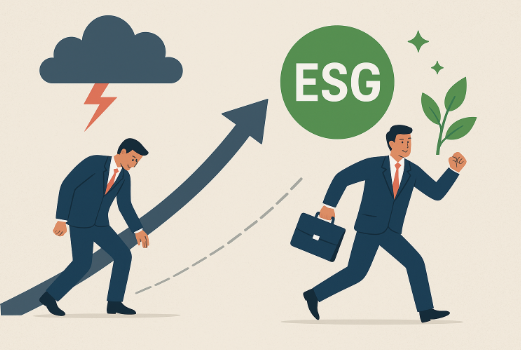
If you think ESG is just reporting checklists, think again. For India’s corporate giants, ESG has become a battlefield—where reputation can crumble in a day, but trust, value and resilience are rebuilt over years. These stories of turbulence and turnaround prove one truth:
ESG is not about compliance. ESG is about survival. And transformation.
Below are India’s most compelling journeys—companies that stumbled, struggled, and then used ESG to rise stronger than before.
⭐ 1. ITC — From Tobacco Anxiety to Sustainability Leadership
There was a time when ITC was defined by one uncomfortable reality: its core business was tobacco. Investors were skeptical. Social perception was negative. Global ESG ratings consistently flagged the company.
But over the last decade, ITC proved what a purpose-driven pivot looks like.
The Turbulence
- Accused of being “over-dependent on cigarettes.”
- Investors questioning long-term value.
- Limited recognition for its massive agri & sustainability initiatives.
The Turnaround
ITC built a multi-decade ESG transformation that silently changed everything:
- 100% solid waste recycling in multiple factories.
- India’s first major FMCG with plastic-neutral status.
- Watershed development covering millions of acres.
- Renewable energy powering manufacturing clusters.
Their ESG roadmap created a new identity:
“From a tobacco company to India’s most sustainable conglomerate.”
Outcome
- Stronger global investor profile.
- Higher resilience due to diversified green businesses.
- Surpassed peers in ESG scores & sustainability indices.
⭐ 2. Vedanta — From Crisis Headlines to Responsible Mining
No company in India has faced ESG turbulence like Vedanta.
The Turbulence
- Protests related to the Tuticorin plant.
- Environmental and community criticisms.
- Intense media scrutiny and investor concern.
For some companies, such pressure destroys morale.
For Vedanta, it became a mirror—and a catalyst.
The Turnaround
Vedanta rebuilt its ESG foundation:
- Net-zero commitment by 2050 (Scope 1 & 2).
- One of India’s largest ESG-linked financing programs.
- Robust community welfare, women empowerment, health & livelihood initiatives.
- Tailings dam safety upgrades aligned with global best practices.
Outcome
- Re-entry into global investment portfolios.
- Continuous upgrade in ESG ratings.
- Strengthened social license to operate.
Vedanta’s story shows:
ESG doesn’t erase history. ESG rewrites the future.
⭐ 3. Tata Steel — The Benchmark for Responsible Steelmaking
Tata Steel is the classic case study in ESG excellence.
The Turbulence
- Global steel volatility.
- Heavy emissions footprint.
- High expectations as India’s most iconic industrial brand.
The Turnaround
While others debated carbon cost, Tata Steel moved with bold intent:
- Hydrogen-based steel pilots.
- Circular economy: recycling scrap into high-grade steel.
- Top global safety standards.
- Industry-leading community development in Jamshedpur & Kalinganagar.
Outcome
- Consistently in the Global Top 10 for steel ESG rankings.
- Preferred by global supply chains with net-zero commitments.
- Massive operational efficiency gains through energy transition.
Tata Steel demonstrates:
ESG leadership is not charity—it’s competitive advantage.
⭐ 4. Hindustan Unilever (HUL) — When Purpose Became a Profit Engine
If any Indian corporate made ESG mainstream, it’s HUL.
The Turbulence
- Packaging waste criticism.
- High water usage for FMCG manufacturing.
- Pressure to shift to circularity.
The Turnaround
HUL built a fully integrated sustainability model:
- Plastic take-back & recycling at national scale.
- Water-positive factories in multiple locations.
- Inclusive sourcing and rural empowerment through Shakti Ammas.
- Aggressive Scope 1 & 2 decarbonization roadmap.
Outcome
- Massive brand trust uplift.
- Lead position in global ESG benchmarks.
- Growth driven by sustainable products.
HUL proves:
Consumers reward brands that protect both people & the planet.
⭐ 5. Mahindra Group — India’s Climate Leadership Pioneer
Mahindra didn’t wait for global pressure—they moved early.
The Turbulence
- Auto sector emissions scrutiny.
- Investor pressure post global EV disruptions.
- Need to transform a 70-year-old brand.
The Turnaround
Mahindra executed India’s first true climate leadership model:
- First Indian company with a science-based target (SBTi).
- Early investment in electric mobility (Mahindra Electric).
- Carbon pricing at internal corporate level (₹1,500 per ton).
- Large-scale renewable energy adoption.
Outcome
- Attracted sustainability-linked loans.
- Became a favorite for ESG funds.
- Reinforced reputation as India’s most future-ready conglomerate.
This is what vision before compulsion looks like.
⭐ 6. Bharat Forge — The Green Reinvention of a Heavy Engineering Giant
Bharat Forge faced a classic challenge:
“How does a heavy engineering company become ESG-positive?”
The Turbulence
- Steel-intensive, carbon-heavy processes.
- High energy consumption.
- Global OEMs pushing for green supply chains.
The Turnaround
Bharat Forge redesigned its identity:
- Shift to electric vehicle components (axles, chassis, lightweight systems).
- Investment in renewable energy across plants.
- Focus on green forging technologies that reduce energy use.
- Strong governance & transparency improvements.
Outcome
- Preferred supplier for global EV OEMs.
- Higher operational efficiency with lower carbon cost.
- Strong ESG visibility with investors.
Bharat Forge shows how traditional industries can leapfrog into clean tech.
⭐ 7. L&T — From Compliance to Value Creation
L&T’s ESG acceleration is a masterclass.
The Turbulence
- Massive construction footprint.
- Energy & emissions heavy EPC projects.
- Complex supply chain & contractor ecosystem.
The Turnaround
L&T embraced ESG across the value chain:
- Green buildings & clean energy infra across India.
- Renewable EPC leadership.
- Strong BRSR & integrated reporting practices.
- Large investment in skilling, safety & worker welfare.
Outcome
- Among the top infrastructure companies in global ESG rankings.
- Strong ability to win climate-resilient projects worldwide.
- Re-rating by long-term ESG investors.
⭐ 8. Infosys — When Carbon Neutral Became a Culture
Infosys is one of India’s earliest ESG champions.
The Turbulence
- Rising carbon footprint from global operations.
- High energy consumption due to data centers & campuses.
- Investor push for transparency in supply chain.
The Turnaround
Infosys executed one of the most respected ESG transitions:
- Carbon neutral since 2020.
- One of the world’s most energy-efficient campuses.
- Shift to 100% renewables.
- Deep digital skilling for communities.
Outcome
- Global admiration as an ESG-first IT company.
- Consistently high ESG scores.
- Competitive advantage in green digital transformation projects.
Infosys didn’t follow ESG—it shaped ESG.
⭐ 9. JSW Steel — Turning a Carbon-Heavy Sector Into a Green Watchpoint
JSW Steel is proof that even the hardest-to-abate sectors can rewrite their story.
The Turbulence
- Steel production labelled as high-carbon.
- Investor & NGO scrutiny.
- Pressure from global buyers demanding green steel.
The Turnaround
JSW accelerated a clean transition:
- Massive renewable energy integration.
- Carbon capture pilot projects.
- Waste-heat recovery systems across plants.
- Social programs for education, skill-building & health.
Outcome
- Improved ESG ratings across CRISIL, MSCI, Sustainalytics.
- Strong acceptance in international green supply chains.
- Operational cost savings and brand uplift.
⭐ 10. HDFC Bank — Governance, Trust & Community Leadership
In banking, ESG is all about trust.
The Turbulence
- Regulatory scrutiny at various points.
- Need to build stronger disclosures.
- Climate-risk expectations from global investors.
The Turnaround
HDFC Bank expanded its ESG impact:
- One of India’s largest CSR footprints.
- Rural empowerment & microfinance access.
- Strong focus on governance, transparency & risk culture.
- Sustainable finance frameworks for green loans & bonds.
Outcome
- Among the most trusted banking ESG profiles in Asia.
- Positive global investor sentiment.
- Strong alignment with RBI’s emerging climate guidelines.
🌱 The Invisible Thread Behind Every Turnaround: The ESG Roadmap
Across ITC, Vedanta, Tata Steel, HUL, Mahindra, L&T, Infosys, JSW Steel & HDFC Bank—one theme appears again and again:
ESG roadmaps aren’t documents. They are decisions.
Not reporting frameworks, but transformation frameworks.
A consistent pattern repeats:
- Phase 1 – Foundation: Materiality, baseline, governance.
- Phase 2 – Data & Technology: Systems, automation, real-time metrics.
- Phase 3 – Strategy: Targets, pathway, business alignment.
- Phase 4 – Reporting & Assurance: BRSR, GRI, ISSB, third-party checks.
- Phase 5 – Continuous Improvement: Innovation, green finance, future-proofing.
Every company above followed these steps—some slowly, some aggressively—but all emerged stronger.
💡 The Real Lesson: ESG Is Not a Cost. ESG Is a Catalyst.
These stories teach us:
- ESG protects companies during crises.
- ESG attracts global capital—ESG-linked bonds, sustainability loans, green investors.
- ESG builds brand trust.
- ESG drives operational savings & innovation.
- ESG secures long-term competitiveness.
India’s corporate transformation is not happening on spreadsheets.
It’s happening in boardrooms, factories, fields, communities, and supply chains—every day.
🔥 Final Thought
If these giants can change their trajectory with ESG, so can any company—big or small.
ESG is no longer about being good. It is about staying relevant.
It is about resilience.
It is about leadership.
🗣Call to Action
Transform Turbulence Into Opportunity
Every organisation faces turbulence — only a few turn it into competitive advantage.
If you’re ready to turn ESG risks into growth and resilience, we’re here to guide you.
👉 Contact us today to begin your sustainability transformation.
Read more blogs on sustainability here.
Some references –
Tata Steel ESG Indicators & Net-Zero Goals — Tata Steel Annual Report ESG Goals tatasteel.com