


Table of Contents
🌍 The Invisible Blanket We Built: How Greenhouse Gases Are Rewriting Earth’s Future
You can’t see it. You can’t touch it.
But it’s choking our planet — an invisible blanket of gases slowly trapping more heat than Earth can bear.
Every puff from a factory, every car ride, every light we switch on adds to it — turning balance into chaos.
These are the greenhouse gases (GHGs) — the real currency of climate change.
🌫️ What Are Greenhouse Gases?


Greenhouse gases are the heat-trapping gases in our atmosphere that make Earth warm enough for life.
The main ones are:
- Carbon dioxide (CO₂) — from burning coal, oil, and gas
- Methane (CH₄) — from livestock, rice fields, and landfills
- Nitrous oxide (N₂O) — from fertilizers
- Fluorinated gases — from industrial coolants and manufacturing
They let sunlight in but trap outgoing heat — just like the glass of a greenhouse.
That’s why we call it the greenhouse effect.
🌡️ The Greenhouse Effect — Nature’s Balancing Act
The greenhouse effect is what keeps our planet alive.
Without it, Earth’s average temperature would be –18°C — too cold for life.
Thanks to this natural process, it stays around +15°C, allowing oceans to flow and life to thrive.
But humans have been thickening this blanket since the Industrial Revolution — burning fossil fuels, cutting forests, and overproducing waste.
We’ve already warmed the planet by +1.1°C, and that small rise is enough to melt glaciers, fuel heatwaves, and flood cities.
Scientists warn:
- Keeping warming below +1.5°C means a manageable future.
- Beyond +2°C, the planet changes in ways we can’t reverse.
Global warming refers to the overall phenomenon — the steady rise in Earth’s average temperature due to greenhouse gases.
The 1.5°C rise is a critical threshold within that phenomenon — a danger limit set by scientists (in the Paris Agreement) to avoid the most severe climate impacts.
So:
- 🌡️ Global warming = the ongoing temperature rise.
- ⚠️ 1.5°C = the red line we must not cross.
On average, Earth’s temperature is rising by about 0.2°C per decade — that’s roughly 0.02°C per year. 🌡️
It may sound small, but over decades it adds up fast — enough to intensify heatwaves, floods, and storms worldwide.
As of 2025, Earth’s average surface temperature has risen about 1.2°C above pre-industrial levels (1850–1900). 🌍 Scientists warn that crossing 1.5°C could trigger irreversible climate tipping points — melting ice sheets, rising seas, and extreme weather surges.
🔥 Life at +2°C to +3°C: The Breaking Point
A rise of just 2 or 3 degrees may not sound like much — but for our planet, it’s the line between stress and collapse.
Every extra degree traps more heat, charging up storms, drying out rivers, and throwing nature off balance.
The result? A world that feels less like home every year.



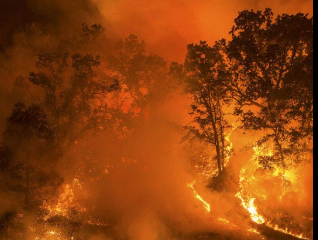
Global Warming: Impact
Here’s what life could look like if the planet keeps heating up.
🌾 1. Food and Water in Crisis
When it gets too hot, plants stop growing. Crops like rice, wheat, and maize fail more often, while floods and droughts wipe out what survives.
- Yields could drop by 10–30% in India and Africa.
- Water shortages will hit as Himalayan glaciers shrink — rivers like the Ganga and Indus may run dry in summer.
- Rising temperatures make groundwater vanish faster and push food prices up.
👉 The world’s dinner plate will shrink, even as millions more mouths need to be fed.
🌊 2. Sinking Cities, Rising Seas
As the oceans warm, they expand — and melting ice from the poles adds even more water.
- Sea levels could rise half to one meter by 2100.
- Cities like Mumbai, Kolkata, Chennai, and Jakarta could face flooding every year.
- Saltwater could creep into farmlands and wells, destroying crops and drinking water.
- Millions may be forced to move inland, becoming climate refugees.
👉 Imagine losing your city not to war, but to the tide.
☠️ 3. Deadly Heat, Unlivable Days
Some places will simply become too hot for survival.
When humidity rises with heat, our bodies can no longer cool down — even in the shade.
- India, Pakistan, and Bangladesh could see days when stepping outside is deadly.
- Heat will kill crops, animals, and people — especially the poor and elderly.
- Diseases like malaria and dengue will spread wider as mosquitoes thrive in warmer zones.
👉 It’s not just a hotter world — it’s a more dangerous one.
🌪️ 4. Disasters Without a Break
A warmer atmosphere holds more moisture, creating stronger storms and heavier rains — while other places dry out completely.
- Expect more cyclones, floods, wildfires, and droughts.
- Infrastructure will struggle to recover before the next disaster hits.
- Economic losses could reach trillions each year.
👉 The “once in a century” flood could become a yearly event.
🌿 5. Nature in Free Fall
Nature’s balance depends on stable temperatures — and it’s unraveling fast.
- 99% of coral reefs could disappear at +2°C.
- The Amazon rainforest could dry out, releasing carbon instead of storing it.
- Polar ice loss will speed up warming even more — a deadly feedback loop.
- Thousands of species may vanish forever.
👉 When nature collapses, so does everything that depends on it — including us.
💸 6. Inequality on Fire
Climate change doesn’t strike evenly. The poorest, who contribute the least, suffer the most.
- Developing countries could lose 5–10% of GDP every year to climate damage.
- Rising food and water costs will deepen poverty.
- Conflicts and migrations will increase as people fight to survive.
👉 The climate crisis isn’t just about weather — it’s about justice.
🌍 The Choice Is Still Ours
We’re already at +1°C — and the cracks are showing.
At +2°C, life gets harder.
At +3°C, it becomes unrecognizable.
But every fraction of a degree we prevent saves lives, crops, forests, and futures.
Each act — using clean energy, restoring forests, demanding climate action — cools our planet a little more.
This isn’t just about the Earth’s temperature.
It’s about our children’s tomorrow.
But who’s really responsible? The answer isn’t one villain — it’s a handful of industries that have powered progress while quietly changing the planet’s thermostat.
Let’s uncover the biggest emitters — globally and right here in India 🇮🇳 — and how we can rewrite the story.
⚡ The Global Picture: Who’s Emitting the Most?
According to the IPCC and World Resources Institute, over 80% of global GHG emissions come from just a few industrial sectors:
| Sector | Share of Global GHG Emissions | Key Gases |
|---|---|---|
| Energy & Power Generation | ~35% | CO₂, CH₄ |
| Industry & Manufacturing | ~20% | CO₂ |
| Agriculture & Land Use | ~18% | CH₄, N₂O |
| Transportation | ~15% | CO₂ |
| Buildings | ~6% | CO₂ |
| Waste Management | ~3% | CH₄, CO₂ |
💡 Together, these six sectors form the “Carbon Six” — the backbone of our modern life and the frontline of climate change.
⚙️ Energy: The Power That Pollutes
Every time we switch on a light, charge a phone, or run a factory, we draw power — and most of that power still comes from fossil fuels like coal, oil, and natural gas.
These fuels have powered human progress for centuries, but they come with a hidden cost:
when burned, they release carbon dioxide (CO₂) and methane (CH₄) — the gases that trap heat in our atmosphere.
The result?
The energy sector alone contributes more than one-third of global greenhouse gas emissions, making it the single largest source of climate pollution.
From coal-fired power plants to diesel generators and industrial furnaces, energy drives our economies but also fuels global warming, smog, and health hazards.
The challenge is not that we use energy — it’s how we produce it.
🌞 The Moral Revolution of Renewables
The shift from fossil fuels to renewables — solar, wind, hydro, and green hydrogen — isn’t just about technology or economics.
It’s about ethics, equity, and survival.
Every solar panel installed, every wind turbine that spins, every home powered by clean energy is a quiet act of defiance against pollution and a vote for a livable future.
It means cleaner air, healthier communities, and freedom from dependence on depleting resources.
It’s the kind of power that doesn’t just light up homes — it lights up hope.
🏭 Industry: The Giants Beneath Our Cities
Cement, steel, and chemicals — the building blocks of progress — are also the heaviest polluters.
- Cement alone emits 8% of the world’s CO₂.
- Steel adds another 7%.
From skyscrapers to smartphones, every product leaves a carbon footprint unless redesigned to be circular and clean.
Every product we use — from the cement under our feet to the steel in our cars — begins in a factory.
But behind every spark of industry lies a cloud of emissions.
Factories burn coal, oil, and gas to generate heat for smelting metals, producing cement, and manufacturing chemicals. Together, industrial processes and energy use account for roughly 25% of global GHG emissions.
Cement alone is responsible for nearly 8% — because when limestone is heated, it releases carbon dioxide as part of the chemical process itself.
Even fertilizers, plastics, and paper — all depend on fossil fuels somewhere in their production chain.
Innovation here isn’t optional — it’s essential.
The next industrial revolution must be green, where carbon capture, green hydrogen, and circular manufacturing replace smoke stacks and waste.
Because every clean factory built today is a promise to tomorrow’s children that progress doesn’t have to poison.
🌾 Agriculture: The Methane Story No One Talks About
Cows, rice fields, and fertilizers sound harmless — yet agriculture contributes nearly one-fifth of global GHGs.
- Livestock release methane (25× more potent than CO₂).
- Fertilizers emit nitrous oxide (300× stronger than CO₂).
Our dinner plates are quietly shaping the planet’s climate story. Shifting diets and smarter farming can be game-changers.
Here’s how each part contributes:
🐄 Cows (Livestock) – Methane from Digestion
- Cows, sheep, and goats release methane (CH₄) during digestion through a process called enteric fermentation.
- Methane is about 25 times more powerful than CO₂ in trapping heat in the atmosphere.
- With over 1 billion cattle worldwide, livestock methane is a major driver of global warming.
🌾 Rice Fields – Methane from Flooded Soils
- Rice paddies are often flooded to control weeds and pests.
- This creates anaerobic (oxygen-free) conditions, where microbes produce methane as they break down organic matter in the soil.
- Rice farming alone contributes about 10% of global methane emissions.
🌿 Fertilizers – Nitrous Oxide from Soil Chemistry
- Synthetic nitrogen fertilizers and manure release nitrous oxide (N₂O) during microbial reactions in soil.
- N₂O is 300 times more potent than CO₂ in global warming potential.
- Overuse of fertilizers makes this one of the fastest-growing sources of emissions.
So, while farming sustains life, its methods — livestock rearing, flooded rice cultivation, and heavy fertilizer use — generate powerful GHGs.
The challenge is to make agriculture climate-smart — through better feed for livestock, alternate wetting and drying in rice fields, and precision fertilizer use — to feed the world without overheating it.
🚗 Transportation: Moving Fast, Emitting Faster
Cars, trucks, ships, and planes together emit around 15% of global GHGs.
A single long-haul flight can equal the yearly emissions of an average Indian citizen.
Cars, trucks, ships, and planes connect the world — but they also choke the air we breathe.
The transport sector contributes nearly 15–20% of global GHG emissions, mostly through burning petrol and diesel.
Each liter of fuel burned releases over 2 kg of CO₂, making every trip a small addition to the planet’s fever.
And yet, this is one of the easiest sectors to transform.
The rise of electric vehicles, biofuels, and public transport innovation shows that we can move the world — without overheating it.
Every EV charging station built, every metro line expanded, every flight made cleaner is a step toward a breathable tomorrow.
Mobility should connect lives, not consume the planet.
Electric mobility and green fuels are no longer luxuries — they’re survival strategies.
🏠 Buildings: The Comfort That Costs the Earth
Our homes, offices, and malls are meant to shelter us — yet together they quietly fuel the climate crisis.
Every time we switch on the air conditioner, use hot water, or leave the lights glowing through the night, we consume energy — mostly from fossil fuels.
Heating, cooling, and powering buildings account for nearly 17–20% of global greenhouse gas emissions — and when you include the materials used to construct them (like cement, steel, and glass), that share rises to nearly 40%.
Think about it:
From the concrete poured to the bulbs that shine, every part of a building’s life — construction, operation, and demolition — leaves a carbon footprint.
But the good news? Buildings can also breathe life back into the planet.
Green architecture and energy-efficient designs can literally cool our planet.
- 🏡 Green buildings use natural light, ventilation, and insulation to cut energy use.
- 🌞 Rooftop solar panels turn every home into a mini power plant.
- 🌿 Sustainable materials like bamboo, recycled steel, and low-carbon cement slash embodied emissions.
- 💡 Smart design and automation make energy efficiency effortless.
Imagine a city where every building gives back more than it takes — where walls cool naturally, lights respond to sunlight, and rooftops grow green instead of grey.
That’s not a fantasy — it’s the blueprint for a livable planet.
Because when buildings become climate heroes, the world itself becomes home again.
🗑️ Waste: The Forgotten Emitter
Landfills emit methane, and open burning releases toxic CO₂ and black carbon.
Though only 3% of global emissions, waste is a low-hanging fruit for change — composting, segregation, and recycling can turn garbage into gold.
Every plastic bottle, food scrap, and landfill tells a silent story of neglect.
When organic waste rots without oxygen in landfills, it releases methane, one of the most dangerous heat-trapping gases.
Composting, recycling, and waste-to-energy systems can turn trash into treasure.
Every segregated bin, every recycled bottle, every composted peel is a small climate victory.
Because in the end, nothing in nature is truly waste — only misplaced resources.
🌍 Top Per-Capita CO₂ Emitters (approximate recent data)
Based on publicly available datasets for 2023 territorial CO₂ emissions:
| Country / territory | Per-capita CO₂ emissions (tons/person) |
|---|---|
| Palau | ~ 62.6 t / person Wikipedia+1 |
| Qatar | ~ 43.6 t / person Wikipedia+1 |
| Kuwait | ~ 24.9 t / person Wikipedia+1 |
| Bahrain | ~ 21.1 t / person Wikipedia |
| Brunei | ~ 20.9 t / person Wikipedia+1 |
| United Arab Emirates | ~ 20.7 t / person Wikipedia |
| United States | ~ 13.8 t / person Wikipedia+2TheGlobalEconomy.com+2 |
| Canada | ~ 19.7 t / person (in many datasets high) Wikipedia |
| Russia | ~ 13.1 t / person Worldometer+2Wikipedia+2 |
| Australia | Also among the high per-capita emitters (well above global average). The Australian+2TheGlobalEconomy.com+2 |
Global average is about 4.76 t CO₂ per person in 2023. TheGlobalEconomy.com+2EDGAR+2
So a country emitting 20+ t / person is ~4× global average or more.
💡 Why Per-Capita Matters (Often more revealing than totals)
| Reason | Explanation |
|---|---|
| Equity & fairness | Per person emissions show how carbon-intensive a country / lifestyle is on average. High per-capita means each individual has heavy footprint even if total is moderate. |
| Comparability across countries | Countries vary hugely in population; per-capita normalizes for size and makes cross-country comparisons fairer. |
| Policy & responsibility | Smaller or rich nations with high per capita are under more pressure to reduce emissions per person. Larger but low per-capita nations are often told they have more “development leg room.” |
| Consumer / investor lens | Investors or regulators look at per-capita metrics to assess sustainability / carbon intensity per citizen; high per-capita may imply inefficiency or heavy reliance on fossil fuels. |
🌍 Top ~10 CO₂ emitters with approximate share
| Rank | Country | Approx share of global CO₂ emissions |
|---|---|---|
| 1 | China | ~ 33% Wikipedia+2World Population Review+2 |
| 2 | United States | ~ 12.6% Worldometer+2EDGAR+2 |
| 3 | India | ~ 7.6% Wikipedia+2EDGAR+2 |
| 4 | Russia | ~ 4.9% Worldometer+2Wikipedia+2 |
| 5 | Japan | ~ 2.8% Worldometer+2EDGAR+2 |
| 6 | Indonesia | ~ 2.4% Wikipedia+1 |
| 7 | Brazil | ~ 2.0% EDGAR+1 |
| 8 | Germany | ~ 1.8% Wikipedia+1 |
| 9 | Saudi Arabia | ~ 1.7% World Population Review+1 |
| 10 | South Korea | ~ 1.6% Wikipedia+1 |
🇮🇳 India’s Climate Equation: Growth vs. Emissions
India, the world’s third-largest emitter, contributes around 7% of global GHGs — but with a twist:
our per capita emissions are just one-third of the global average.Reference
⚙️ Where India’s Emissions Come From
- Energy & Power (≈ 40%) – Coal-fired power plants still dominate electricity generation.
- Industry (≈ 20%) – Steel, cement, and manufacturing rely heavily on fossil fuels.
- Agriculture (≈ 18%) – Cattle methane, rice fields, and fertilizers contribute significantly.
- Transport (≈ 10%) – Rapid urbanization and growing vehicle ownership add to CO₂ output.
- Buildings & Waste (≈ 10%) – Cooling, lighting, and landfills emit CO₂ and methane.
India’s forests and land use absorb roughly 522 million tonnes of CO₂ annually, offsetting about 22% of total emissions.
That’s our unsung hero — our green lungs 🌳.
🌡️ The Impact of Global Warming on India
India is among the most climate-vulnerable countries in the world. The effects of a heating planet are already visible — not in charts, but in everyday life.
☀️ 1. Deadly Heatwaves
- Summers now regularly cross 48°C in North India.
- According to IMD, heatwaves are becoming longer, more frequent, and more deadly.
- Prolonged exposure impacts not just health but worker productivity, agriculture, and energy demand.
💧 2. Water Scarcity and Floods
- Glaciers in the Himalayas — the lifeline for the Ganga and Indus rivers — are retreating fast.
- Cities like Bengaluru, Chennai, and Delhi swing between water shortage and flooding.
- The monsoon, once predictable, has become erratic — hitting farmers hardest.
🌾 3. Agricultural Stress
- India’s food security is under threat.
- Even a 1°C rise in temperature can reduce wheat yields by 5–10%.
- Droughts, unseasonal rains, and pest outbreaks are forcing farmers into debt and despair.
🌊 4. Rising Seas, Sinking Cities
- Coastal cities like Mumbai, Kolkata, and Chennai face increased flooding from sea-level rise and cyclones.
- Saltwater intrusion is poisoning farmlands in the Sundarbans and coastal Odisha.
🏥 5. Health and Inequality
- Air pollution already causes over 1.6 million premature deaths annually.
- Climate change is worsening this — by increasing smog, disease vectors, and heat stress.
- Poor and marginalized communities bear the worst of these impacts, despite contributing the least to emissions.
💚 India’s Response: Fighting Back for the Future
India isn’t standing still. It’s acting fast and scaling big:
- 🇮🇳 Committed to reach Net Zero by 2070.
- 🌞 Installed over 80 GW of solar capacity — one of the largest in the world.
- 🚗 Pushing electric mobility, green hydrogen, and bioenergy.
- 🌱 Expanding forest cover and restoring degraded lands.
- 🤝 Leading the International Solar Alliance (ISA), inspiring over 100 countries.
India’s climate story is one of responsible ambition — growing without repeating the mistakes of the West.
🌏 The Human Truth
Climate change isn’t a distant danger — it’s a present wound.
From flooded villages in Assam to parched fields in Maharashtra, every degree of warming deepens inequality.
But there’s also hope — in every solar panel glinting on a rural rooftop, every youth-led tree campaign, and every green business choosing sustainability over short-term gain.
India’s path forward will define not just its future — but the planet’s.
Because in the climate story, India isn’t just a victim or a villain — it’s the turning point.
💚 Call to Action: Your Carbon Shadow Matters
The planet doesn’t need a handful of perfect environmentalists — it needs millions of people doing something.
✅ Switch to renewable energy
✅ Cut down on waste
✅ Support sustainable brands
✅ Vote for green policies
✅ Educate one more person
Because the real power to cool the planet lies not just in factories and parliaments — but in our hands. ✊🌏
“We didn’t inherit this Earth from our ancestors; we are borrowing it from our children.” The planet doesn’t belong to us to use up — we are merely caretakers for the next generation. Every ton of CO₂ we emit, every forest we cut, every species we lose — we’re taking away something that rightfully belongs to our children.
Let’s make sure we return it in better shape.
Read more blogs on sustainability here.