
Table of Contents
Nisha had always dreamed of working in a big tech firm.
An experienced engineer with stars in her eyes, she joined her dream company in 2020 — right in the middle of Covid-19. She worked hard, despite suffering from the Covid in 2nd wave, met all release deadlines. She kept work above her health, her personal life. She faced several challenges of networking at new workplace, but kept her focus on work, on company welfare, on customer satisfaction, on productivity.
Then came 2021 – the time of Great Resignation. Everywhere she looked, people were quitting, demanding flexibility, purpose, and dignity.
She thought she was lucky — her company promised an “employee-first” culture and proudly displayed its ESG score on every wall.
But soon, she saw the truth behind the slogans.
Her manager micromanaged every move.
Her ideas were dismissed in meetings.
When she worked late, there was no concern for safety or well-being — instead an anger in 1-1s with the manager for raising such concerns for women safety.
The smiles on HR posters didn’t match the whispers in the corridors.

Three years later, Nisha faced what many now call a “passive layoff.”
No pink slip. No meeting. Just weeks of being excluded, ignored, and overburdened.
Her one-on-ones turned hostile — filled with rude remarks and unwarranted criticism. Every time she spoke up with genuine suggestions to improve processes and serve customers better, she was labeled outspoken in a culture that rewarded silence and “Yes-Men.”
The constant negativity took a toll on her mental and physical health. Eventually, realizing her well-being mattered more than any job, Nisha made the hardest decision — she resigned voluntarily.
Her exit wasn’t about any personal reason. It was about dignity.
When Nisha decided to quit, her reason was simple — “Lack of dignity from my manager.”
But she never wrote that.
She wrote: “Personal reasons.”
Because in most companies, truth is dangerous.
💬 HR calls it “unprofessional.”
👔 Managers take it “personally.”
🧱 And honesty quietly gets filtered out in the system.
So people leave with fake smiles and polite reasons —
while cultures rot from within.
If an employee can’t safely say why they’re leaving,
such company’s ESG reports, engagement scores, and “people-first” slogans mean nothing.
🩵 The “S” in ESG isn’t about glossy policies — it’s about giving people the dignity to speak the truth without fear.
🚨 The Great Resignation Wasn’t About Jobs — It Was About Respect
Between 2021 and 2022, over 47 million Americans quit their jobs — the highest in history.
India’s IT sector too saw attrition rates soar to 25–30%.
At first, CEOs blamed it on restlessness or lack of loyalty.
But deeper studies by McKinsey, Microsoft, and PwC revealed the real cause —
toxic culture, poor leadership, and a loss of human connection.
Employees weren’t running from work — they were running toward respect.
The “S” in ESG — Social — was supposed to stand for this very humanity.
For equity, empathy, inclusion, and dignity.
But while companies raced to publish ESG reports, few paused to ask:
“How are our people really feeling?”
🤖 2024–2025: The Silent Layoff Era
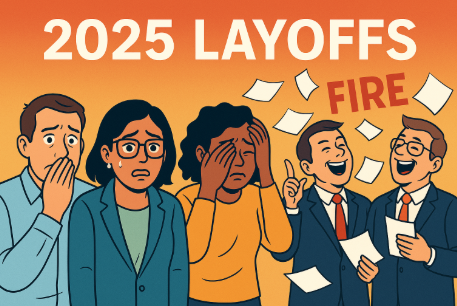
Fast forward to 2024–25.
AI, automation, and cost cuts swept across industries.
Tech giants announced mass layoffs — over 250,000 jobs lost globally in just two years.
But behind the headlines was a more invisible wave — passive layoffs.
No memos. No severance. No headlines.
Just people slowly pushed out.
They’re labeled as “underperformers,” or
“not adaptable,” or “not culture fit.”
But often, it’s politics — managers protecting favorites, networks protecting old colleagues.
A passive layoff is a resignation engineered by management, not chosen by the employee.
It’s the silent cruelty that never shows up in ESG metrics —
and yet, it bleeds through every workplace where empathy has died.
💬 The Forgotten “S” in ESG
When companies talk about ESG, the focus usually lands on the “E” — the environment.
Carbon neutrality. Recycling drives. EV fleets.
The “G” — governance — gets some spotlight too, thanks to investors and auditors.
But the “S”? It’s the forgotten sibling.
Measured by HR policies and DEI dashboards, but not by real human experience.
The Social factor isn’t about charity donations or Women’s Day hashtags.
It’s about the daily heartbeat of the workplace.
- The tone of a manager’s voice in a 1:1.
- The courage to speak up without fear.
- The empathy shown when someone is struggling.
- The integrity to not play politics with people’s livelihoods.
These are the true ESG indicators — invisible, but powerful.
💔 Why Ignoring the “S” Costs Businesses Dearly
When empathy leaves, talent follows.
And when talent leaves, business suffers.
💸 According to Gallup, companies with high employee disengagement lose $8.8 trillion globally in productivity each year.
💼 Replacing an employee costs 1.5–2x their annual salary.
📉 High attrition directly correlates with lower innovation and slower recovery during downturns.
A company may save short-term costs through layoffs, but it loses the trust that fuels long-term resilience.
You can automate code — but not creativity.
You can replace heads — but not hearts.
😔 The Hypocrisy Within
It’s not just layoffs.
It’s the hypocrisy of leaders who talk “sustainability” while practicing selective empathy.
They speak of “mental health” but shame employees who need breaks.
They celebrate “diversity” but ignore women forced to travel home late after night shifts.
They post about “employee well-being” while HR sends robotic “Thanks for your service” mails at midnight.
And during 1:1 meetings — the moments that define culture —
many managers trade empathy for ego.
Rude tones. Condescending remarks. Dismissive feedback.
Those meetings don’t end with improvement — they end with emotional scars.
🌱 Redefining the “S” — From Policy to Practice
The real Social in ESG begins when leadership redefines success:
Not as how much profit is made, but how it is made.
Here’s how the “S” can become real again:
- 💬 Empathetic Leadership: Train managers to lead conversations, not control them. Emotional intelligence should be a KPI.
- 🧭 Psychological Safety: Let people speak without fear. Innovation only thrives in trust.
- 👩💻 Respectful Work Culture: End toxic micromanagement and politics. Encourage collaboration, not competition.
- 🌇 Women’s Dignity: Prioritize safety and flexibility, not just diversity numbers.
- 🔍 Transparent HR Practices: Passive layoffs are a silent scandal. Audit how exits truly happen.
Because no ESG report can be credible if its culture fails the human test.
⚠️ A Call for Corporate Introspection
Companies love to showcase solar panels and CSR drives.
But sustainability without empathy is just greenwashing in disguise.
If we can track carbon footprints,
why can’t we track the emotional footprint of leadership?
If we can measure profits quarterly,
why not measure employee trust too?
The real sustainability revolution will begin not in boardrooms,
but in 1:1 meetings where leaders choose kindness over control.
💡 Final Thought
The Great Resignation was a rebellion.
The Silent Layoffs are a warning.
If companies still fail to listen,
the next wave won’t be resignations —
it will be reputation collapses.
Because the future of ESG isn’t about how much we save the planet,
but how much we save our people.
🌍 The real “S” in ESG stands for Soul.
And the day organizations lose that — they lose everything else that matters.
Read blogs on sustainability here.
Reference –
World Economic Forum article: “The Great Resignation continues. Why are US workers continuing to quit their jobs?” — reports that millions of people quit their jobs, citing feeling disrespected among reasons. weforum.org