
Table of Contents
The Warning All Companies Hear — But Not All Survive
There comes a moment in every company’s life when everything looks perfect from the outside.
The stock price is rising.
The brand is admired.
The CEO is celebrated.
The world believes the company is a success story written in stone.
But inside the engine room — where the real work happens — something fragile has already started to break.
It whispers first.
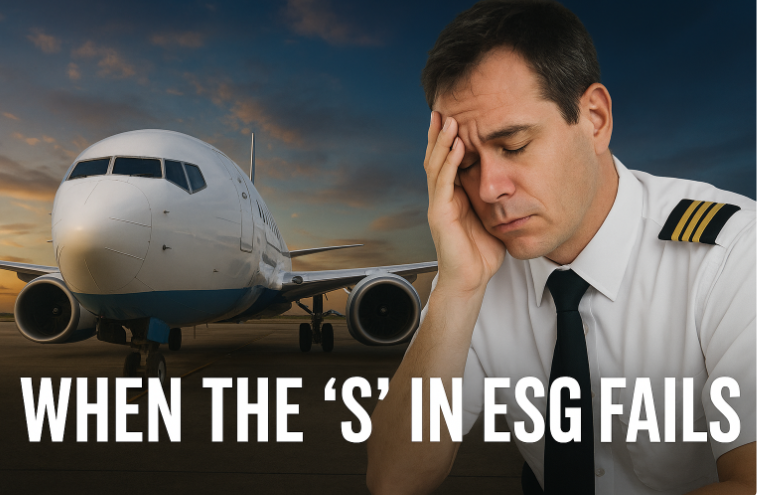
A pilot whispers:
“I cannot fly another night. I’m exhausted.”
A warehouse worker whispers:
“My back hurts. I don’t think I can lift another box. But I need this job.”
A software engineer whispers:
“This culture feels toxic. I’m losing myself.”
A factory worker whispers:
“There are cracks in the wall. We shouldn’t go in today.”
A customer whispers:
“Something feels off. They just don’t care like before.”
And somewhere in a glass boardroom — surrounded by dashboards, charts, and KPIs — those whispers get drowned by ambition.
“Later.”
“We can push harder.”
“We need to hit the quarter.”
“It’s manageable.”
But then, one day, the whispers become a scream.
Flights are cancelled by the thousands.
Planes crash.
Workers strike.
Customers revolt.
Scandals explode.
Entire factories collapse.
Brands burn down overnight.
Not because markets collapsed.
Not because technology failed.
Not because competitors won.
But because the company forgot its people.
This is the story of those collapses — IndiGo, Boeing, Uber, Amazon, Foxconn, Wells Fargo, Rana Plaza, OYO — not as accusations, but as lessons.
Not to shame, but to warn.
Not to judge, but to prevent future tragedies.
Because every corporate disaster is a human disaster first.
When the “S” in ESG fails, everything else follows.
1. IndiGo Crisis (2025): A People Problem That Became a National Breakdown
India witnessed scenes normally reserved for Hollywood disaster films — airport floors filled with stranded passengers, crying children, people sleeping on luggage, and thousands scrambling to reach weddings, interviews, exams, and funerals.
Why?
Not due to a natural disaster.
Not due to a terror threat.
Not due to a global emergency.
But because of crew fatigue, overloaded rosters, and lack of preparedness for updated rest and safety norms — all linked directly to the “S” pillar of ESG.
The Hidden Problem: People Were Exhausted
Reports highlighted:
- Pilots operating on stretched rosters
- Airline maintaining fewer pilots per aircraft than needed
- Months of warnings about fatigue
- Poor contingency planning for regulatory changes
- Internal allegations of unrealistic workloads
When new safety norms kicked in, IndiGo didn’t have enough rested crew to fly.
The result?
A national aviation crisis.
The Human Cost
Families missed life events.
Students missed exams.
Elderly passengers slept on the floor.
Airport staff took the anger.
Pilots battled burnout.
Efficiency alone cannot keep a system running when its people are on the edge.
IndiGo’s crisis is a case study in how ignoring the Social pillar can cripple operations overnight.
2. Boeing 737 MAX: The Deadliest ESG-Social Failure in Modern Corporate History
Two crashes.
Two aircraft full of families who never reached home.
346 lives lost.
One of the greatest reputational and financial hits in aviation history.
The cause?
Internal warnings ignored.
Safety concerns overshadowed by pressure to compete with Airbus.
Pilots not adequately trained on new software.
A culture that prioritised speed and market dominance over human safety.
This is the darkest example of what happens when profit outvotes people.
The human cost was irreversible.
The corporate cost was billions.
3. Amazon Warehouses: When Human Bodies Meet Brutal Efficiency
Amazon is one of the most admired companies on earth.
Yet its warehouses have faced global scrutiny:
- Injury rates reportedly higher than industry averages
- Workers rushing to meet algorithm-driven targets
- Bathroom breaks timed
- High turnover
- Allegations of dehumanising conditions
Amazon has since invested heavily in safety improvements — but the early years showed what happens when hyper-efficiency forgets human capacity.
You can build the world’s fastest logistics machine.
But not on exhausted backs forever.
4. Uber: A Culture That Grew Too Fast, Until It Collapsed Inward
Uber wasn’t destroyed by competitors.
It was wounded by its own culture.
Reports described:
- Widespread harassment
- Managerial bullying
- Retaliation fears
- Grey-area ethics
- A “bro culture” celebrated internally but condemned globally
The result?
- CEO resignation
- Massive valuation hit
- Investor revolt
- Global investigations
- Reputation rebuild costing years
Uber’s story teaches one painful truth:
No innovation survives a broken culture.
5. Foxconn & Apple: Workers Under Pressure in the World’s Most Efficient Factories
Foxconn, a key Apple supplier, faced global outrage after:
- Long work hours
- Dormitory-style living
- Labour pressure
- Multiple suicides at facilities
Apple intervened, audits were conducted, and conditions improved — but the episode revealed a global blind spot:
Efficiency is not sustainability.
Human dignity is not optional.
6. Wells Fargo: When Internal Pressure Destroys Integrity
Wells Fargo employees were pushed to meet aggressive sales targets.
So aggressive that thousands resorted to creating millions of fake customer accounts without consent.
Why?
Because the internal pressure was crushing.
And when people break, ethics break.
The consequences:
- CEO resignation
- Billions in fines
- Regulatory restrictions
- Severe reputational damage
This wasn’t a finance scandal.
It was a social systems failure.
7. Rana Plaza: The Corporate Negligence That Took 1,100 Lives
Nothing reveals the true meaning of “Social” in ESG more painfully than Rana Plaza — a garment factory building in Bangladesh.
Workers saw cracks in the walls.
They begged not to enter.
Managers forced them.
The building collapsed.
1,134 workers died.
Thousands were injured.
Families shattered forever.
This tragedy changed global supply chain standards — but at a cost too high to forgive.
It became the world’s loudest warning that ignoring workers is fatal.
8. OYO Rooms: Blitzscaling Beyond People Limits
As OYO scaled globally:
- Small hotel partners complained about contract terms
- Employees described burnout
- Quality scores dropped
- Lawsuits piled up
- Global partners withdrew
The company stabilised later, but the lesson was clear:
Growth without people foundations collapses under its own speed.
THE PATTERN IS ALWAYS THE SAME
Across industries, countries, and decades, the same formula repeats:
When pressure grows
and people weaken
and leadership ignores
and early warnings are silenced
and culture turns fragile—
the collapse begins.
Companies don’t fall because the market turns.
They fall because their people do.
Why This Matters to Every Leader Today
Whether you run:
- A conglomerate
- A fintech
- A renewable energy firm
- A hospital chain
- A logistics empire
- An airline
- A manufacturing unit
- A consulting firm
… your survival depends on ONE thing:
How well you protect your people.
Not your revenue, not your brand, not your technology.
Because when fatigue meets silence,
when ethics meet pressure,
when customers feel invisible,
when workers feel replaceable,
and when safety becomes negotiable—
the countdown to collapse begins.
ESG Isn’t About Compliance. It’s About Humanity.
The Environmental pillar can be measured.
The Governance pillar can be documented.
But the Social pillar must be lived:
- Safety
- Workload
- Fairness
- Dignity
- Customers
- Labour practices
- Culture
- Well-being
- Transparency
- Respect
Companies fail here because S is the hardest —
and the most important.
The future will belong to companies that lead with empathy, not ego.
Responsibility, not just revenue.
Humanity, not just efficiency.
Because machines may run your operations,
but people run your company.
FINAL MESSAGE: When People Rise, Companies Rise. When People Fall, Companies Fall.
IndiGo’s cancellations, Boeing’s crashes, Amazon’s fatigue complaints, Uber’s culture crisis, Foxconn’s suicides, Wells Fargo’s ethics collapse, Rana Plaza’s tragedy, OYO’s burnout — every story says the same thing:
Ignoring the “S” in ESG is not an oversight.
It is a disaster waiting to happen.
And companies that listen to early whispers
avoid the screams.
✨ Call To Action
Build a People-First ESG System Before the Next Crisis Hits
If you are a leader, board member, CXO, sustainability professional or investor, the most important action you can take now is:
👉 Create a robust, people-centric ESG-S framework that protects workers, customers, and the company itself.
Read more blogs on sustainability here.
📚 REFERENCES
(All safe, public-domain, reputable mainstream journalism sources.)
IndiGo Crisis (2025)
Reuters — https://www.reuters.com/world/india/india-orders-crisis-hit-indigo-cut-flights-by-5-2025-12-09/
Boeing 737 MAX
New York Times — https://www.nytimes.com/interactive/2019/03/15/business/boeing-737-max-crashes.html
Amazon Warehouse Conditions
The Guardian — https://www.theguardian.com/technology/2021/dec/13/amazon-warehouse-injuries-investigation
Uber Workplace Culture
BBC — https://www.bbc.com/news/technology-40352850
Foxconn Factory Conditions
BBC — https://www.bbc.com/news/technology-30853376
Wells Fargo Fake Accounts Scandal
CNN Business — https://www.cnn.com/2019/03/28/investing/wells-fargo-scandal-explained/index.html
Rana Plaza Factory Collapse
BBC — https://www.bbc.com/news/world-asia-22476774
OYO Growth & Struggles
Bloomberg — https://www.bloomberg.com/news/features/2020-01-30/oyo-hotels-once-a-startup-star-faces-growing-pains