


Table of Contents
Priya’s Story of a Toxic Office Culture
When Silence Speaks Louder Than Words:
Imagine walking into an office where the walls are painted with silence. People avoid eye contact in meetings, tough questions are swallowed, and promotions seem already decided—regardless of performance. The brightest voices leave quietly, while the long tenure enjoying complacency laugh the loudest. On the surface, it looks like “just another workplace,” but beneath it lies something far more dangerous: a culture that is quietly rotting, paving the way for governance failure.
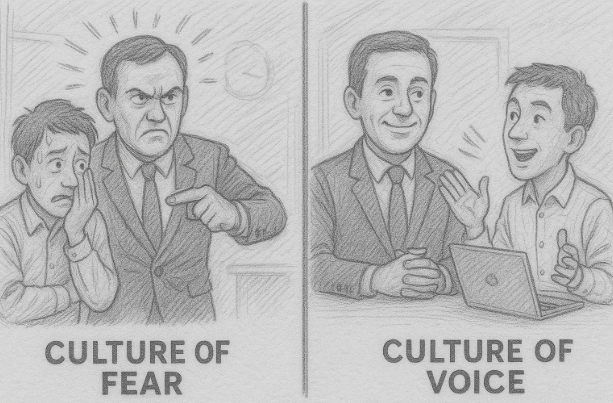
One Monday morning, Priya, a bright new product manager, walked into her dream job. She had ideas, energy, and a deep sense of integrity. But within weeks, she realized something was off. Her manager dismissed her suggestions in meetings, abused her in one on ones for speaking up on improvement suggestions on customer pain points. Colleagues whispered in corridors but never spoke up in front of leadership. There was a culture of fear and not of voice. Promotions seemed to go to the same “inner circle,” “yes men” regardless of performance.
At first, Priya thought it was just “office politics.” But what she was really witnessing was the slow decay of governance values—the kind of culture that, left unchecked, topples even the biggest companies.
History proves this: Enron wasn’t only about accounting tricks—it was about a culture where dissent was silenced. Wirecard wasn’t just about missing billions—it was about insiders protecting each other while shutting out truth-tellers.

Top 10 Office Culture Red Flags:
The signs are always there. They show up first in the office hallways before they hit the boardroom or the stock exchange. Here are the Top 10 Office Culture Red Flags every leader, employee, and investor should watch for.
🚩 1. Culture of Fear: Silence Over Truth
Priya noticed colleagues whispering in hallways but staying quiet in meetings. Speaking up carried risks—silence was safer. A culture built on fear silences accountability before numbers are ever cooked.
🚩 2. Punishing Dissent & Different Opinions
When Priya offered alternative ideas, she was subtly mocked and excluded from key projects. Dissent was treated as disloyalty. Meanwhile, those who conformed were fast-tracked. This mirrored how boards that punish contrarian voices fail in governance oversight.
🚩 3. Yes-Man Culture & Unchecked Power Dynamics
Her manager dominated conversations, rewarding those who nodded in agreement. Her manager had unchecked power, his boss was far from reach for subordinates complain. Over time, fresh perspectives disappeared, replaced by robotic yes men. A company without challengers is a company without checks and balances.
🚩 4. Favoritism, Bias & Long-Tenured Complacency
Priya saw senior employees—though disengaged and underqualified—rewarded purely for loyalty. Bright newcomers left frustrated. Governance failure often begins where tenure and bias outweigh merit.
🚩 5. Managers Putting Personal Gain Over Customers
When a pulse survey came, Priya’s manager downplayed customer pain points and instead inflated his own ratings. Personal image mattered more than customer trust. This “self before service” attitude corrodes both culture and governance.
🚩 6. Lack of Empathy in Leadership
Colleagues under stress were met with cold responses. Deadlines mattered more than wellbeing. Without empathy, leadership erodes loyalty and fosters quiet quitting—red flags for deeper governance cracks.
🚩 7. Hypocrisy: Values Preached, Not Practiced
The company preached “integrity, transparency, collaboration,” yet leaders bent rules freely. This hypocrisy normalized double standards—inside culture and outside governance.
🚩 8. Hero Worship & Untouchable Leaders
Executives were glorified, their mistakes brushed aside. Priya quickly learned that criticizing them was career suicide. Hero worship creates blind spots that can hide fraud in plain sight.
🚩 9. Lack of Diversity in Thought & People
Decisions were made by people who all thought, looked, and acted the same. All male team leads, with team leads cut from the same mold—same gender, same mindset—decisions became echo chambers instead of balanced judgments. No new ideas entered the room. Diversity is not just moral—it’s a governance safeguard.
🚩 10. Overemphasis on Optics Over Substance
Reports were polished, presentations glossy, surveys inflated. But the reality? Customers were unhappy and employees disengaged. Obsession with appearances is often the first step in hiding inconvenient truths.
✅ Solutions: Building a Healthy Office Culture
- Encourage psychological safety → Empower employees to speak up without fear.
- Reward merit, not blind loyalty → Build fairness into promotions and pay.
- Foster transparency → Share data, decisions, and rationales openly.
- Independent oversight → Culture audits by HR, internal audit, or external bodies.
- Lead by example → Culture follows leadership; governance follows culture.
- Diverse leadership & accountability → Include varied perspectives and enforce ethical leadership at the top.
🚨 Call to Action
- Leaders: Don’t just measure profits—measure culture. Toxicity today is tomorrow’s governance scandal.
- Employees: Don’t normalize silence. Use channels to escalate concerns.
- Investors & Regulators: Look at employee surveys, attrition trends, and whistleblower activity as early-warning signs of corporate governance risks.
✅ Takeaway:
Priya’s story is not unique. Offices across the world carry these cultural red flags, often dismissed as “just politics.” But when silence, favoritism, and hero worship thrive, governance is already failing. Spotting these signs early isn’t just about fixing workplaces—it’s about protecting companies from becoming the next Enron, Satyam, or Wirecard.
Office culture is not “soft stuff.” It is the DNA of corporate governance. Spotting red flags—silence, favoritism, hero worship, or complacency—can save companies from the next Enron, Satyam, or Wirecard.
✅ Best Practice Suggestion for Priya
Dealing with a Toxic Office Culture & Managerial Abuse
Navigating a toxic work environment—especially when your manager becomes abusive for expressing dissent—requires a balance of professionalism, self-protection, and strategic action. Here’s a best practice guide for Priya, with a sample boundary-setting message included.
1. 🔍 Recognize and Define the Toxicity
- Identify exactly what’s happening: verbal abuse, public shaming, micromanagement, retaliation for differing opinions.
- Keep detailed documentation: What was said, when, and by whom.
2. 💬 Set Clear Boundaries – Calmly and Professionally
When a manager reacts abusively to Priya’s dissent or differing views, she should stand up for herself in a respectful yet assertive way. Here’s how she can do that:
📩 Sample Boundary-Setting Message to Manager
Subject: Request for Respectful Communication
Hi [Manager’s Name],
I’d like to follow up on our recent conversation. I understand that we may not always agree on everything, and I fully respect your position and responsibilities. However, I felt that the way the discussion unfolded — particularly the tone and language used — was unproductive and personally distressing.
I value open, respectful dialogue and am always willing to listen and align with the team’s direction, even if I raise a different perspective initially. Disagreements are natural in any workplace, and I believe they can be handled constructively.
Moving forward, I’d appreciate it if we could maintain a more respectful tone in our conversations, even during moments of disagreement. I’m committed to contributing positively to the team, and I hope we can foster an environment where concerns can be raised without fear of personal repercussions.
Thank you for taking this into consideration.
Best regards,
Priya
✅ Tip: Always send boundary-setting communication in writing to create a record. Avoid emotional or accusatory language—stick to facts, impact, and expectations.
3. 🧘♀️ Protect Your Mental and Emotional Health
- Prioritize wellness: take breaks, avoid over-committing, seek professional support if needed.
- Limit unnecessary emotional investment in toxic dynamics.
4. 🤝 Find or Build a Support System
- Identify trustworthy colleagues or mentors inside or outside the company.
- Don’t go through it alone — a support system builds perspective and resilience.
5. 🛡️ Escalate When Necessary
- If abuse continues despite setting boundaries, escalate to HR or Employee Relations with:
- Your documentation
- A copy of your boundary message
- A calm summary of repeated behavior
6. ✍️ Prepare Your Exit Strategy (Just in Case)
- Begin updating your resume and LinkedIn quietly.
- Start networking and exploring roles in healthier environments.
- Interview future employers about company culture:
“How does leadership handle disagreement?” or
“How does your team handle conflict or differing viewpoints?”
7. 🚪 Exit Sign: Know When to Leave
If Priya has tried boundary-setting, escalation, and support-seeking — but the toxicity continues to harm her well-being or career growth — leaving is a strength, not a failure.
🧾 Finances & Exit Readiness
- Review your monthly budget and reduce non-essential expenses.
- Start or grow an emergency fund (even small amounts help).
- Avoid lifestyle inflation until you’ve transitioned to a healthier role.
🚦 Know the Signs to Exit Immediately
If Priya experiences:
- Health decline (physical or mental)
- Constant anxiety, burnout, or dread
- Harassment, bullying, or threats
Then: Pause job search and prioritize exiting — even if without a new role.
In Summary: Priya’s Tactical Path
| Step | Action |
|---|---|
| Document abuse | Keep dated records of inappropriate incidents |
| Set boundaries | Use respectful written communication (sample above) |
| Care for self | Mental health comes before job performance |
| Seek support | Connect with allies and mentors |
| Escalate if needed | Go to HR with facts and evidence |
| Prepare exit plan | Quietly look for healthier opportunities |
Read our blogs on Corporate Governance here.
Some external reads.