


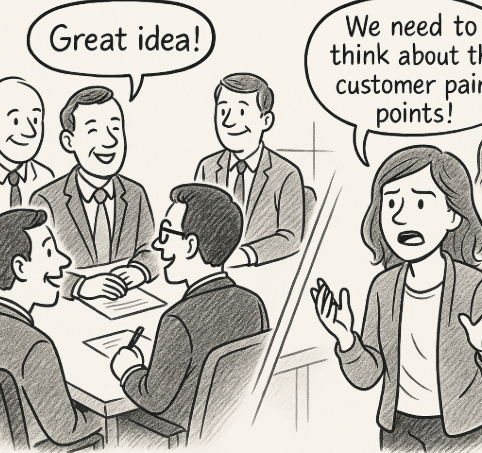
She had ideas. She had empathy. She had the courage to speak when others stayed silent. But none of it mattered in a room where decisions were made by men, for men.
In many workplaces today—especially in traditionally male-dominated sectors—gender bias doesn’t always scream; it whispers. It shows up in who gets invited to meetings, whose suggestions are taken seriously, and who gets credit when a project succeeds. For women, navigating these environments can feel like walking a tightrope—speak up, and you’re “difficult.” Stay silent, and you’re invisible.
What’s worse? When companies ignore these biases, it’s not just women who lose—businesses lose too. Innovation stalls, customer understanding suffers, and blind spots multiply. Because when everyone in the room thinks the same, they miss what truly matters outside it.
This is a story of one such team in a company—where male comfort, unchecked bias, and the silencing of a single woman’s voice eventually came at a high cost.
Table of Contents
🧍♂️🧍♂️ The Cost of a Single Perspective: How a Male-Dominated Culture Failed Its Customers
Here’s a real-world story, with names changed, that illustrates the impact of lack of diversity and suppressed voices in a male-dominated workplace, especially on customer experience and business outcomes:
At TechAxis Solutions, a software development company, the leadership structure was predictably uniform—two male directors, all-male team leads, and a technical team where 90% were men.With 95% hiring from within, the workplace became an echo chamber—where insiders guarded their turf, and fresh, diverse voices were silenced before they could be heard. Hiring often happened through referrals, and over time, a pattern emerged: men hired men—not out of malice, but due to unconscious bias and comfort zones.
👩💼 Few Women, Lower Voices
In a team of 40, only 3 women worked at entry-level positions—none in leadership. One of them, Riya, a junior UX analyst, began noticing a disturbing pattern in product feedback:
“Customers, especially women, often find the user interface unrelatable, confusing, and lacking emotional intelligence.”
When she suggested changes—like using more inclusive design, empathic onboarding, and conversational support messages—her inputs were brushed off. Comments like:
“We’ve always done it this way.”
“Too emotional. Let’s focus on performance.”
became routine responses.
💥 The Consequences
Over the next quarter:
- Customer churn rose by 22%, particularly among women-led businesses.
- Review forums filled with complaints: “Clunky UX”, “Doesn’t understand my workflow”, “Too robotic”.
- A top client backed out, citing “poor alignment with user experience expectations.”
But the leadership team never connected the dots. In internal meetings, male managers kept echoing each other’s assumptions, reinforcing the same flawed approach—a classic yes-man loop.
👤 The Silencing of Innovation
Riya tried once more in an all-hands meeting, bringing mockups and data. One manager interrupted mid-sentence.
“We’ll think about it. Not a priority now.”
She was later moved to backend documentation—a silent dismissal. On top of it, the male manager criticized her for being stubborn. He took the side of other male employees in team —not thinking about the customer or the company—but only to keep majority happy so he gets good ratings in the company half yearly surveys, which asked team members to rate manager.
Riya even approached HR to raise her concerns, hoping for fair mediation. However, her complaint was quickly deflected. She was told to use the company’s “conflict lounge” process and advised that unless a majority of her team shared and supported her viewpoint, no formal steps could be taken. Since the managers involved had over 25 years of tenure within the company,they wielded significant internal influence, HR hesitated to challenge them. The fear of upsetting powerful figures meant no constructive feedback or accountability was enforced.
Riya was isolated, stressed due to constant criticism from her manager every time she gave a different opinion. Later the manager assumed Riya will be the one to not give him good feedback in company surveys, he considered her as a threat to his own promotions. He played dirty games behind closed doors, hoping she’d break. The constant stress, isolation, and criticism shattered Riya’s health—sleepless nights, nightmares, and a body out of balance. In the end, she walked away—not in defeat, but to save herself.
Riya’s departure came as a quiet relief to the male-dominated team. With no one left to challenge their one-dimensional thinking, the managers felt reassured. Some even laughed, assuming that with a like-minded, all-male team, they’d now secure better ratings and promotions—free from any internal dissent or differing perspectives.
📉 The Company Pays the Price
Eventually, a competitor with a diverse, customer-driven design team won over several TechAxis clients by doing what Riya had suggested all along—humanize the product, listen empathetically, design inclusively.
The Turnaround:
Months after Riya’s exit, the company began noticing cracks in customer satisfaction and product adoption. Complaints continued to rise—especially from women and older users—while churn increased. A formal committee was eventually formed to investigate the mounting losses and declining brand trust.
After extensive internal surveys, customer interviews, and team assessments, the conclusion was clear: the lack of diversity and silencing of alternative perspectives had cost the company deeply. The homogenous team structure had created blind spots that no one was equipped to challenge.
Realizing the damage, the leadership made a strategic shift. A new policy mandated inclusive hiring, ensuring that at least 35% of new hires came from diverse backgrounds—not just in gender, but in experience, age, and thought. Slowly, a healthier culture began to emerge—one where difference was not dismissed, but invited.
🎯 Lesson:
- Sidelining voices that offer empathy and alternative perspectives leads to poor innovation and customer dissatisfaction.
- Diversity must go beyond hiring numbers—it must exist in leadership, be heard in decisions, and be protected in culture.
Call to Action:
If you’re a leader, a teammate, or an HR professional—pause and reflect.
Are you creating a space where voices like Riya’s are welcomed, or quietly erased?
Every time a thoughtful opinion is shut down, every time a lone voice is ignored for not “fitting in,” your company loses more than just an employee—it loses empathy, innovation, and the trust of its customers.
Diversity isn’t just a hiring metric. It’s the soul of decision-making.
Don’t wait for losses to wake you up. Make inclusion a daily practice. Listen deeper. Challenge sameness. Empower the quiet voice in the room—before silence becomes your company’s loudest downfall.
When Patriarchy Travels from Home to Office


How Patriarchal Norms Shape Workplace Gender Bias in Countries like India
In many Indian homes, men are respected as decision-makers while women are silenced—even when equally or better educated. After marriage, this imbalance deepens. The same mindset walks into offices, where women are seen but not heard. For many men, a woman being praised or leading feels threatening—their ego resists it, because they’ve never seen women take charge at home. Cultural conditioning doesn’t stop at the doorstep; it shapes boardrooms too. And in doing so, it robs companies of the power of diverse thought.
🌍 Why Diversity at the Workplace Matters
Diversity in the workplace goes beyond gender, race, or ethnicity. It includes diverse experiences, age, socioeconomic backgrounds, neurodiversity, and perspectives. A diverse team brings more innovation, better decision-making, and higher profitability.
🔑 Key Benefits of Diversity:
- Broader perspectives = better problem-solving
- Greater creativity and innovation
- Higher employee engagement and retention
- Better access to global markets
- Enhanced reputation and employer brand
✅ Real-World Example: Microsoft’s Neurodiversity Hiring Program
The Problem:
Tech companies often overlooked neurodiverse candidates (such as those with autism) due to non-traditional communication or interview styles.
The Action:
Microsoft launched a Neurodiversity Hiring Program to actively recruit and support individuals on the autism spectrum by adjusting interview processes and providing mentorship.
The Outcome:
- Improved product testing through exceptional pattern recognition by autistic testers
- Higher retention rates among neurodiverse hires
- Broader innovation due to unique problem-solving approaches
Microsoft reported that these efforts not only created a more inclusive workplace but also led to direct improvements in engineering and product performance. Reference link.
✅ Example: Johnson & Johnson – Power of Inclusive Design
Here’s a powerful real-life example of how diversity helped a company innovate, connect with new customers, and drive business success:
Company: Johnson & Johnson
Diversity Impact: Product design, customer trust, revenue growth
🔍 The Story:
Johnson & Johnson’s consumer health division embraced diversity in their product development teams, intentionally involving female scientists, engineers, and people from diverse ethnic and age backgrounds.
One key success was the design of bandages that match a range of skin tones, especially important for people of color who had long been underserved. For decades, traditional skin-tone bandages were made only in light beige, which didn’t match darker skin and subtly sent a message about exclusion.
Thanks to employee voices from diverse backgrounds, J&J released “Truly Bandages” — inclusive skin-tone bandages for all. It wasn’t just about aesthetics; it was about belonging, dignity, and representation.
💡 The Result:
- Massive positive media coverage and public goodwill
- Increased trust among underrepresented customers
- New market segment unlocked
- Boost in brand loyalty and product sales
- Positioned J&J as a leader in inclusive product innovation
🧠 Lesson:
Diversity isn’t a checkbox—it’s a business advantage. When people from different life experiences are empowered to contribute, companies can create products and services that truly reflect the world they serve.
🌟 Final Thought
Diversity isn’t just a moral responsibility—it’s a strategic advantage. When companies embrace differences, they unlock powerful capabilities that homogenous teams often miss.
Diversity isn’t about slogans—it’s about action. If inclusion isn’t practiced on the ground, it’s just theatre. Real progress happens when every voice is heard, valued, and empowered to shape outcomes.
Read how Yes-Men sink Giants here.